

Common Winterberry Tree Seeds | Winterberry Holly | (Ilex verticillata)
Common Winterberry Tree Seeds | Winterberry Holly | (Ilex verticillata)
The most vivid red in any winter landscape. The shrub that defines the season.
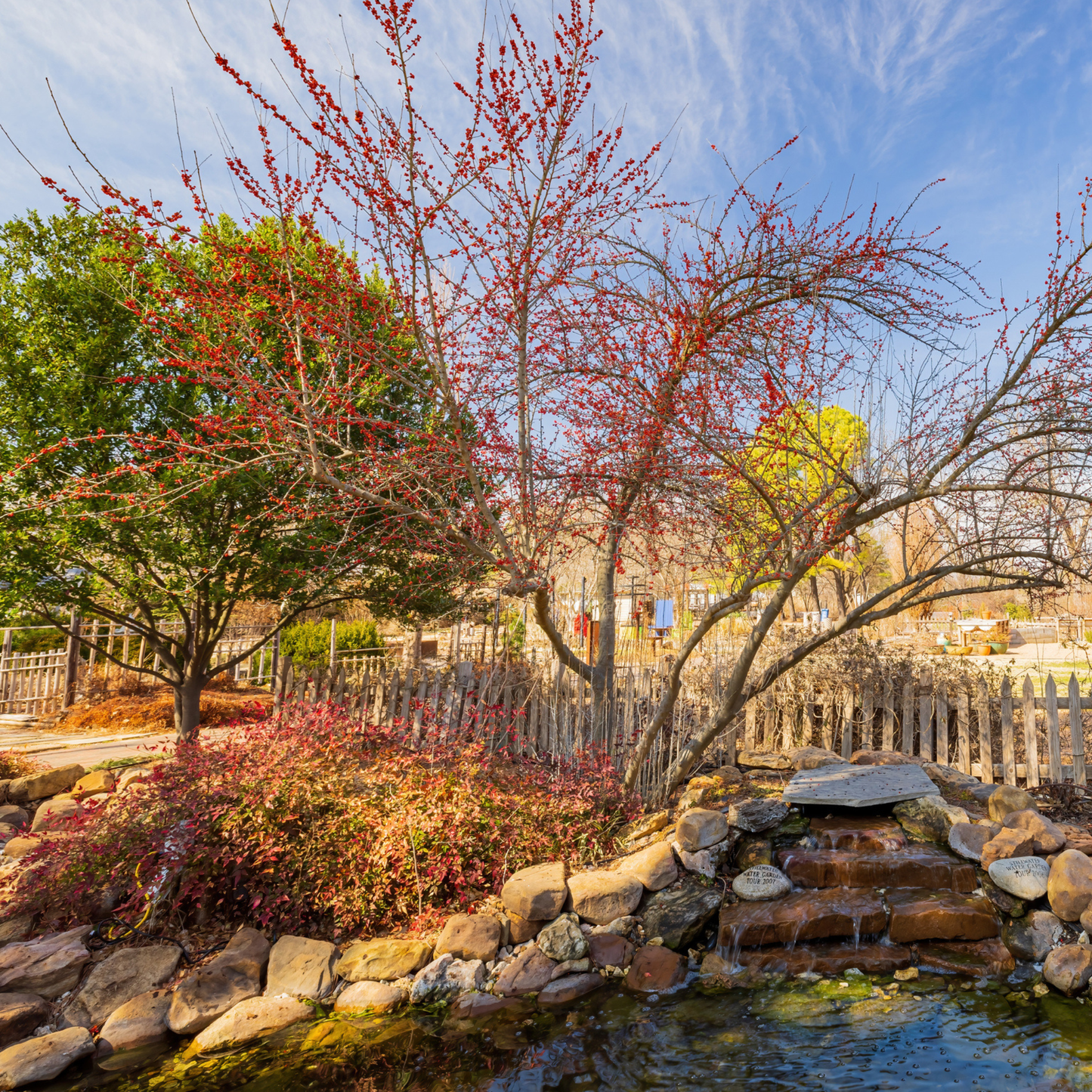
Ilex verticillata, the Winterberry Holly, is the most visually spectacular native shrub in the eastern United States during the winter months, its bare stems covered so densely in brilliant red berries that the shrub appears to glow against a snow-covered background or a gray winter sky. It grows naturally in wetlands, pond margins, and boggy ground where few other shrubs compete, but adapts well to ordinary garden soils with adequate moisture. It is also one of the most important native berry sources for overwintering birds, with thrushes, bluebirds, and cedar waxwings stripping the berries as soon as cold temperatures concentrate the sugars and make them palatable in late winter. If you are looking to buy Winterberry seeds or grow native holly from seed, this is the native shrub that makes a winter garden worth looking at.
- Brilliant red berries covering bare stems through the entire winter, one of the most vivid cold-season displays available
- Native to the eastern United States, adaptable to wet, boggy, or ordinary garden conditions with adequate moisture
- Berries eaten intensively by thrushes, bluebirds, robins, and cedar waxwings in late winter and early spring
- Male and female plants are separate, requiring both for berry production
- Brilliant yellow, orange, and red fall foliage before the berries take center stage
Things you probably did not know about the Winterberry
The berries become more attractive to birds after several freeze-thaw cycles. Freshly ripened Winterberry berries in fall are relatively high in tannins and not immediately preferred by most birds. Through the winter, repeated freezing and thawing breaks down the tannins and concentrates the sugars, making the berries increasingly palatable as winter deepens. This delayed palatability is a natural synchrony with the period when birds need the calories most.
You need a male plant within 200 feet for the female to berry. Winterberry is dioecious, with male and female flowers on separate plants. Female plants produce the berries but only when a male plant is close enough to provide pollen during the brief flowering period in late spring. A single male plant can pollinate multiple female plants. Seed-grown plants cannot be sexed until they first flower, which typically occurs at 3 to 5 years from seed.
The berries are mildly toxic to humans and dogs. Winterberry berries contain theobromine and other ilex compounds that cause vomiting and diarrhea in humans and dogs if consumed in quantity. Birds are unaffected by these compounds, which is why the berries persist through winter for avian consumption rather than being taken by mammals. The toxicity is mild at low quantities but the berries should not be eaten or offered to pets.
The roots tolerate standing water that would kill most other native shrubs. Winterberry grows naturally in swamp margins, pond edges, and wet depressions where standing water is present for portions of the year. Few other flowering native shrubs tolerate these conditions, making Winterberry the primary choice for wet sites that need ornamental and ecological value.
Growing Details
- Botanical Name: Ilex verticillata
- Stratification: Required, warm stratification of 60 days followed by 90 to 120 days cold stratification
- USDA Zones: 3 to 9
- Soil: Prefers moist, acidic, organic soil, tolerates standing water, adapts to ordinary garden conditions with consistent moisture
- Light: Full sun to partial shade, best berry production in full sun
- Height: 6 to 12 feet
- Spread: 6 to 10 feet
- Growth Rate: Moderate, 1 to 2 feet per year
Plant at least one male and two or more females for maximum berry production. Then watch the bluebirds in February.
FAQ
FAQ
Do you pre-stratify the seeds?
Most of our seeds are not pre-stratified. They are stored under dry, cold conditions to preserve viability without initiating stratification, allowing you to time germination for your local growing season.
The exception is recalcitrant seeds. Because these seeds must remain moist to stay viable, they are kept in moist, cold storage and are therefore in a pre-stratified state. Depending on how long a particular batch has been stored, some may arrive with an emerging radicle and be ready to plant immediately. Radicle development is not guaranteed.
Please refer to the individual product page and included growing instructions for species-specific requirements.
Do any of your seeds need to stay moist? (Recalcitrant seeds)
Yes. Some species we offer, including Chestnut, Hazelnut, and Paw Paw, are recalcitrant and must remain moist to stay viable.
Please refrigerate these seeds immediately upon arrival unless they have already developed a radicle. Seeds with an emerging radicle should be planted promptly.
Do you ship internationally?
No. We currently ship within the United States only.
We previously shipped to Canada, but tariffs, duties, and import fees resulted in customers receiving significant and unpredictable additional charges upon delivery. Because we cannot reliably calculate or absorb these costs, we have suspended shipping to Canada.
At this time, we do not ship to Canada or other international destinations.
Shipping & What's Included
Shipping & What's Included
Shipping & Packaging
• Hand-packed in resealable kraft paper seed bags
• Stratification and planting instructions included on every seed pack
• Ships within 3–5 business days via USPS within the United States and U.S. territories
Return Policy
Return Policy
Due to the nature of our products, we do not accept returns on seeds.
If your order arrives damaged, contains incorrect items, or is missing items, please contact us within 7 days of delivery so we can resolve the issue.