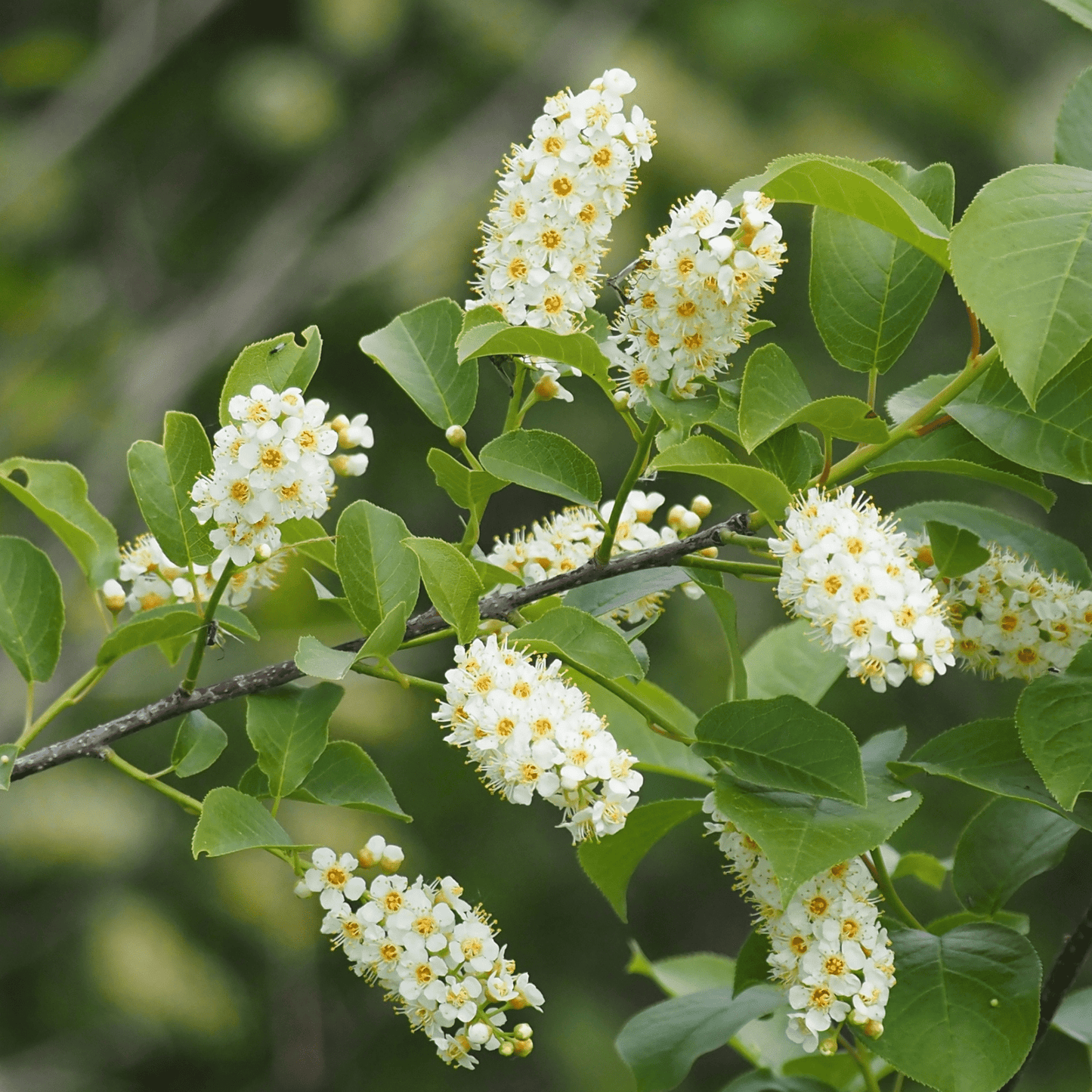


Choke Cherry Seeds | Common Chokecherry | (Prunus virginiana)
Choke Cherry Seeds | Common Chokecherry | (Prunus virginiana)
Native. Productive. The cherry that feeds the most wildlife of any Prunus in North America.
Prunus virginiana, the Chokecherry, is the most widely distributed native cherry in North America and one of the most ecologically important, producing heavy crops of dark red to black fruits in mid to late summer that are consumed by over 70 bird species, dozens of mammal species, and humans willing to process the intensely tart, astringent fresh fruit into jams, jellies, wine, and syrup that are considered excellent. It grows across an enormous range from Newfoundland to California and from sea level to mountain elevations, tolerating drought, cold, poor soils, and disturbed sites with a resilience that makes it one of the most reliable native fruit shrubs available. The fragrant white flower spikes in spring are important early pollinator resources and the dense thickets that develop from root suckers provide critical nesting cover for songbirds. If you are looking to buy Chokecherry seeds or grow this native cherry from seed, this is the most productive and ecologically valuable native Prunus in North American horticulture.
- Produces heavy crops of dark fruit eaten by over 70 bird species, one of the most important native wildlife fruit plants
- Native across the widest geographic range of any North American cherry, from coast to coast and Arctic to Mexico
- Fragrant white flower spikes in spring, important early nectar source for native bees
- Spreads by root suckers to form dense wildlife thickets providing nesting cover and food
- Extremely adaptable to poor soils, drought, cold, and disturbed sites
Things you probably did not know about the Chokecherry
It was the most important fruit in the diet of Plains Indigenous peoples. Chokecherries were harvested in enormous quantities across the Great Plains and Rocky Mountain region by every Indigenous nation within its range. The fruits were dried, pounded with dried meat and fat to make pemmican, and stored as a primary winter food. Its role in Plains Indigenous food culture rivals that of staple crops in other regions.
The pits and leaves are poisonous but the fruit is not. Chokecherry pits, leaves, and bark contain prunasin, a cyanogenic glycoside that releases hydrogen cyanide when metabolized. Livestock have been poisoned by consuming wilted leaves. The fruit itself is safe, and the seeds are harmless when the fruit is properly processed through cooking or drying.
The name comes from the raw eating experience. Fresh chokecherries produce an intensely astringent sensation that makes the mouth and throat feel constricted. Cooking or drying removes the tannins responsible, transforming the fruit into richly flavored jelly, syrup, and wine that are widely valued.
It naturalizes faster than almost any other native Prunus. Chokecherry spreads aggressively by underground rhizomes and bird-dispersed seeds. A single planting can establish a productive thicket within a few years, making it a go-to species for wildlife habitat restoration and erosion control.
Growing Details
- Botanical Name: Prunus virginiana
- Stratification: Required, 90 to 120 days cold moist stratification
- USDA Zones: 2 to 7
- Soil: Extremely adaptable, tolerates poor, dry, rocky, or clay soils
- Light: Full sun to partial shade
- Height: 15 to 25 feet
- Spread: 10 to 20 feet, spreading by root suckers to form thickets
- Growth Rate: Moderate to fast, 1 to 2 feet per year
Plant it at a field edge, along a fence, or anywhere you want fast native cover that feeds birds starting in its second year. Few plants establish, spread, and produce this reliably with so little input.
FAQ
FAQ
Do you pre-stratify the seeds?
Most of our seeds are not pre-stratified. They are stored under dry, cold conditions to preserve viability without initiating stratification, allowing you to time germination for your local growing season.
The exception is recalcitrant seeds. Because these seeds must remain moist to stay viable, they are kept in moist, cold storage and are therefore in a pre-stratified state. Depending on how long a particular batch has been stored, some may arrive with an emerging radicle and be ready to plant immediately. Radicle development is not guaranteed.
Please refer to the individual product page and included growing instructions for species-specific requirements.
Do any of your seeds need to stay moist? (Recalcitrant seeds)
Yes. Some species we offer, including Chestnut, Hazelnut, and Paw Paw, are recalcitrant and must remain moist to stay viable.
Please refrigerate these seeds immediately upon arrival unless they have already developed a radicle. Seeds with an emerging radicle should be planted promptly.
Do you ship internationally?
No. We currently ship within the United States only.
We previously shipped to Canada, but tariffs, duties, and import fees resulted in customers receiving significant and unpredictable additional charges upon delivery. Because we cannot reliably calculate or absorb these costs, we have suspended shipping to Canada.
At this time, we do not ship to Canada or other international destinations.
Shipping & What's Included
Shipping & What's Included
Shipping & Packaging
• Hand-packed in resealable kraft paper seed bags
• Stratification and planting instructions included on every seed pack
• Ships within 3–5 business days via USPS within the United States and U.S. territories
Return Policy
Return Policy
Due to the nature of our products, we do not accept returns on seeds.
If your order arrives damaged, contains incorrect items, or is missing items, please contact us within 7 days of delivery so we can resolve the issue.