

Chinkapin Oak Tree Seeds | Quercus muehlenbergii
Chinkapin Oak Tree Seeds | Quercus muehlenbergii
The limestone oak. Tough as the rock it grows on.
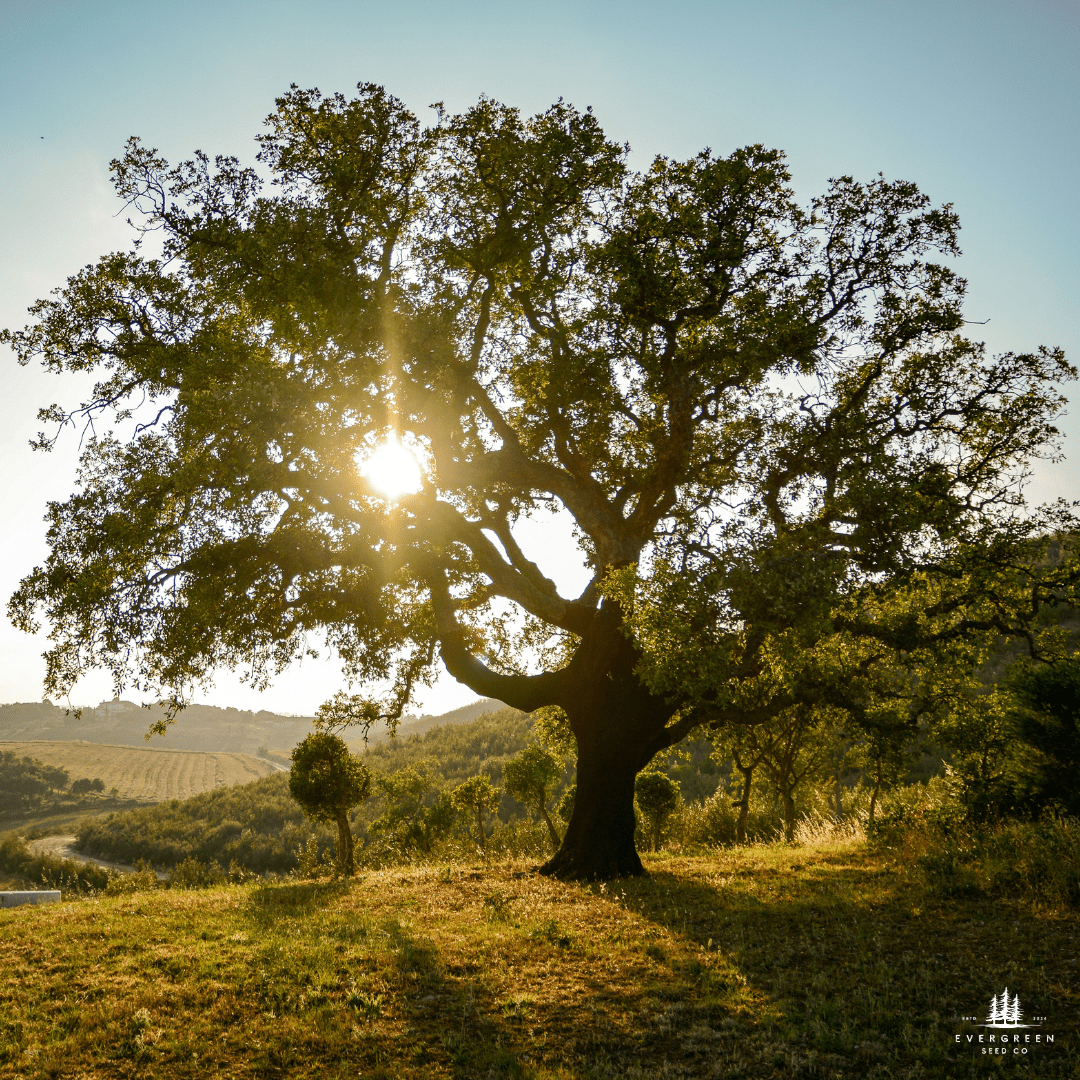
Quercus muehlenbergii, the Chinkapin Oak, is one of the most drought-tolerant and adaptable native oaks in eastern North America, growing naturally on dry limestone bluffs, rocky ridges, and thin upland soils where most other oaks cannot establish. Its toothed, chestnut-like leaves that give it its common name, its graceful upright form, and its extremely sweet, low-tannin acorns eaten eagerly by deer and turkey make it one of the most valuable native oaks for both landscape use and wildlife management. It is also one of the fastest-growing of the white oak group, establishing more quickly than most of its relatives and developing significant canopy within a decade of planting. If you are looking to buy Chinkapin Oak seeds or grow this adaptable native oak from seed, this is the white oak for dry, rocky, and alkaline sites where other oaks struggle.
- The most drought-tolerant native oak in the white oak group, thriving on dry limestone and rocky soils
- Toothed, chestnut-like leaves immediately distinctive from most other oaks
- Produces exceptionally sweet, low-tannin acorns consumed eagerly by deer, turkey, and wildlife
- One of the faster-growing white oaks, establishing canopy more quickly than most relatives
- Extremely cold-hardy, native from New England through the Great Plains and south to Texas
Things you probably did not know about the Chinkapin Oak
It grows on some of the most inhospitable sites of any eastern oak. Chinkapin Oak grows naturally on exposed limestone outcrops and dry south-facing bluffs where the soil is shallow, alkaline, and dry enough to stress most woody plants. Where you find cedar glades and limestone pavements in the Ozarks, the Appalachians, and the Great Lakes region, Chinkapin Oak is often the dominant canopy tree, occupying the sites that every other oak avoided.
The acorns are sweet enough to eat raw. Unlike the intensely bitter acorns of Red Oak species, Chinkapin Oak acorns have such low tannin content that they can be eaten by humans with minimal processing. Indigenous peoples across its range valued them as a food source and consumed them with less leaching treatment than most acorns required. Deer and turkey preferentially seek Chinkapin Oak acorns over most other mast sources when they are available.
It is named for the Chinkapin, a different tree it resembles. The toothed leaf margin of Chinkapin Oak so closely resembles the leaves of the Allegheny Chinkapin, a shrubby native in the chestnut family, that early botanists assumed the two were related. They are not. The leaf similarity is convergent evolution rather than kinship, but the common name has stuck for over two centuries.
The bark develops a distinctive light gray, blocky pattern unlike most other oaks. Mature Chinkapin Oak bark is pale gray and breaks into thick, blocky plates that give the trunk a light, almost silver appearance different from the darker, deeply furrowed bark of most white oaks. This distinctive bark makes Chinkapin Oak identifiable in winter even without leaves.
Growing Details
- Botanical Name: Quercus muehlenbergii
- Stratification: Required, 30 to 60 days cold moist stratification, recalcitrant seed, keep moist
- USDA Zones: 3 to 7
- Soil: Extremely adaptable, thrives on dry, rocky, alkaline, or limestone-based soils
- Light: Full sun
- Height: 40 to 60 feet
- Spread: 40 to 60 feet
- Growth Rate: Moderate to fast for a white oak, 1 to 2 feet per year
Plant it on the dry, rocky site where other oaks have failed. This is the oak that was built for exactly that spot.
FAQ
FAQ
Do you pre-stratify the seeds?
Most of our seeds are not pre-stratified. They are stored under dry, cold conditions to preserve viability without initiating stratification, allowing you to time germination for your local growing season.
The exception is recalcitrant seeds. Because these seeds must remain moist to stay viable, they are kept in moist, cold storage and are therefore in a pre-stratified state. Depending on how long a particular batch has been stored, some may arrive with an emerging radicle and be ready to plant immediately. Radicle development is not guaranteed.
Please refer to the individual product page and included growing instructions for species-specific requirements.
Do any of your seeds need to stay moist? (Recalcitrant seeds)
Yes. Some species we offer, including Chestnut, Hazelnut, and Paw Paw, are recalcitrant and must remain moist to stay viable.
Please refrigerate these seeds immediately upon arrival unless they have already developed a radicle. Seeds with an emerging radicle should be planted promptly.
Do you ship internationally?
No. We currently ship within the United States only.
We previously shipped to Canada, but tariffs, duties, and import fees resulted in customers receiving significant and unpredictable additional charges upon delivery. Because we cannot reliably calculate or absorb these costs, we have suspended shipping to Canada.
At this time, we do not ship to Canada or other international destinations.
Shipping & What's Included
Shipping & What's Included
Shipping & Packaging
• Hand-packed in resealable kraft paper seed bags
• Stratification and planting instructions included on every seed pack
• Ships within 3–5 business days via USPS within the United States and U.S. territories
Return Policy
Return Policy
Due to the nature of our products, we do not accept returns on seeds.
If your order arrives damaged, contains incorrect items, or is missing items, please contact us within 7 days of delivery so we can resolve the issue.