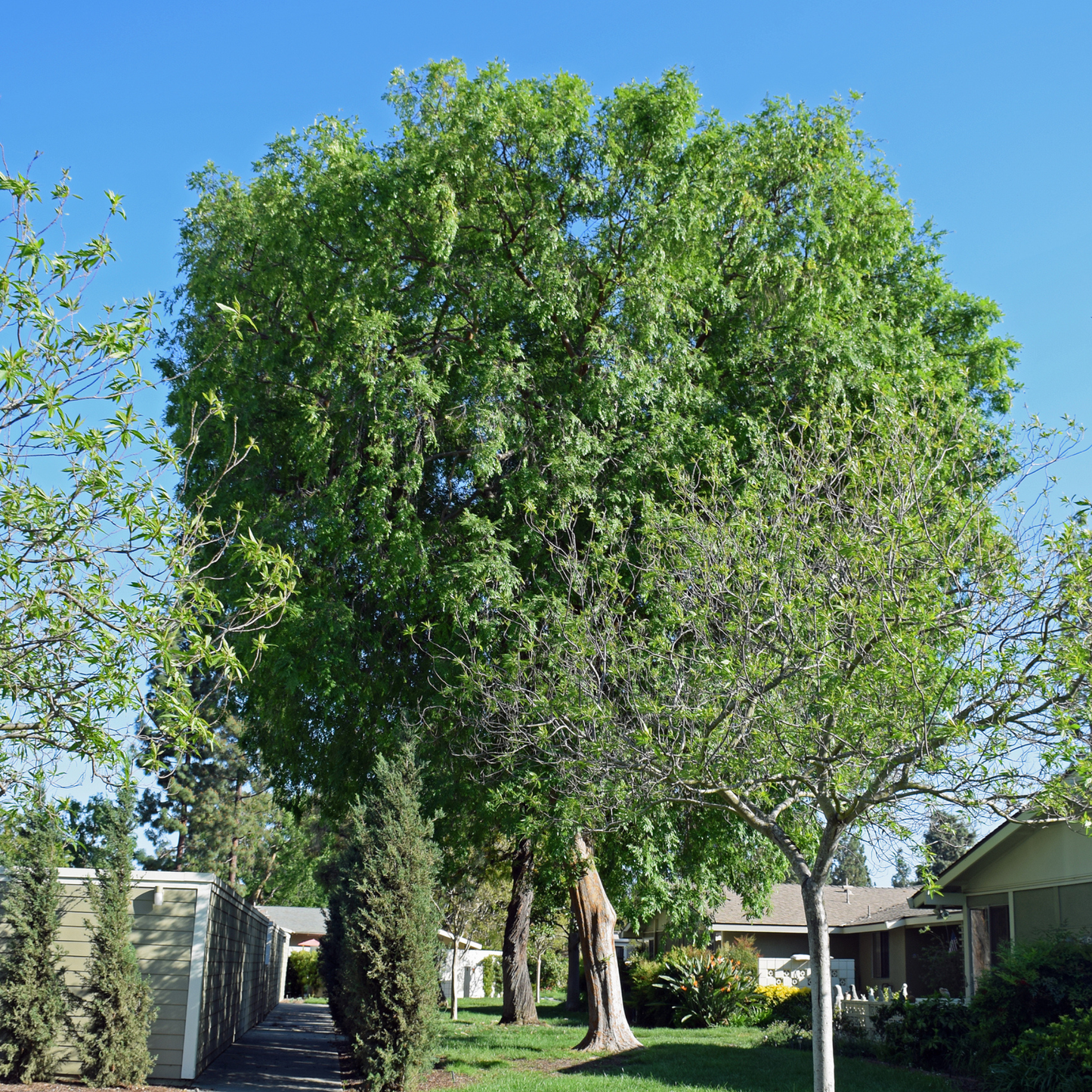


Chinese Elm Tree Seeds | Lacebark Elm | (Ulmus parvifolia)
Chinese Elm Tree Seeds | Lacebark Elm | (Ulmus parvifolia)
The most graceful elm in cultivation. Year-round bark that rivals any tree.
Ulmus parvifolia, the Chinese Elm, is widely considered the finest elm species for landscape use, combining exceptional drought and disease tolerance with one of the most beautiful bark patterns of any temperate tree, a mottled, exfoliating surface in gray, green, orange, and tan that develops on mature specimens into something that looks more like a mosaic than a natural bark. It is semi-evergreen in mild climates, holding its small, dark green leaves through mild winters before shedding briefly in early spring, and it is one of the most reliably healthy elms available at a time when most of its American relatives are threatened by Dutch elm disease. It is also one of the most important species in traditional Chinese, Japanese, and Korean bonsai practice. If you are looking to buy Chinese Elm seeds or grow this elegant elm from seed, this is the elm that earns its place in every climate it can grow in.
- Spectacular mottled exfoliating bark in gray, green, orange, and tan, one of the most ornamental barks of any tree
- Semi-evergreen in mild climates, one of the last trees to drop leaves and first to leaf out in spring
- Highly resistant to Dutch elm disease, the pathogen that devastated most American elm species
- One of the most widely used trees in traditional bonsai practice across East Asia
- Extremely adaptable to drought, urban soils, heat, and pollution
Things you probably did not know about the Chinese Elm
The bark develops differently on every individual tree. The mottled, multicolored exfoliating bark of Chinese Elm is one of its most celebrated characteristics, but the specific pattern, color combination, and rate of development varies significantly between individual trees. Some specimens develop predominantly orange tones while others show more gray or green. Seed-grown trees have no predetermined bark pattern, making each one a genuine individual discovery as it matures.
It is one of the most popular street trees in cities across Asia and warm regions of North America. Chinese Elm's combination of drought tolerance, pollution resistance, moderate size, and four-season ornamental value makes it one of the most practical trees for urban planting in warm and temperate climates. It has been planted extensively along streets and in urban parks from California to Florida and across the Mediterranean, performing consistently where more sensitive elms fail.
Chinese Elm bonsai are among the most approachable for beginners. The Chinese Elm's fast growth, willingness to bud back from old wood, and tolerance for beginner mistakes in watering and pruning make it the most commonly recommended starting tree for bonsai practice worldwide. The small leaf size, graceful branching, and attractive bark contribute to convincing bonsai design at a relatively young age, which is why it appears in virtually every bonsai collection at every skill level.
The wood was used for furniture and tool handles in traditional Chinese craftsmanship. Chinese Elm wood is hard, tough, and resistant to splitting, making it a traditional material for furniture, agricultural tools, and wheel components in Chinese craft traditions. The combination of workability and durability made it a standard material before industrial production methods changed how wood products were manufactured.
Growing Details
- Botanical Name: Ulmus parvifolia
- Stratification: Not required, seeds ripen in fall and can be sown fresh
- USDA Zones: 4 to 9
- Soil: Extremely adaptable, tolerates poor, dry, alkaline, or compacted soils
- Light: Full sun to partial shade
- Height: 40 to 60 feet
- Spread: 25 to 40 feet
- Growth Rate: Moderate to fast, 1.5 to 2.5 feet per year
Plant it where you want a tree that gets better-looking every year as the bark develops its full mosaic pattern. Give it ten years and then stand close and look at the trunk.
FAQ
FAQ
Do you pre-stratify the seeds?
Most of our seeds are not pre-stratified. They are stored under dry, cold conditions to preserve viability without initiating stratification, allowing you to time germination for your local growing season.
The exception is recalcitrant seeds. Because these seeds must remain moist to stay viable, they are kept in moist, cold storage and are therefore in a pre-stratified state. Depending on how long a particular batch has been stored, some may arrive with an emerging radicle and be ready to plant immediately. Radicle development is not guaranteed.
Please refer to the individual product page and included growing instructions for species-specific requirements.
Do any of your seeds need to stay moist? (Recalcitrant seeds)
Yes. Some species we offer, including Chestnut, Hazelnut, and Paw Paw, are recalcitrant and must remain moist to stay viable.
Please refrigerate these seeds immediately upon arrival unless they have already developed a radicle. Seeds with an emerging radicle should be planted promptly.
Do you ship internationally?
No. We currently ship within the United States only.
We previously shipped to Canada, but tariffs, duties, and import fees resulted in customers receiving significant and unpredictable additional charges upon delivery. Because we cannot reliably calculate or absorb these costs, we have suspended shipping to Canada.
At this time, we do not ship to Canada or other international destinations.
Shipping & What's Included
Shipping & What's Included
Shipping & Packaging
• Hand-packed in resealable kraft paper seed bags
• Stratification and planting instructions included on every seed pack
• Ships within 3–5 business days via USPS within the United States and U.S. territories
Return Policy
Return Policy
Due to the nature of our products, we do not accept returns on seeds.
If your order arrives damaged, contains incorrect items, or is missing items, please contact us within 7 days of delivery so we can resolve the issue.