

Carpathian English Walnut Tree Seeds | Persian Walnut | (Juglans regia)
Carpathian English Walnut Tree Seeds | Persian Walnut | (Juglans regia)
The finest nut in the world. Cold-hardy enough to grow almost anywhere.
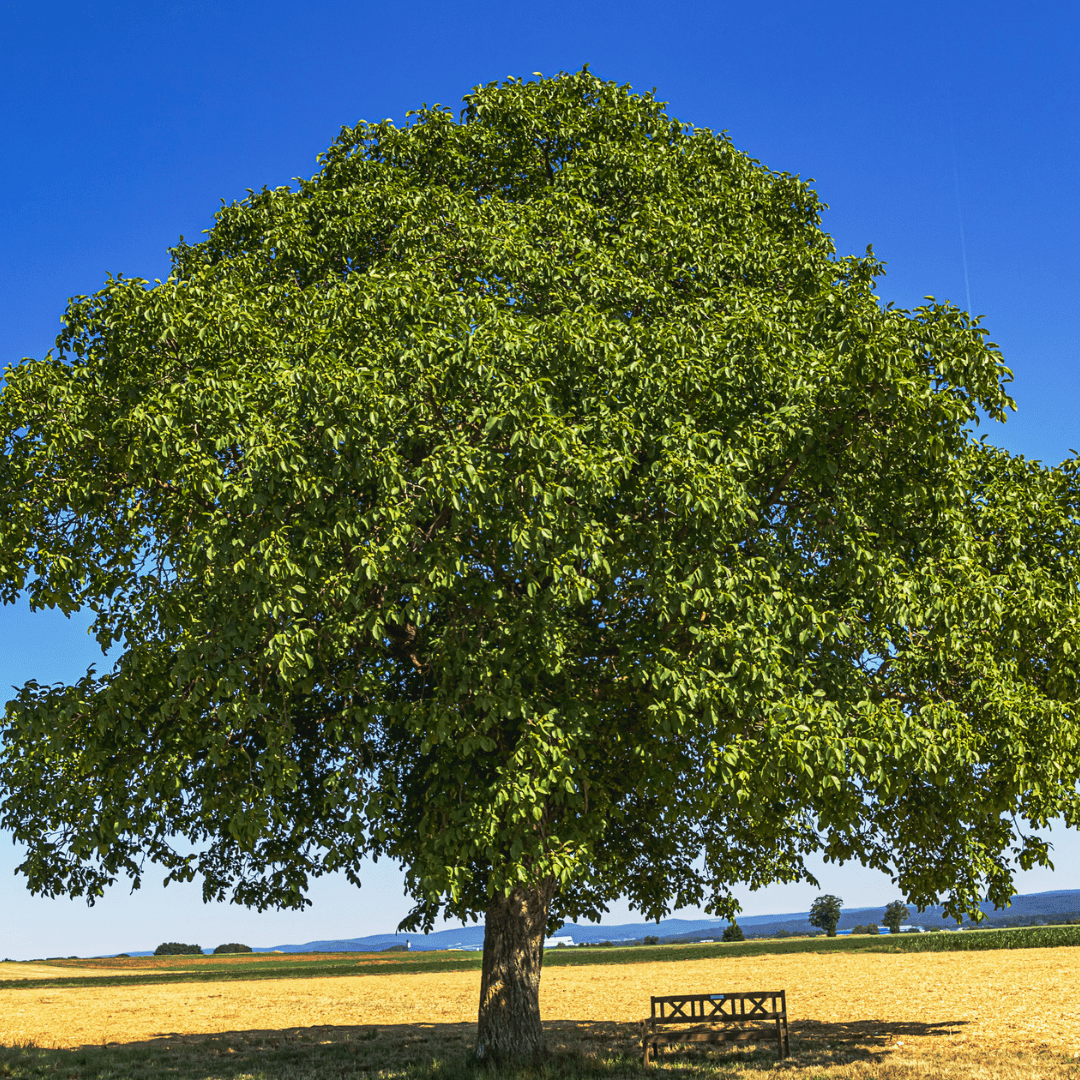
Juglans regia, the English Walnut or Persian Walnut, is the walnut that appears in every grocery store and on every holiday table, the species responsible for virtually the entire global commercial walnut industry, producing the richest, mildest, most complex-flavored nut of any walnut species. The Carpathian selections are cold-hardy strains collected from the Carpathian Mountains of Poland and Ukraine, capable of surviving winters that would kill standard English Walnut orchards grown from California seed stock, extending the range of commercial-quality English Walnut production into zone 4 and even marginal zone 3 in sheltered locations. Growing Carpathian English Walnut from seed produces trees with the cold hardiness of the mountain source combined with the superior nut quality that has made English Walnut the most commercially valuable nut crop in the world. If you are looking to buy English Walnut seeds or grow Carpathian Walnut from seed, this is the walnut that delivers gourmet-quality nuts in climates where most English Walnut varieties cannot survive.
- The most commercially valuable and widely eaten nut in the world, produced by every standard English Walnut
- Carpathian selections cold-hardy to zone 4, significantly more cold-tolerant than standard California walnut stock
- Produces thin-shelled, mild, rich-flavored nuts superior in taste to Black Walnut or Butternut
- Large, attractive shade tree with compound leaves and yellow fall color
- Begins producing nuts within 5 to 7 years from seed under good growing conditions
Things you probably did not know about the Carpathian English Walnut
The trees were discovered by a Canadian minister traveling in Poland in 1927. Reverend Paul Crath, a Ukrainian-Canadian minister, observed walnut trees surviving harsh Carpathian winters while traveling through Poland and Ukraine in the 1920s. He collected seeds from the hardiest specimens and brought them back to Canada, where they were distributed and evaluated. The Carpathian strains that emerged from this introduction extended English Walnut cultivation hundreds of miles north of its previous cold limit, transforming what was a mild-climate specialty crop into a viable option for northern growers.
The English Walnut originated in the mountain forests of Central Asia, not England. Despite the common name, English Walnut is native to a region stretching from the Carpathians through Turkey, Iran, and the Caucasus to Central Asia and the Himalayas. The name English refers to the role of English merchants in distributing the nuts throughout northern Europe and eventually to North America, not to any English origin of the species. In most of the world it is called the Persian Walnut or Common Walnut.
The green hulls stain everything they touch permanently. The green outer hull surrounding the walnut shell contains juglone and other compounds that produce a dark brown stain that is essentially permanent on fabric, concrete, skin, and most other materials. This staining property was exploited for centuries as a fabric dye and hair coloring across Central Asia and Europe. The walnut hull dye was used to color cloth, leather, and wooden furniture throughout the ancient and medieval world.
Cold-hardy Carpathian seedlings vary significantly in nut quality and cold tolerance. Growing from seed produces natural variation in both cold hardiness and nut characteristics including shell thickness, kernel size, flavor intensity, and yield. The best seed-grown Carpathian specimens can rival grafted commercial varieties in nut quality while the less favorable individuals may have thicker shells or lower production. This variation makes growing from seed a genuine discovery process with the possibility of selecting and propagating superior individuals.
Growing Details
- Botanical Name: Juglans regia
- Stratification: Required, 90 to 120 days cold moist stratification, recalcitrant seed, keep moist
- USDA Zones: 4 to 9 for Carpathian selections
- Soil: Deep, well-drained, slightly acidic to neutral, intolerant of compacted or waterlogged soils
- Light: Full sun
- Height: 40 to 60 feet
- Spread: 40 to 60 feet
- Growth Rate: Moderate to fast, 1.5 to 2.5 feet per year
Plant it in the deepest, best-drained soil available and give it room. In seven years you will have English walnuts. In twenty years you will have one of the finest shade trees on the property and more nuts than you can use.
FAQ
FAQ
Do you pre-stratify the seeds?
Most of our seeds are not pre-stratified. They are stored under dry, cold conditions to preserve viability without initiating stratification, allowing you to time germination for your local growing season.
The exception is recalcitrant seeds. Because these seeds must remain moist to stay viable, they are kept in moist, cold storage and are therefore in a pre-stratified state. Depending on how long a particular batch has been stored, some may arrive with an emerging radicle and be ready to plant immediately. Radicle development is not guaranteed.
Please refer to the individual product page and included growing instructions for species-specific requirements.
Do any of your seeds need to stay moist? (Recalcitrant seeds)
Yes. Some species we offer, including Chestnut, Hazelnut, and Paw Paw, are recalcitrant and must remain moist to stay viable.
Please refrigerate these seeds immediately upon arrival unless they have already developed a radicle. Seeds with an emerging radicle should be planted promptly.
Do you ship internationally?
No. We currently ship within the United States only.
We previously shipped to Canada, but tariffs, duties, and import fees resulted in customers receiving significant and unpredictable additional charges upon delivery. Because we cannot reliably calculate or absorb these costs, we have suspended shipping to Canada.
At this time, we do not ship to Canada or other international destinations.
Shipping & What's Included
Shipping & What's Included
Shipping & Packaging
• Hand-packed in resealable kraft paper seed bags
• Stratification and planting instructions included on every seed pack
• Ships within 3–5 business days via USPS within the United States and U.S. territories
Return Policy
Return Policy
Due to the nature of our products, we do not accept returns on seeds.
If your order arrives damaged, contains incorrect items, or is missing items, please contact us within 7 days of delivery so we can resolve the issue.