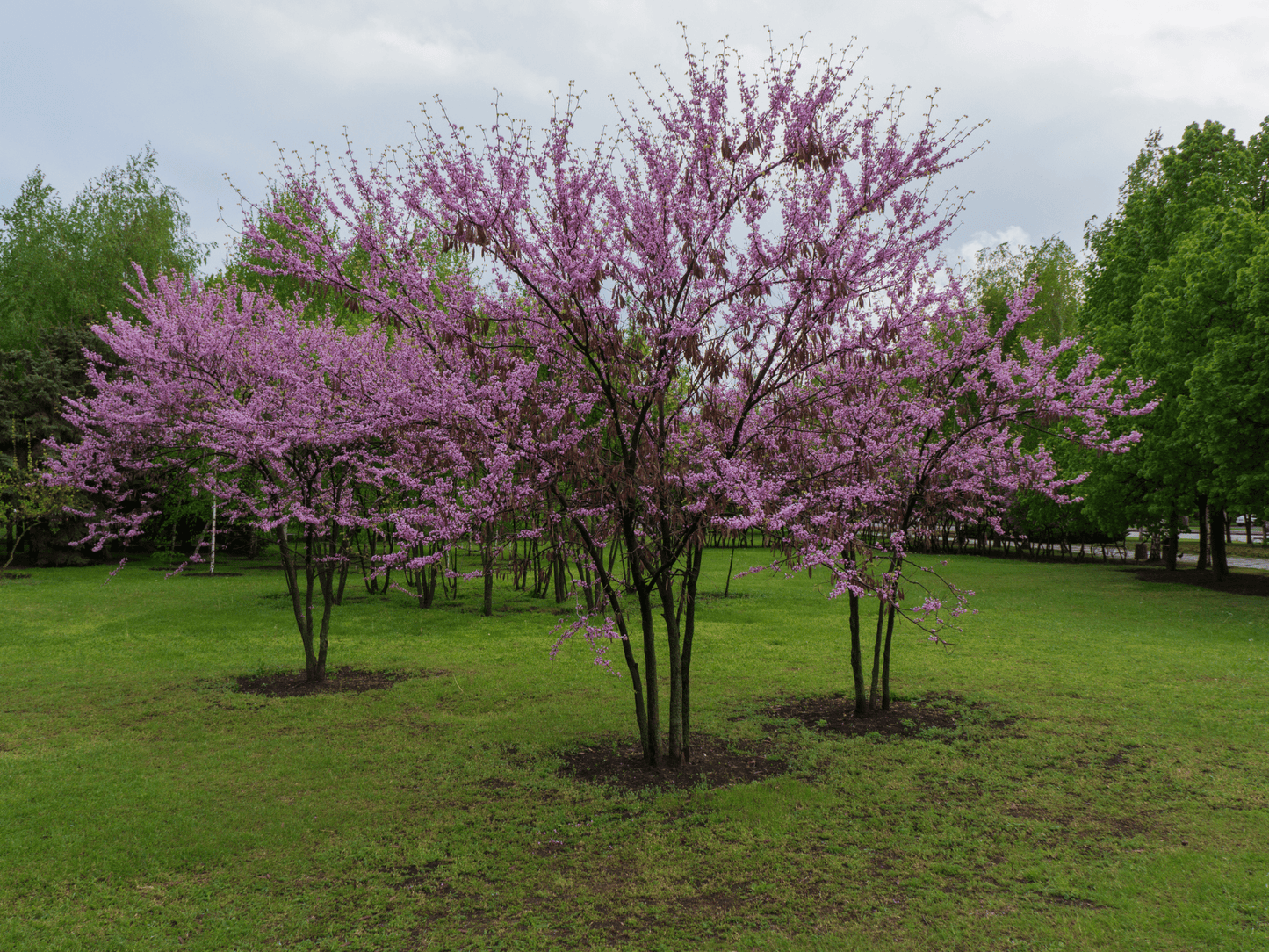


Western Redbud | California Redbud Tree Seeds | (Cercis occidentalis)
Western Redbud | California Redbud Tree Seeds | (Cercis occidentalis)
The most spectacular spring flowering shrub of the California foothills. Magenta before anything else blooms.
Cercis occidentalis, the Western Redbud or California Redbud, is the Pacific Coast counterpart of the beloved Eastern Redbud, a native of the dry foothills, canyons, and chaparral slopes of California, Arizona, and Utah that produces one of the most brilliant spring flowering displays of any western native plant, covering its bare stems in dense clusters of vivid magenta-pink flowers weeks before the leaves emerge in a show that stops traffic on California foothill roads every March and April. It is more drought-tolerant than Eastern Redbud, better adapted to the dry summers and thin soils of the California interior, and produces a rounder, more multi-stemmed shrub form that fills garden spaces differently than its taller eastern relative. The heart-shaped leaves that follow the flowers are blue-green and attractive through summer, turning yellow to red in fall before dropping. If you are looking to buy Western Redbud seeds or grow this California native from seed, this is the most spectacular native flowering shrub for dry western gardens.
- Dense clusters of vivid magenta-pink flowers covering bare stems in early spring before leaves emerge
- More drought-tolerant than Eastern Redbud, adapted to the dry summers and thin soils of California's interior hills
- Multi-stemmed shrub form reaching 10 to 18 feet, filling garden spaces differently than tree-form relatives
- Blue-green heart-shaped summer leaves turning yellow to red in fall
- Native to the California foothills, canyon edges, and chaparral slopes where few other flowering plants perform
Things you probably did not know about the Western Redbud
The flowers, seed pods, and young leaves are all edible and have been used by California Indigenous peoples for centuries. Western Redbud flowers have a mildly tart, slightly sweet flavor and were eaten raw as a spring food by the Miwok, Yokuts, Cahuilla, and numerous other California Indigenous nations. The young green seed pods were also eaten raw or cooked when very tender in spring. The mature seed pods were dried and the seeds processed as a food source. The plant provided both an early spring salad green and a later-season seed crop, making it one of the more fully utilized native California food plants.
The dark red seed pods persist on the stems through winter and provide one of the most ornamental winter displays of any California native. After the seeds ripen and fall in late summer, the flattened, wine-red seed pods remain attached to the branches through fall and into winter, creating a burgundy-red display that is visible from a distance and provides winter color when the plant is otherwise dormant. The combination of winter pods, spring flowers, summer foliage, and fall color makes Western Redbud a four-season ornamental that no other California native shrub matches for complete seasonal interest.
It is one of the primary basketry materials of California Indigenous cultures. The long, flexible young stems of Western Redbud were harvested in specific seasons and used for coiled and twined basketry by the Pomo, Miwok, Maidu, and other California nations. The inner bark provides a distinctive reddish-brown color in finished baskets when used in its natural state, and the outer bark produces a different tone. The harvesting technique involves cutting young stems to specific lengths at the appropriate stage of growth, a practice that was integrated into the annual management of redbud stands by traditional practitioners for generations.
The magenta flower color is significantly more intense than the pink-purple of Eastern Redbud. Western Redbud flowers in the most vivid magenta-pink of any Cercis species, a richer, more saturated color than the rosy-pink of Eastern Redbud or the purple-pink of Judas Tree. The intensity of the color against the gray California foothill landscape in early spring before any other plant has flowered creates a visual impact that is difficult to convey in photographs and must be experienced in person to be fully appreciated.
Growing Details
- Botanical Name: Cercis occidentalis
- Stratification: Required, scarification followed by 30 to 60 days cold stratification
- USDA Zones: 6 to 9
- Soil: Well-drained, poor to moderately fertile, tolerates rocky, alkaline, or clay soils
- Light: Full sun to partial shade
- Height: 10 to 18 feet
- Spread: 10 to 15 feet
- Growth Rate: Moderate, 1 to 1.5 feet per year
Plant it on a dry slope or in a rocky, well-drained spot in full sun and let it develop into the multi-stemmed form it naturally takes. In March when it covers itself in magenta before a single leaf has opened it will be the most vivid thing in the western landscape.
FAQ
FAQ
Do you pre-stratify the seeds?
Most of our seeds are not pre-stratified. They are stored under dry, cold conditions to preserve viability without initiating stratification, allowing you to time germination for your local growing season.
The exception is recalcitrant seeds. Because these seeds must remain moist to stay viable, they are kept in moist, cold storage and are therefore in a pre-stratified state. Depending on how long a particular batch has been stored, some may arrive with an emerging radicle and be ready to plant immediately. Radicle development is not guaranteed.
Please refer to the individual product page and included growing instructions for species-specific requirements.
Do any of your seeds need to stay moist? (Recalcitrant seeds)
Yes. Some species we offer, including Chestnut, Hazelnut, and Paw Paw, are recalcitrant and must remain moist to stay viable.
Please refrigerate these seeds immediately upon arrival unless they have already developed a radicle. Seeds with an emerging radicle should be planted promptly.
Do you ship internationally?
No. We currently ship within the United States only.
We previously shipped to Canada, but tariffs, duties, and import fees resulted in customers receiving significant and unpredictable additional charges upon delivery. Because we cannot reliably calculate or absorb these costs, we have suspended shipping to Canada.
At this time, we do not ship to Canada or other international destinations.
Shipping & What's Included
Shipping & What's Included
Shipping & Packaging
• Hand-packed in resealable kraft paper seed bags
• Stratification and planting instructions included on every seed pack
• Ships within 3–5 business days via USPS within the United States and U.S. territories
Return Policy
Return Policy
Due to the nature of our products, we do not accept returns on seeds.
If your order arrives damaged, contains incorrect items, or is missing items, please contact us within 7 days of delivery so we can resolve the issue.