

Buttonbush Seeds (Cephalanthus Occidentalis)
Buttonbush Seeds (Cephalanthus Occidentalis)
The sphere that stops everything with wings.
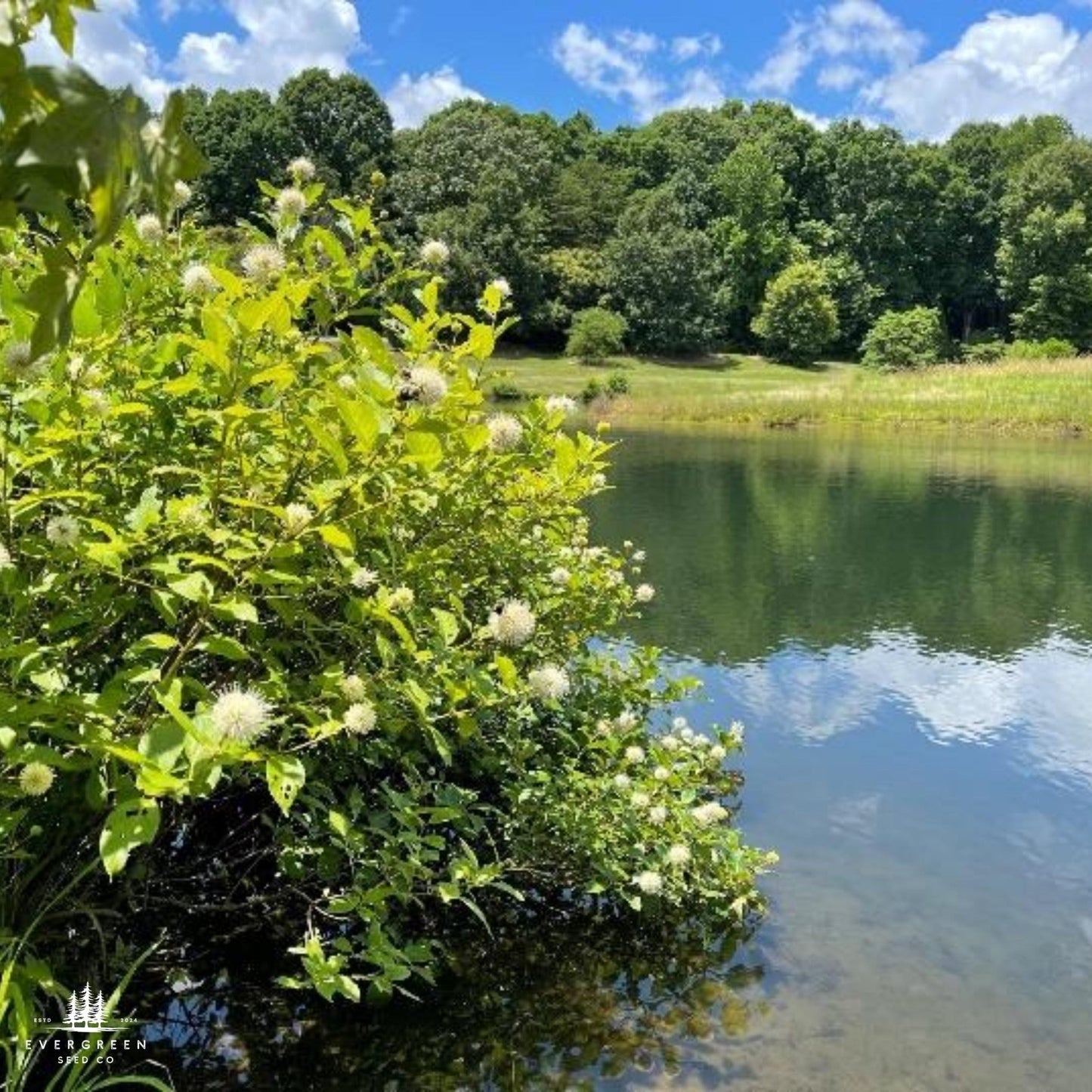
Cephalanthus occidentalis, Buttonbush, is one of the most important pollinator shrubs in North America and one of the most visually unique plants you can grow. Its perfectly spherical white blooms appear in midsummer, drawing in butterflies, native bees, and hummingbirds in remarkable numbers. Built for wet conditions, it thrives where other shrubs struggle, transforming pond edges and low areas into ecological hotspots.
- Distinctive globe-shaped white flowers in midsummer
- Thrives in standing water, pond margins, and wet soils
- Attracts a wide diversity of pollinators and beneficial insects
- Seeds support ducks and other waterfowl
- Stabilizes banks and naturalizes along waterways
Things You Probably Didn’t Know
It fills a critical seasonal gap.
Buttonbush blooms after most spring flowers fade, providing essential nectar during a period when pollinator resources are limited.
The plant defends itself.
All parts contain compounds that make it toxic if consumed by humans or livestock, helping it establish in areas where grazing pressure is high.
Waterfowl depend on it.
The seeds are a valuable food source for ducks and other wetland birds, making it a key species in habitat restoration projects.
It has a long history of use.
Indigenous communities used Buttonbush in traditional medicine for a range of applications, reflecting its chemical complexity.
Growing Details
- Botanical Name: Cephalanthus occidentalis
- Stratification: Recommended; 60–90 days cold stratification
- USDA Zones: 5–11
- Soil: Prefers wet to moist soils; tolerates standing water
- Light: Full sun to partial shade
- Height: 6–12 feet
- Spread: 6–12 feet
- Growth Rate: Moderate to fast
Plant it at the water's edge and let it turn the wet corner of your property into the most visited spot on the land.
FAQ
FAQ
Do you pre-stratify the seeds?
Most of our seeds are not pre-stratified. They are stored under dry, cold conditions to preserve viability without initiating stratification, allowing you to time germination for your local growing season.
The exception is recalcitrant seeds. Because these seeds must remain moist to stay viable, they are kept in moist, cold storage and are therefore in a pre-stratified state. Depending on how long a particular batch has been stored, some may arrive with an emerging radicle and be ready to plant immediately. Radicle development is not guaranteed.
Please refer to the individual product page and included growing instructions for species-specific requirements.
Do any of your seeds need to stay moist? (Recalcitrant seeds)
Yes. Some species we offer, including Chestnut, Hazelnut, and Paw Paw, are recalcitrant and must remain moist to stay viable.
Please refrigerate these seeds immediately upon arrival unless they have already developed a radicle. Seeds with an emerging radicle should be planted promptly.
Do you ship internationally?
No. We currently ship within the United States only.
We previously shipped to Canada, but tariffs, duties, and import fees resulted in customers receiving significant and unpredictable additional charges upon delivery. Because we cannot reliably calculate or absorb these costs, we have suspended shipping to Canada.
At this time, we do not ship to Canada or other international destinations.
Shipping & What's Included
Shipping & What's Included
Shipping & Packaging
• Hand-packed in resealable kraft paper seed bags
• Stratification and planting instructions included on every seed pack
• Ships within 3–5 business days via USPS within the United States and U.S. territories
Return Policy
Return Policy
Due to the nature of our products, we do not accept returns on seeds.
If your order arrives damaged, contains incorrect items, or is missing items, please contact us within 7 days of delivery so we can resolve the issue.