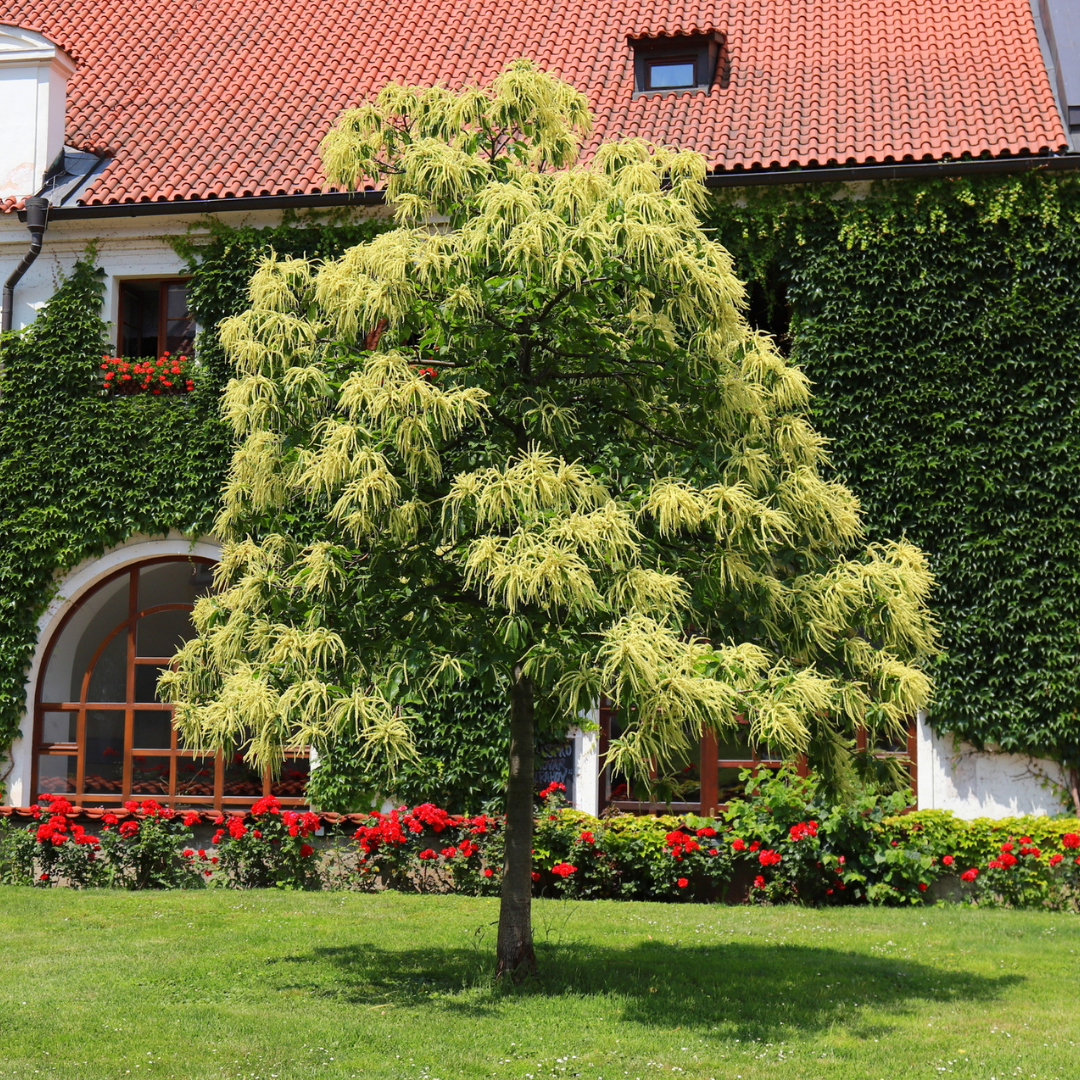


Bouche de Bétizac Chestnut Tree Seeds (Castanea crenata × sativa)
Bouche de Bétizac Chestnut Tree Seeds (Castanea crenata × sativa)
The most productive chestnut in the world. French-bred. Blight-resistant. Extraordinary.
Castanea ‘Bouche de Bétizac’ is the highest-yielding chestnut variety ever developed, a French hybrid between Japanese Chestnut and European Chestnut bred by the Institut National de la Recherche Agronomique in 1962 and released after decades of evaluation as the variety that sets the standard for commercial chestnut production worldwide. It produces enormous crops of large, sweet nuts earlier in the season than most other chestnuts and with a consistency of production that purely seedling-grown trees rarely achieve. The blight resistance from the Japanese Chestnut parent makes it far more reliably productive in North American conditions than pure European Chestnut varieties. If you are looking to buy Bouche de Bétizac Chestnut seeds or grow this exceptional variety from seed, this is the chestnut that commercial European orchardists choose when maximum production matters most.
- The highest-yielding chestnut variety in the world by commercial orchard production standards
- Bred by INRA France, combining Japanese Chestnut blight resistance with European Chestnut nut quality
- Produces large, sweet nuts earlier in the season than most other chestnut varieties
- Blight-resistant, far more reliable in North American conditions than pure European Chestnut
- Begins producing nuts within 3 to 5 years from seed under good growing conditions
Things you probably did not know about Bouche de Bétizac
It produces up to twice the yield per tree of standard European Chestnut varieties. Commercial chestnut orchardists in France, Italy, and Spain who transitioned to Bouche de Bétizac from traditional European Chestnut varieties documented yield increases of 50 to 100 percent per tree under equivalent management conditions. This yield advantage, combined with its early ripening and large nut size, drove its rapid adoption across European commercial chestnut production from the 1970s onward.
The name refers to a place, not the nut. Bouche de Bétizac is a place name from the Ardèche region of France, the area where INRA conducted much of its chestnut breeding work. The variety was named for the research location rather than for any characteristic of the nut or tree, following a long-standing French agricultural naming tradition tied to geography.
European Chestnut has been a subsistence food crop in the Mediterranean mountains for over 2,000 years. In the Cévennes, Corsica, Tuscany, and other mountainous regions of southern Europe where grain cultivation was difficult, the chestnut was called the bread tree and provided the primary caloric staple for entire communities for centuries. The culture of the chestnut in these regions is so deep that local dialects developed dozens of specific words for stages of nut ripeness, harvesting techniques, and preparation methods.
Growing from seed produces variation from the parent variety. Bouche de Bétizac is clonally propagated in commercial settings to preserve its specific characteristics. Seed-grown plants from Bouche de Bétizac will produce trees with varying expressions of the parent variety’s genetics, some potentially approaching its yield and quality and others showing more influence from the Japanese or European parent lines. Growing from seed is the traditional path to discovering new chestnut varieties.
Growing Details
- Botanical Name: Castanea crenata x sativa ‘Bouche de Bétizac’
- Stratification: Required, 60 to 90 days cold moist stratification, recalcitrant seed, keep moist
- USDA Zones: 5 to 9
- Soil: Well-drained, slightly acidic, avoid compacted or waterlogged conditions
- Light: Full sun
- Height: 40 to 60 feet
- Spread: 40 to 60 feet
- Growth Rate: Moderate to fast, 2 to 3 feet per year
Plant two or more chestnut varieties together for cross-pollination and maximum nut production. Bouche de Bétizac paired with any other blight-resistant variety creates the conditions for the heaviest possible annual nut crops.
FAQ
FAQ
Do you pre-stratify the seeds?
Most of our seeds are not pre-stratified. They are stored under dry, cold conditions to preserve viability without initiating stratification, allowing you to time germination for your local growing season.
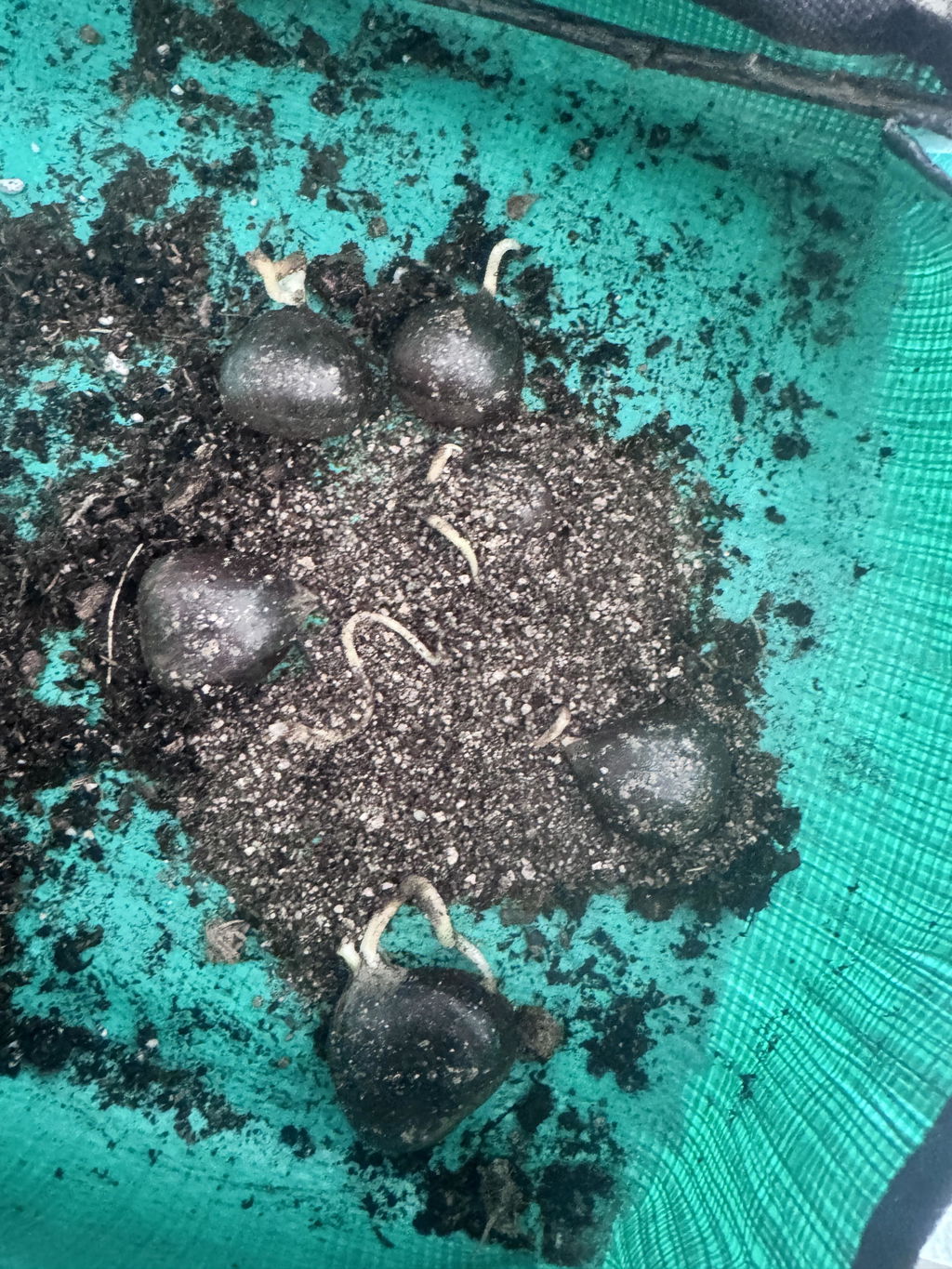
The exception is recalcitrant seeds. Because these seeds must remain moist to stay viable, they are kept in moist, cold storage and are therefore in a pre-stratified state. Depending on how long a particular batch has been stored, some may arrive with an emerging radicle and be ready to plant immediately. Radicle development is not guaranteed.
Please refer to the individual product page and included growing instructions for species-specific requirements.
Do any of your seeds need to stay moist? (Recalcitrant seeds)
Yes. Some species we offer, including Chestnut, Hazelnut, and Paw Paw, are recalcitrant and must remain moist to stay viable.
Please refrigerate these seeds immediately upon arrival unless they have already developed a radicle. Seeds with an emerging radicle should be planted promptly.
Do you ship internationally?
No. We currently ship within the United States only.
We previously shipped to Canada, but tariffs, duties, and import fees resulted in customers receiving significant and unpredictable additional charges upon delivery. Because we cannot reliably calculate or absorb these costs, we have suspended shipping to Canada.
At this time, we do not ship to Canada or other international destinations.
Shipping & What's Included
Shipping & What's Included
Shipping & Packaging
• Hand-packed in resealable kraft paper seed bags
• Stratification and planting instructions included on every seed pack
• Ships within 3–5 business days via USPS within the United States and U.S. territories
Return Policy
Return Policy
Due to the nature of our products, we do not accept returns on seeds.
If your order arrives damaged, contains incorrect items, or is missing items, please contact us within 7 days of delivery so we can resolve the issue.