

Blue Palo Verde Tree Seeds | (Parkinsonia florida)
Blue Palo Verde Tree Seeds | (Parkinsonia florida)
The tree that is blue-green year-round. The most important tree in the Sonoran Desert.
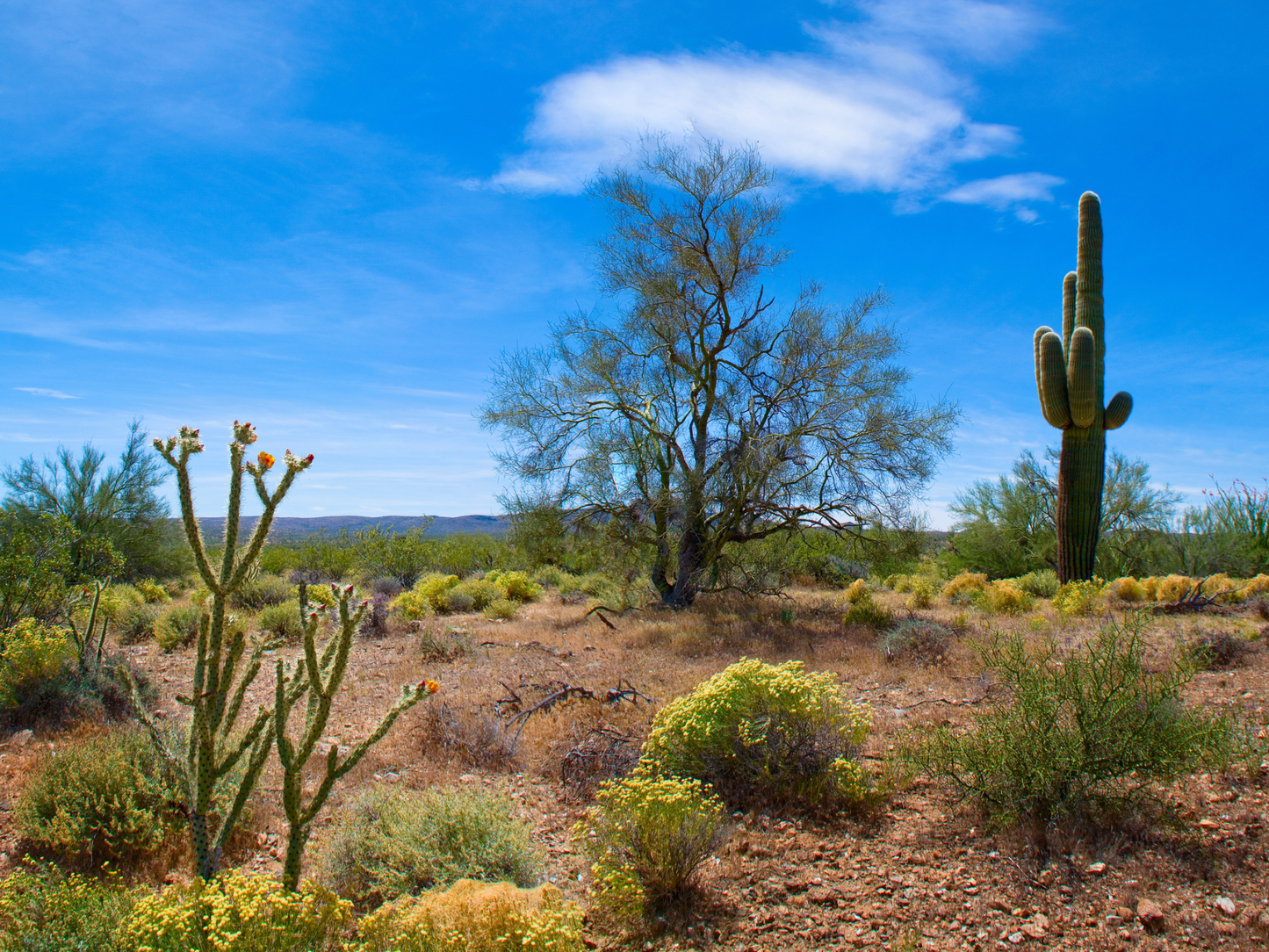
Parkinsonia florida, the Blue Palo Verde, is the most ecologically significant native tree of the Sonoran Desert, a small to medium tree whose blue-green bark carries out photosynthesis year-round even when the tree drops its tiny leaves during drought periods, giving it a distinctive blue-green appearance in every season that justifies its common name. In spring it produces one of the most spectacular flowering displays in the desert, covering its blue-green branches in masses of brilliant yellow flowers for two to three weeks in a show that is visible from miles away across the flat desert landscape and has been called the most beautiful spring event in the American Southwest. It is the keystone species of the desert ecosystem, providing nest sites for Harris's hawks and Saguaro cactus, food for dozens of insect species, shade for shade-dependent cacti, and a structural complexity to the desert landscape that no other single species provides. If you are looking to buy Blue Palo Verde seeds or grow this extraordinary desert native from seed, this is the tree that the Sonoran Desert is built around.
- Blue-green bark carrying out photosynthesis year-round, one of only a handful of trees with significant bark photosynthesis
- Brilliant yellow flower display in spring covering the entire canopy, one of the most spectacular desert flowering events
- The keystone species of the Sonoran Desert ecosystem, providing structural habitat for dozens of dependent species
- Extremely drought-tolerant, surviving on natural rainfall in conditions of extreme heat and aridity
- Fast-growing for a desert tree, establishing more quickly than most other native Sonoran species
Things you probably did not know about the Blue Palo Verde
Up to 40 percent of the tree's photosynthesis occurs through the bark rather than leaves during drought. The blue-green bark of Palo Verde contains chlorophyll and carries out significant photosynthesis throughout the year, including during drought periods when the tree drops its leaves entirely to reduce water loss. This bark photosynthesis, called chlorenchyma, allows the tree to maintain metabolic function and some growth even during extended drought when leaf-bearing plants have shut down completely. It is one of the most unusual physiological adaptations of any desert tree.
It is the state tree of Arizona. Blue Palo Verde was designated the Arizona state tree in 1954, recognized as the most characteristic and ecologically important native tree of the Sonoran Desert ecosystem that defines much of Arizona's natural identity. The choice reflects the tree's visibility, uniqueness, and irreplaceable role in the desert landscape rather than timber or economic value, making it one of the few state trees chosen purely for ecological and aesthetic significance.
The seeds were a primary food source for the Tohono O'odham people for thousands of years. The protein-rich seeds of Blue Palo Verde were harvested before full ripeness from the pods and roasted or ground into a meal by the Tohono O'odham and other Sonoran Desert peoples. The seeds contain approximately 30 percent protein and significant carbohydrate content, making them one of the most nutritionally complete wild foods available in the desert environment. The harvest timing, before the seeds fully harden, was critical to making them edible and processable.
Harris's hawks nest almost exclusively in Blue Palo Verde trees in the Sonoran Desert. The cooperative hunting hawk species distinctive to the Sonoran Desert, Harris's Hawk, selects Blue Palo Verde as its primary nest tree because the structure, height, and density of the canopy provides ideal nest support and the tree's canopy provides more shade than most other native desert trees. The dependence is so strong that Harris's Hawk nesting success in the core of the Sonoran Desert is directly correlated with Blue Palo Verde density in the landscape.
Growing Details
- Botanical Name: Parkinsonia florida
- Stratification: Required, scarification of the hard seed coat, then 30 to 60 days cold stratification
- USDA Zones: 8 to 11
- Soil: Well-drained, rocky, sandy, alkaline or neutral, excellent drainage essential
- Light: Full sun
- Height: 15 to 30 feet
- Spread: 15 to 25 feet
- Growth Rate: Fast for a desert tree, 2 to 3 feet per year with occasional deep watering when establishing
Plant it in full sun in the hottest, driest, most alkaline spot available. Once established, give it nothing but the rain that falls. It was designed for exactly those conditions.
FAQ
FAQ
Do you pre-stratify the seeds?
Most of our seeds are not pre-stratified. They are stored under dry, cold conditions to preserve viability without initiating stratification, allowing you to time germination for your local growing season.
The exception is recalcitrant seeds. Because these seeds must remain moist to stay viable, they are kept in moist, cold storage and are therefore in a pre-stratified state. Depending on how long a particular batch has been stored, some may arrive with an emerging radicle and be ready to plant immediately. Radicle development is not guaranteed.
Please refer to the individual product page and included growing instructions for species-specific requirements.
Do any of your seeds need to stay moist? (Recalcitrant seeds)
Yes. Some species we offer, including Chestnut, Hazelnut, and Paw Paw, are recalcitrant and must remain moist to stay viable.
Please refrigerate these seeds immediately upon arrival unless they have already developed a radicle. Seeds with an emerging radicle should be planted promptly.
Do you ship internationally?
No. We currently ship within the United States only.
We previously shipped to Canada, but tariffs, duties, and import fees resulted in customers receiving significant and unpredictable additional charges upon delivery. Because we cannot reliably calculate or absorb these costs, we have suspended shipping to Canada.
At this time, we do not ship to Canada or other international destinations.
Shipping & What's Included
Shipping & What's Included
Shipping & Packaging
• Hand-packed in resealable kraft paper seed bags
• Stratification and planting instructions included on every seed pack
• Ships within 3–5 business days via USPS within the United States and U.S. territories
Return Policy
Return Policy
Due to the nature of our products, we do not accept returns on seeds.
If your order arrives damaged, contains incorrect items, or is missing items, please contact us within 7 days of delivery so we can resolve the issue.