

Blue Elderberry Seeds (Sambucus cerulea)
Blue Elderberry Seeds (Sambucus cerulea)
The western cousin. Bigger berries, bluer fruit, and the same extraordinary wildlife value.
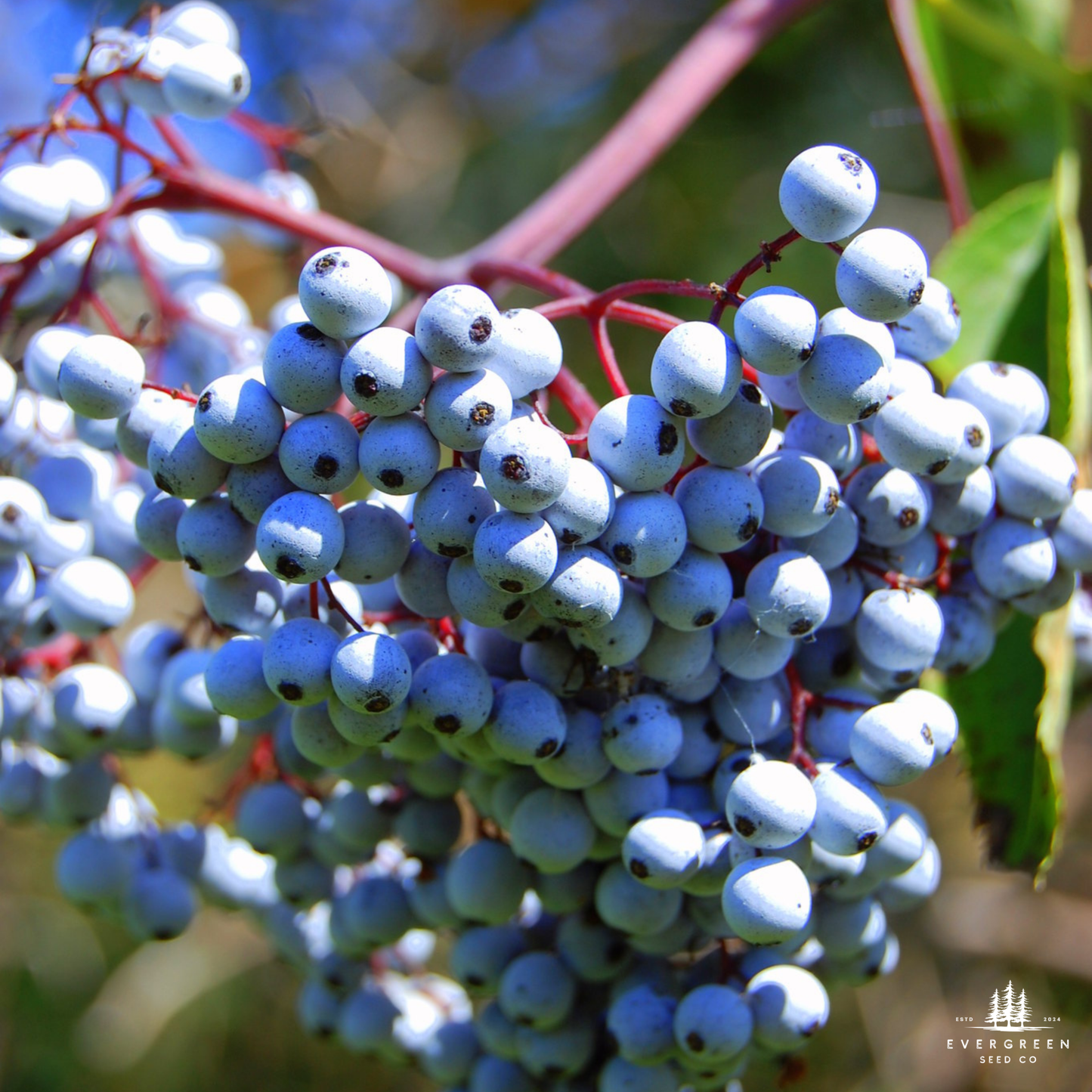
Sambucus nigra ssp. cerulea, the Blue Elderberry, is the western counterpart of the American Black Elderberry, a fast-growing native shrub of the Pacific Coast and Rocky Mountain region that produces heavy clusters of blue-black berries with a distinctive silvery waxy bloom that gives the fruit its blue appearance. Like its eastern relative, it is one of the most productive and wildlife-supportive native shrubs you can plant, attracting pollinators during its white flower clusters in early summer and feeding dozens of bird and mammal species when the berries ripen in late summer and fall. It is also edible for humans, used for syrup, wine, jelly, and juice in the same ways as the eastern species. If you are looking to buy Blue Elderberry seeds or grow western elderberry from seed, this is the native shrub that does more per square foot than almost anything else in a western garden.
- Heavy clusters of blue-black berries with silvery waxy bloom, distinctive and beautiful in late summer
- White flower clusters in early summer attract native bees, wasps, beetles, and butterflies
- Berries eaten by over 40 bird species and important mammals across the Pacific Coast and Rocky Mountain region
- Fast-growing native shrub beginning to fruit within 2 to 3 years of planting
- Used for elderberry syrup, wine, jelly, and juice in the same tradition as the eastern species
Things you probably did not know about the Blue Elderberry
It was one of the most important plants in the material culture of Pacific Coast Indigenous peoples. The Blue Elderberry was used for food, medicine, and tools by virtually every Indigenous nation across its range from British Columbia to Baja California. The hollow stems were made into flutes and clappers for ceremonial music. The fruit was dried for winter food. The bark and flowers were used medicinally. Few plants were as fully integrated into daily and ceremonial life across the Pacific Coast culture area.
The waxy bloom is edible and was used as a food coloring. The blue-white waxy coating on Blue Elderberry fruits, called pruinose bloom, is the same compound found on plums, grapes, and blueberries. It is perfectly edible and was used by Indigenous peoples to create a light blue-gray food coloring for ceremonial foods. The bloom intensifies in dry conditions and fades in wet ones, making fruit appearance highly variable between seasons.
It can reach 20 feet in a single year under ideal conditions. Blue Elderberry is among the fastest-establishing native shrubs in western North America. In moist, fertile soils with adequate water, young plants can produce extraordinary first-year growth. This speed is part of why it is used in restoration plantings along disturbed riparian corridors across the Pacific Coast states.
The flowers are used in cuisine as well as the berries. Elderflowers harvested before they fully open have a delicate muscat fragrance and are used to make elderflower cordial, fritters, tempura, and sparkling wine. The Blue Elderberry flower clusters are slightly larger than those of the eastern species and produce the same fragrant, culinary-quality blossoms that have made elderflower one of the most fashionable culinary ingredients in the past decade.
Growing Details
- Botanical Name: Sambucus nigra ssp. cerulea
- Stratification: Required, 60 to 90 days cold moist stratification
- USDA Zones: 4 to 9
- Soil: Adaptable, prefers moist, fertile soil but tolerates a range of conditions
- Light: Full sun to partial shade
- Height: 10 to 25 feet
- Spread: 8 to 15 feet, spreads by root suckers
- Growth Rate: Fast, 3 to 6 feet per year in ideal conditions
Plant it near water if you have it or in any moist, sunny spot and harvest the flowers in June and the berries in August. Very few plants on a property will be more productive or more visited.
FAQ
FAQ
Do you pre-stratify the seeds?
Most of our seeds are not pre-stratified. They are stored under dry, cold conditions to preserve viability without initiating stratification, allowing you to time germination for your local growing season.
The exception is recalcitrant seeds. Because these seeds must remain moist to stay viable, they are kept in moist, cold storage and are therefore in a pre-stratified state. Depending on how long a particular batch has been stored, some may arrive with an emerging radicle and be ready to plant immediately. Radicle development is not guaranteed.
Please refer to the individual product page and included growing instructions for species-specific requirements.
Do any of your seeds need to stay moist? (Recalcitrant seeds)
Yes. Some species we offer, including Chestnut, Hazelnut, and Paw Paw, are recalcitrant and must remain moist to stay viable.
Please refrigerate these seeds immediately upon arrival unless they have already developed a radicle. Seeds with an emerging radicle should be planted promptly.
Do you ship internationally?
No. We currently ship within the United States only.
We previously shipped to Canada, but tariffs, duties, and import fees resulted in customers receiving significant and unpredictable additional charges upon delivery. Because we cannot reliably calculate or absorb these costs, we have suspended shipping to Canada.
At this time, we do not ship to Canada or other international destinations.
Shipping & What's Included
Shipping & What's Included
Shipping & Packaging
• Hand-packed in resealable kraft paper seed bags
• Stratification and planting instructions included on every seed pack
• Ships within 3–5 business days via USPS within the United States and U.S. territories
Return Policy
Return Policy
Due to the nature of our products, we do not accept returns on seeds.
If your order arrives damaged, contains incorrect items, or is missing items, please contact us within 7 days of delivery so we can resolve the issue.