

Blackhaw Tree Seeds | Smooth Blackhaw | (Viburnum prunifolium)
Blackhaw Tree Seeds | Smooth Blackhaw | (Viburnum prunifolium)
Sweet native fruit. Winter structure. The viburnum that does everything well.
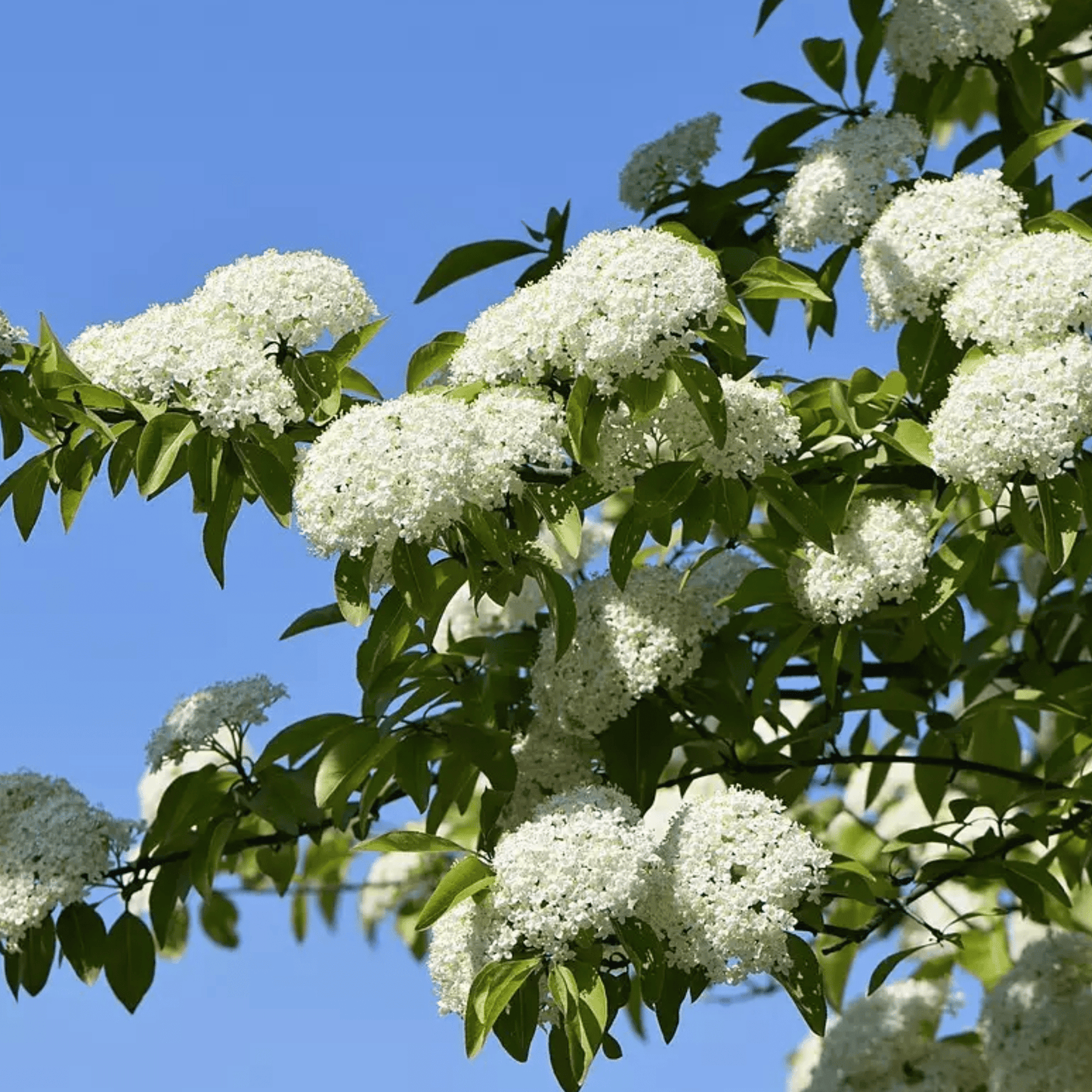
Viburnum prunifolium, the Blackhaw, is one of the most versatile and least celebrated native shrubs in eastern North America, a small tree or large shrub that produces flat-topped white flower clusters in spring, clusters of blue-black berries with a sweet, date-like flavor in fall that are edible and excellent for jelly and preserves, and brilliant red to purple fall foliage that holds for weeks before the glossy black berries persist on bare stems through early winter. It grows in sun or shade, in dry or moist soils, on limestone or acidic ground, in the forest interior or the open field margin, with an adaptability that few other native shrubs match. It is also one of the most important wildlife shrubs in the eastern forest, with berries eaten by over 25 bird species and the dense branching providing critical nesting structure for songbirds. If you are looking to buy Blackhaw seeds or grow this native viburnum from seed, this is the shrub that earns its space in every season and every situation.
- Sweet, date-like edible berries in fall eaten by over 25 bird species and excellent for human preserves
- Flat-topped white flower clusters in spring providing early nectar for native bees and pollinators
- Brilliant red to purple fall foliage, among the most reliable and vivid of any native shrub
- Adaptable to sun and shade, dry and moist soils, acid and alkaline ground
- Dense, thorny branching providing critical nesting and escape cover for songbirds
Things you probably did not know about the Blackhaw
The bark and berries have been used medicinally for centuries, particularly for uterine complaints. Viburnum prunifolium bark preparations were listed in the United States Pharmacopeia from 1882 to 1926 as a treatment for uterine cramping and threatened miscarriage, having been adopted into official medicine from Cherokee and other southeastern Indigenous traditions. The specific antispasmodic compounds, particularly scopoletin and aesculetin, that were responsible for these traditional uses have been identified and studied by pharmacologists. The bark extract is still used in herbal medicine for the same applications today.
The berries become sweeter after frost. Blackhaw berries are mildly astringent and fully tart when they first ripen in late summer. After several frosts in fall, the tannins break down and the sugar concentration increases, transforming the berries into the sweet, date-like fruit that Indigenous peoples and early settlers valued. Picking before frost produces adequate jelly fruit. Picking after several hard frosts produces the finest fresh-eating berries the shrub can provide.
It is sometimes confused with Nannyberry but can be distinguished by its shorter leaf petioles. Blackhaw and Nannyberry are closely related and superficially similar, both producing flat-topped flower clusters, blue-black berries, and red fall color. The most reliable field distinction is the leaf petiole, which is short and unwing in Blackhaw and longer and slightly wing-margined in Nannyberry. The two shrubs also occupy slightly different habitats, with Blackhaw tolerating drier and more exposed conditions than Nannyberry.
The wood is extremely hard for a shrub. Blackhaw wood is among the densest produced by any native understory shrub in eastern North America. Its hardness and fine grain made it useful for small tool handles and wooden pegs in traditional craft, applications where the wood's density and resistance to splitting under impact were valuable in small cross-sections that larger hardwoods could not provide economically.
Growing Details
- Botanical Name: Viburnum prunifolium
- Stratification: Required, warm stratification of 60 to 90 days followed by 90 days cold stratification
- USDA Zones: 3 to 9
- Soil: Extremely adaptable, tolerates dry and wet soils, acid and alkaline conditions
- Light: Full sun to full shade
- Height: 12 to 15 feet
- Spread: 6 to 12 feet
- Growth Rate: Moderate, 1 to 2 feet per year
Plant it in the difficult spot where the combination of shade, dry soil, and lack of attention would challenge most shrubs. Blackhaw will not complain and will give you flowers, berries, fall color, and wildlife value in return for essentially nothing.
FAQ
FAQ
Do you pre-stratify the seeds?
Most of our seeds are not pre-stratified. They are stored under dry, cold conditions to preserve viability without initiating stratification, allowing you to time germination for your local growing season.
The exception is recalcitrant seeds. Because these seeds must remain moist to stay viable, they are kept in moist, cold storage and are therefore in a pre-stratified state. Depending on how long a particular batch has been stored, some may arrive with an emerging radicle and be ready to plant immediately. Radicle development is not guaranteed.
Please refer to the individual product page and included growing instructions for species-specific requirements.
Do any of your seeds need to stay moist? (Recalcitrant seeds)
Yes. Some species we offer, including Chestnut, Hazelnut, and Paw Paw, are recalcitrant and must remain moist to stay viable.
Please refrigerate these seeds immediately upon arrival unless they have already developed a radicle. Seeds with an emerging radicle should be planted promptly.
Do you ship internationally?
No. We currently ship within the United States only.
We previously shipped to Canada, but tariffs, duties, and import fees resulted in customers receiving significant and unpredictable additional charges upon delivery. Because we cannot reliably calculate or absorb these costs, we have suspended shipping to Canada.
At this time, we do not ship to Canada or other international destinations.
Shipping & What's Included
Shipping & What's Included
Shipping & Packaging
• Hand-packed in resealable kraft paper seed bags
• Stratification and planting instructions included on every seed pack
• Ships within 3–5 business days via USPS within the United States and U.S. territories
Return Policy
Return Policy
Due to the nature of our products, we do not accept returns on seeds.
If your order arrives damaged, contains incorrect items, or is missing items, please contact us within 7 days of delivery so we can resolve the issue.