

Black Tupelo Tree Seeds (Nyssa sylvatica)
Black Tupelo Tree Seeds (Nyssa sylvatica)
The first tree to turn in fall. The most reliable red in the eastern forest.
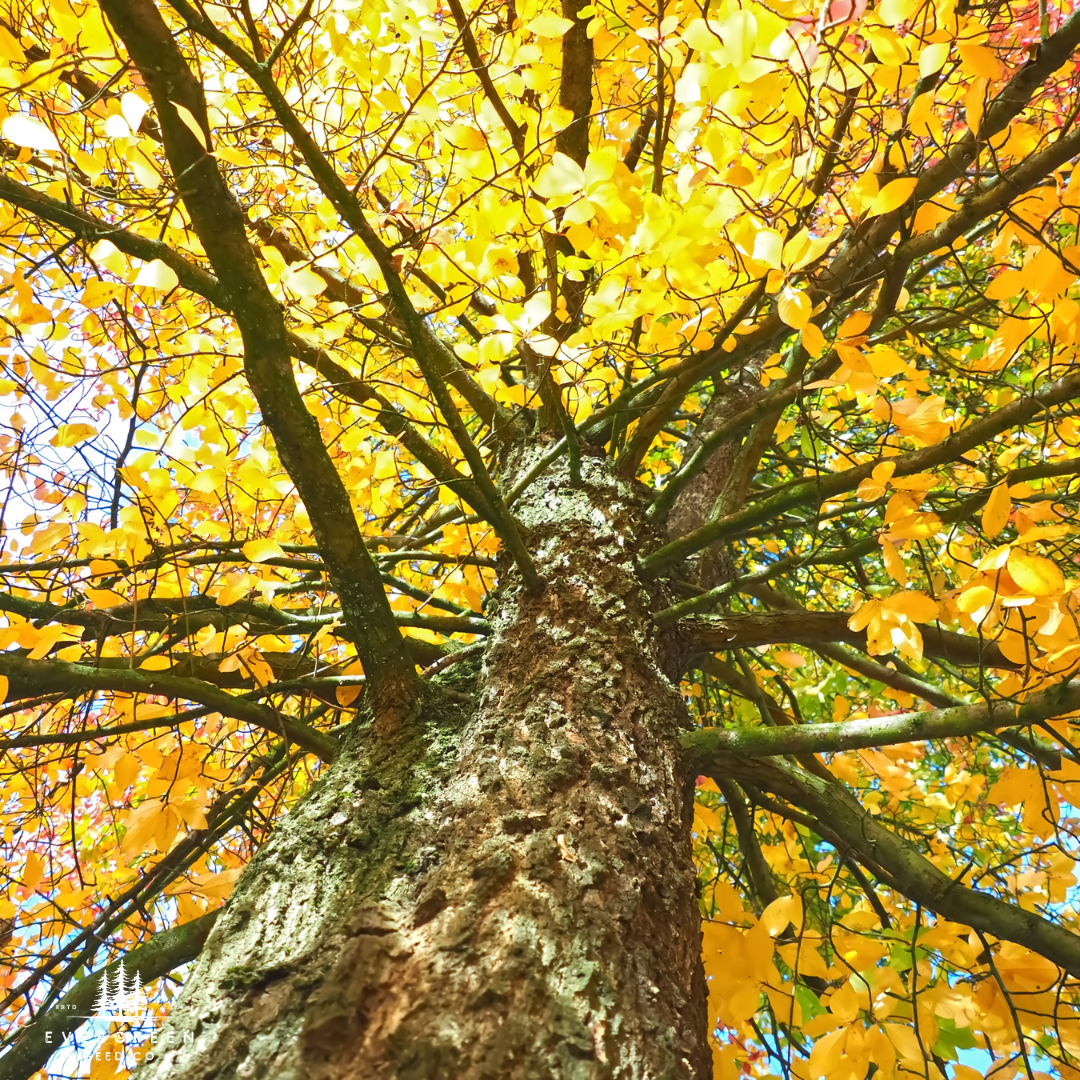
Nyssa sylvatica, the Black Tupelo or Black Gum, is the tree that announces autumn before any other in the eastern United States. While Sugar Maples are still green and oaks have not begun to consider changing, Black Tupelo turns a deep, saturated scarlet that is visible from a considerable distance, setting entire hillsides and roadsides ablaze as early as late August in some years. The color is not the variable orange-red-yellow mixture of maple fall but a pure, concentrated scarlet that holds for weeks before the leaves drop. Combined with glossy dark green summer foliage, attractive blue-black fruit clusters consumed by over 30 bird species, and distinctive horizontal branching that creates a striking winter silhouette, Black Tupelo delivers genuine ornamental value across all four seasons. If you are looking to buy Black Tupelo seeds or grow black gum from seed, this is the tree that starts fall before everything else knows the season has changed.
- The first major native tree to turn color in fall, often showing red as early as late August
- Deep, saturated scarlet fall color that holds for weeks, among the purest reds of any native tree
- Glossy, dark green summer foliage providing clean contrast before the fall transformation
- Blue-black fruit clusters eaten by over 30 bird species in late summer and fall
- Horizontal branching creating a distinctive, architectural winter silhouette
Things you probably did not know about the Black Tupelo
The wood is so interlocked it cannot be split with an axe. Black Tupelo wood has a spiral, interlocking grain structure that resists splitting in all directions simultaneously. This property that frustrated woodchoppers for generations proved invaluable for specific applications. The most important was chopping blocks and butcher blocks, where the interlocking grain prevents the wood from splitting under repeated axe blows. Black Tupelo was the preferred chopping block wood across the rural South for this reason, and old Black Tupelo chopping blocks in working condition are still found in Appalachian farm museums.
The fruit has been measured as the highest-fat native berry consumed by fall migrating birds in the eastern United States. Multiple studies of migratory bird nutrition along the Atlantic and Mississippi flyways have measured Black Tupelo fruit as one of the highest-calorie and highest-fat native berries available during fall migration. This nutritional density makes it critically important to long-distance migrants including wood thrushes, veeries, Swainson's thrushes, and gray-cheeked thrushes that are completing their fueling for flights to Central and South America.
It is dioecious, with male and female trees, but the sexes look identical until fruiting age. Black Tupelo is technically dioecious with male and female flowers on separate trees, though some individuals produce both male and some perfect flowers. Seed-grown trees cannot be sexed until they reach flowering maturity, which typically occurs at 5 to 10 years from seed. Female trees produce the fruit, which requires at least one male or hermaphroditic tree nearby for pollination.
The brilliant fall color is the result of exceptional anthocyanin production. Black Tupelo is among the earliest and most prolific producers of anthocyanin pigments in fall, the red and purple compounds that develop as chlorophyll breaks down. The intensity of the color is partly genetic and partly environmental, with cold nights and warm sunny days triggering the strongest displays. In good fall weather years, the scarlet can be so saturated it appears almost artificial.
Growing Details
- Botanical Name: Nyssa sylvatica
- Stratification: Required, 90 days cold moist stratification
- USDA Zones: 3 to 9
- Soil: Adaptable, prefers moist, slightly acidic, well-drained to moderately wet soils
- Light: Full sun to partial shade
- Height: 30 to 60 feet
- Spread: 20 to 35 feet
- Growth Rate: Slow to moderate, 1 to 1.5 feet per year
Plant it where you will see it from a window in September. When everything else is still green and the Black Tupelo has already gone scarlet, you will understand why it earns its place in any landscape.
FAQ
FAQ
Do you pre-stratify the seeds?
Most of our seeds are not pre-stratified. They are stored under dry, cold conditions to preserve viability without initiating stratification, allowing you to time germination for your local growing season.
The exception is recalcitrant seeds. Because these seeds must remain moist to stay viable, they are kept in moist, cold storage and are therefore in a pre-stratified state. Depending on how long a particular batch has been stored, some may arrive with an emerging radicle and be ready to plant immediately. Radicle development is not guaranteed.
Please refer to the individual product page and included growing instructions for species-specific requirements.
Do any of your seeds need to stay moist? (Recalcitrant seeds)
Yes. Some species we offer, including Chestnut, Hazelnut, and Paw Paw, are recalcitrant and must remain moist to stay viable.
Please refrigerate these seeds immediately upon arrival unless they have already developed a radicle. Seeds with an emerging radicle should be planted promptly.
Do you ship internationally?
No. We currently ship within the United States only.
We previously shipped to Canada, but tariffs, duties, and import fees resulted in customers receiving significant and unpredictable additional charges upon delivery. Because we cannot reliably calculate or absorb these costs, we have suspended shipping to Canada.
At this time, we do not ship to Canada or other international destinations.
Shipping & What's Included
Shipping & What's Included
Shipping & Packaging
• Hand-packed in resealable kraft paper seed bags
• Stratification and planting instructions included on every seed pack
• Ships within 3–5 business days via USPS within the United States and U.S. territories
Return Policy
Return Policy
Due to the nature of our products, we do not accept returns on seeds.
If your order arrives damaged, contains incorrect items, or is missing items, please contact us within 7 days of delivery so we can resolve the issue.