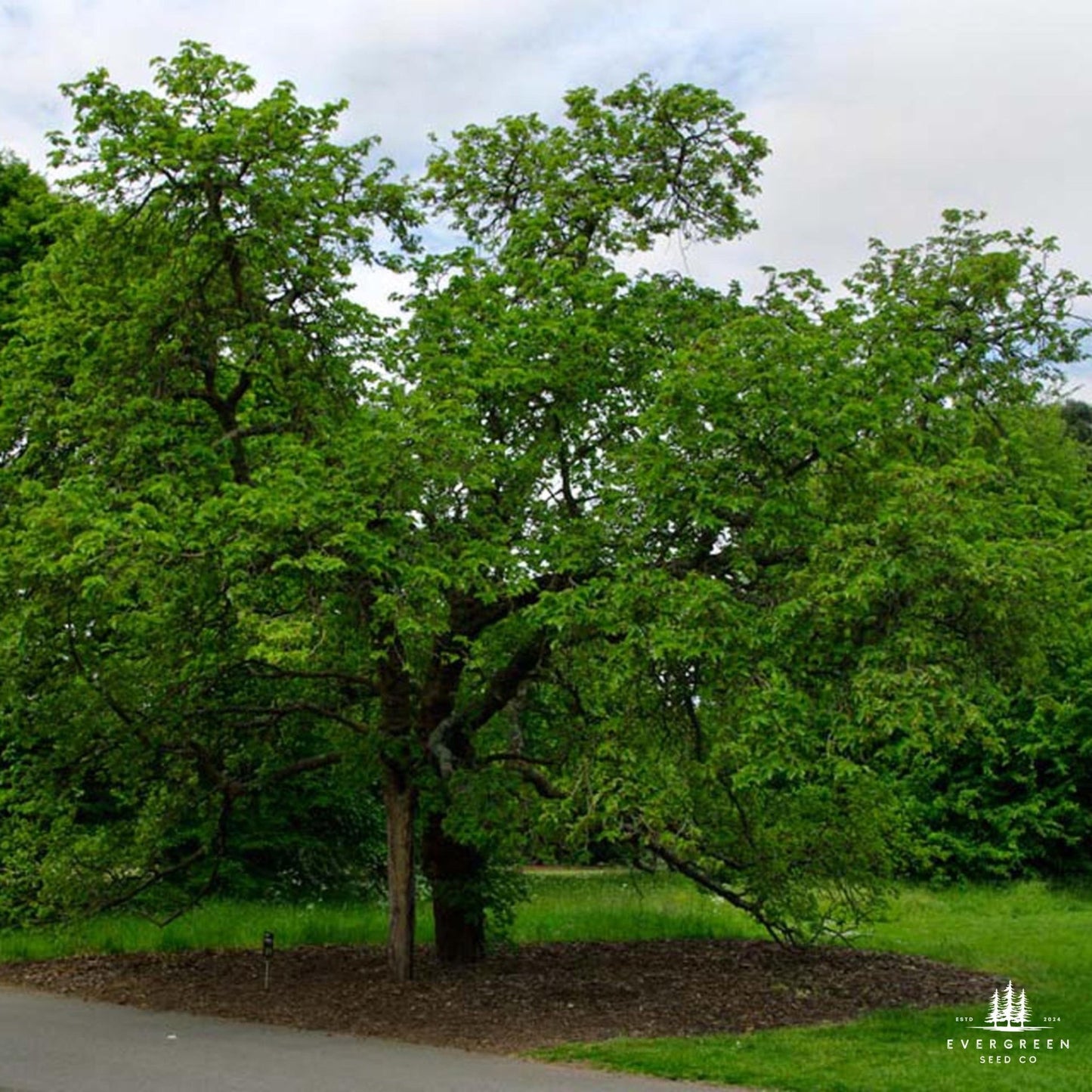


Black Mulberry Tree Seeds | Black Persian Mulberry | (Morus nigra)
Black Mulberry Tree Seeds | Black Persian Mulberry | (Morus nigra)
The sweetest fruit you have never tasted. The tree that built the silk road.
Morus nigra, the Black Mulberry, produces the most intensely flavored of all mulberry fruits, deeply sweet and tart, staining everything they touch a rich purple-red that has been compared to wine and wild blackberries combined. It is the oldest cultivated mulberry species, grown in Central Asia and the Middle East for over 4,000 years, and the fruit that ancient silk route traders and medieval European nobility prized above all other mulberries. It is also one of the longest-lived small fruit trees available, with documented specimens in England and Italy exceeding 500 years old and still fruiting. If you are looking to buy Black Mulberry seeds or grow this ancient fruit tree from seed, you are planting something with a pedigree stretching back to before the Roman Empire.
- Produces the most intensely flavored mulberry fruit of any species, deeply sweet with a rich wine-like tartness
- One of the longest-lived small fruit trees available, with documented specimens over 500 years old
- Self-fertile, producing fruit without a second tree nearby
- Extremely adaptable, tolerating drought, heat, and poor soils once established
- Fruit ripens over a long season, providing sustained food for birds, wildlife, and humans
Things you probably did not know about the Black Mulberry
It was the fruit of choice for Roman emperors.
Black Mulberries were cultivated across the Roman Empire and considered one of the finest fruits available. The Emperor Justinian reportedly had Black Mulberry trees planted throughout Constantinople. The fruit appears repeatedly in classical texts as a delicacy and the juice was used medicinally for throat complaints.
Shakespeare mentioned it in three plays.
The mulberry appears in A Midsummer Night's Dream, Titus Andronicus, and Coriolanus, reflecting how familiar the tree was in Elizabethan England. A mulberry tree planted at New Place, Shakespeare's home in Stratford-upon-Avon in 1609, became so famous after his death that a later owner cut it down in 1758 to stop the tourist crowds. The wood was sold as souvenirs and relics for decades afterward.
It stains so intensely the dye was used in textiles and inks for centuries.
The deep purple-red juice of Black Mulberries was used as a fabric dye and writing ink across the ancient world. The staining is so persistent that fresh fruit should be harvested over a tarpaulin and eaten with abandon rather than caution.
The fruit cannot be commercially shipped.
Black Mulberries are too soft and perishable to survive the handling required for commercial distribution. They begin to ferment within hours of picking. The only way most people will ever taste a truly ripe Black Mulberry is to grow one. This is a fruit that belongs exclusively to people who have access to the tree.
Growing Details
- Botanical Name: Morus nigra
- Stratification: Recommended, 30 to 60 days cold stratification
- USDA Zones: 5 to 9
- Soil: Adaptable, prefers well-drained, moderately fertile soil, tolerates drought once established
- Light: Full sun
- Height: 20 to 40 feet
- Spread: 30 to 40 feet
- Growth Rate: Moderate, 1 to 2 feet per year
Plant it where you can reach the fruit from the ground and keep a cloth nearby. This tree makes a mess and it is completely worth it.
FAQ
FAQ
Do you pre-stratify the seeds?
Most of our seeds are not pre-stratified. They are stored under dry, cold conditions to preserve viability without initiating stratification, allowing you to time germination for your local growing season.
The exception is recalcitrant seeds. Because these seeds must remain moist to stay viable, they are kept in moist, cold storage and are therefore in a pre-stratified state. Depending on how long a particular batch has been stored, some may arrive with an emerging radicle and be ready to plant immediately. Radicle development is not guaranteed.
Please refer to the individual product page and included growing instructions for species-specific requirements.
Do any of your seeds need to stay moist? (Recalcitrant seeds)
Yes. Some species we offer, including Chestnut, Hazelnut, and Paw Paw, are recalcitrant and must remain moist to stay viable.
Please refrigerate these seeds immediately upon arrival unless they have already developed a radicle. Seeds with an emerging radicle should be planted promptly.
Do you ship internationally?
No. We currently ship within the United States only.
We previously shipped to Canada, but tariffs, duties, and import fees resulted in customers receiving significant and unpredictable additional charges upon delivery. Because we cannot reliably calculate or absorb these costs, we have suspended shipping to Canada.
At this time, we do not ship to Canada or other international destinations.
Shipping & What's Included
Shipping & What's Included
Shipping & Packaging
• Hand-packed in resealable kraft paper seed bags
• Stratification and planting instructions included on every seed pack
• Ships within 3–5 business days via USPS within the United States and U.S. territories
Return Policy
Return Policy
Due to the nature of our products, we do not accept returns on seeds.
If your order arrives damaged, contains incorrect items, or is missing items, please contact us within 7 days of delivery so we can resolve the issue.