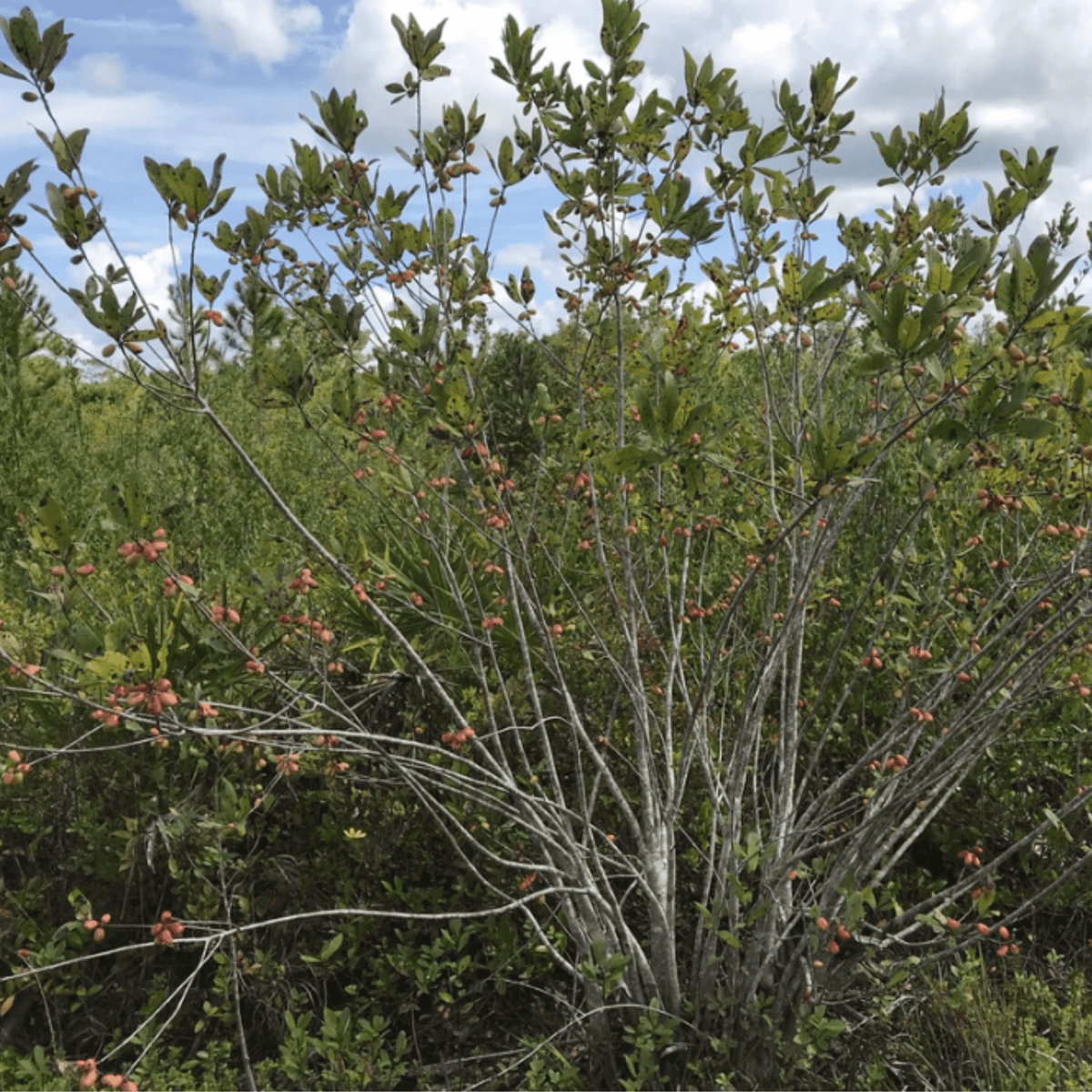


Bee Tupelo Tree Seeds | Ogeechee Lime | Sour Tupelo | (Nyssa ogeche)
Bee Tupelo Tree Seeds | Ogeechee Lime | Sour Tupelo | (Nyssa ogeche)
The source of the most prized honey in the world. The Ogeechee River's gift to beekeepers.
Nyssa ogeche, the Bee Tupelo or Ogeechee Lime, is the tree responsible for Tupelo honey, one of the most expensive and most sought-after specialty honeys in the world, produced in significant quantities only in a narrow corridor of river swamps along the Apalachicola and Ogeechee rivers in the Florida panhandle and coastal Georgia where the tree grows naturally. Its flowers produce nectar with a unique sugar composition, lower in glucose and higher in fructose than most flower nectars, that creates honey resistant to crystallization and with a distinctive light, floral, almost effervescent flavor that honey connoisseurs consistently rate as the finest American honey available. Growing Bee Tupelo from seed plants the tree that beekeepers camp beside in swamps to capture two weeks of the most valuable honey season in the year. If you are looking to buy Bee Tupelo seeds or grow Ogeechee Tupelo from seed, this is the tree with the most commercially significant flower nectar of any native species in the South.
- Produces the nectar for Tupelo honey, the most prized and expensive specialty honey in the United States
- Unique nectar sugar composition creating honey that resists crystallization virtually indefinitely
- Native to the river swamps of the Florida panhandle and coastal Georgia, one of the most geographically restricted native trees in the South
- White flowers in spring attractive to honeybees and native bees over a concentrated 2 to 3 week bloom period
- Produces small, olive-like fruit eaten by wood ducks, bears, and numerous wildlife species
Things you probably did not know about the Bee Tupelo
Pure Tupelo honey commands prices of $20 to $30 per pound at specialty retailers. Genuine Tupelo honey, produced by beekeepers who move hives to the Apalachicola River swamps specifically for the bloom, is among the most expensive honeys in the world when sold pure and certified. The short bloom window, the inaccessible swamp habitat, and the limited geographic range of the tree combine to make pure Tupelo honey a genuine rarity. Much of what is sold as Tupelo honey is blended with other honeys to increase volume.
The honey was made famous by the film Ulee's Gold. The 1997 film Ulee's Gold, starring Peter Fonda, follows a Florida panhandle beekeeper managing Tupelo honey production. The film brought national attention to the extraordinary labor and specific natural conditions required to produce genuine Tupelo honey and created significant commercial demand for authentic Florida Tupelo honey that persists today.
The Ogeechee name refers to the Ogeechee River in Georgia where the tree was first scientifically described. The species was described botanically from specimens collected along the Ogeechee River in coastal Georgia in the late 18th century. The Ogeechee River drains into the Altamaha River estuary in the same coastal Georgia region where the Franklin Tree was discovered by the Bartrams, making that corner of Georgia one of the most botanically significant landscapes in American botanical history.
The fruit is called Ogeechee lime and was used as a citrus substitute in colonial Georgia. The small, tart fruits of Bee Tupelo were used in coastal Georgia in the 18th and 19th centuries as a substitute for limes and lemons, which were difficult to obtain in the colonial interior. The fruits were pickled, used in beverages, and made into a tart preserve that served as the only readily available citrus-flavored ingredient in the coastal Georgia swamp country for generations.
Growing Details
- Botanical Name: Nyssa ogeche
- Stratification: Required, 90 days cold moist stratification
- USDA Zones: 7 to 9
- Soil: Moist to wet, tolerates standing water and seasonally flooded sites, does not tolerate dry conditions once established
- Light: Full sun to partial shade
- Height: 30 to 60 feet
- Spread: 20 to 35 feet
- Growth Rate: Moderate, 1 to 1.5 feet per year
Plant it near water in zones 7 to 9 and if you keep bees, move a hive nearby in April. What comes out of those hives for two weeks in May is unlike any other honey you will produce all year.
FAQ
FAQ
Do you pre-stratify the seeds?
Most of our seeds are not pre-stratified. They are stored under dry, cold conditions to preserve viability without initiating stratification, allowing you to time germination for your local growing season.
The exception is recalcitrant seeds. Because these seeds must remain moist to stay viable, they are kept in moist, cold storage and are therefore in a pre-stratified state. Depending on how long a particular batch has been stored, some may arrive with an emerging radicle and be ready to plant immediately. Radicle development is not guaranteed.
Please refer to the individual product page and included growing instructions for species-specific requirements.
Do any of your seeds need to stay moist? (Recalcitrant seeds)
Yes. Some species we offer, including Chestnut, Hazelnut, and Paw Paw, are recalcitrant and must remain moist to stay viable.
Please refrigerate these seeds immediately upon arrival unless they have already developed a radicle. Seeds with an emerging radicle should be planted promptly.
Do you ship internationally?
No. We currently ship within the United States only.
We previously shipped to Canada, but tariffs, duties, and import fees resulted in customers receiving significant and unpredictable additional charges upon delivery. Because we cannot reliably calculate or absorb these costs, we have suspended shipping to Canada.
At this time, we do not ship to Canada or other international destinations.
Shipping & What's Included
Shipping & What's Included
Shipping & Packaging
• Hand-packed in resealable kraft paper seed bags
• Stratification and planting instructions included on every seed pack
• Ships within 3–5 business days via USPS within the United States and U.S. territories
Return Policy
Return Policy
Due to the nature of our products, we do not accept returns on seeds.
If your order arrives damaged, contains incorrect items, or is missing items, please contact us within 7 days of delivery so we can resolve the issue.