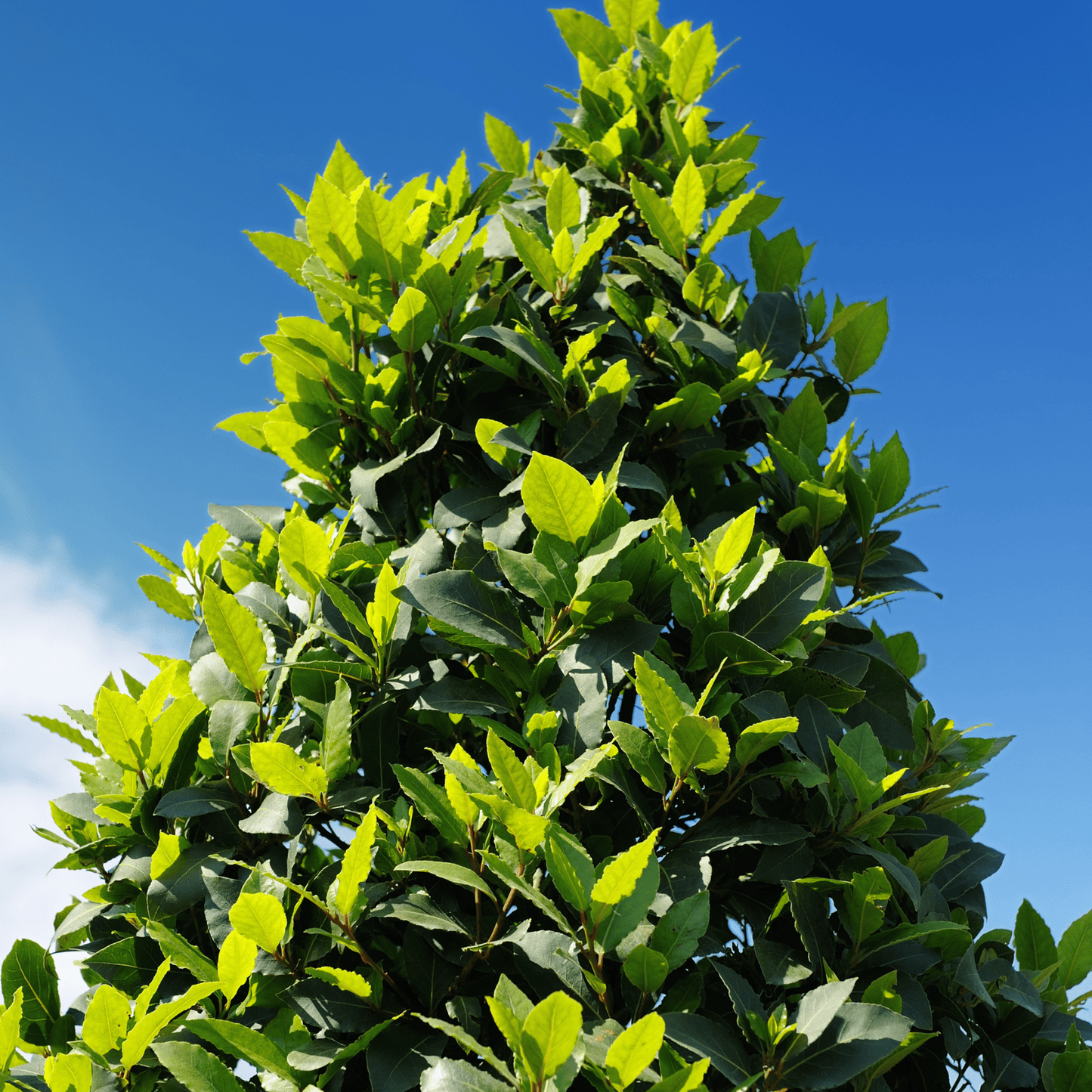


Bay Laurel Tree Seeds | Sweet Bay | (Laurus nobilis)
Bay Laurel Tree Seeds | Sweet Bay | (Laurus nobilis)
The original laurel. The crown of emperors. The herb that built a cuisine.
Laurus nobilis, the Bay Laurel or Sweet Bay, is the tree of ancient Olympic champions and Roman emperors, the source of the laurel wreaths that symbolized victory, honor, and achievement across the classical world, and one of the most important culinary herbs in Mediterranean cooking, its aromatic, evergreen leaves used fresh and dried in stocks, stews, sauces, and braises across every cuisine that has contact with the Mediterranean tradition. It is a handsome, aromatic evergreen tree in warm climates, growing to 30 or 40 feet in ideal conditions, and a highly productive container plant in cold climates that can be trimmed to a topiary, maintained as a shrub, or grown as an indoor standard that provides a continuous supply of fresh bay leaves for the kitchen. If you are looking to buy Bay Laurel seeds or grow culinary bay from seed, this is the herb tree that has been cultivated in human gardens for at least 3,000 years and earns its space in every kitchen garden that can grow it.
- The source of bay leaves used in virtually every culinary tradition connected to Mediterranean cooking
- The original laurel of classical wreaths and Olympic victory, among the most symbolically significant plants in western history
- Aromatic evergreen foliage providing year-round culinary harvest in warm climates and container growing in cold ones
- Tolerates severe pruning and topiary training, one of the most amenable ornamental edible trees for formal garden use
- Dioecious, with female trees producing small black berries used in cooking and traditional medicine
Things you probably did not know about the Bay Laurel
The laurel wreath at the ancient Olympics was made from wild bay harvested from a sacred grove at Olympia. The Olympic crown, called the kotinos, was cut from a single wild olive tree at Olympia for the ancient games, but the laurel wreath used in the Pythian Games at Delphi and in Roman triumphal processions came specifically from Bay Laurel. The association of Bay Laurel with intellectual and athletic achievement is so deeply embedded in western cultural tradition that it survives in the English word baccalaureate, from the Latin for laureate berry, the degree name that still evokes the original laurel crown.
The leaves contain compounds with genuine medicinal properties. Bay Laurel leaves contain eugenol, cineole, and other aromatic compounds with documented antimicrobial and anti-inflammatory properties. Traditional uses of bay in medicine, from treating digestive complaints and joint pain to repelling insects, are supported by the pharmacological activity of these compounds. Bay leaves placed in grain storage repel weevils through the same aromatic compounds that make the leaves useful in cooking.
Fresh bay leaves taste completely different from dried ones. The volatile aromatic compounds in fresh Bay Laurel leaves include a higher proportion of the lighter, more volatile fractions that give fresh bay its bright, eucalyptus-like quality. Drying concentrates the heavier, more stable compounds that produce the familiar, deeper, more complex dried bay flavor. Experienced cooks use fresh and dried bay for different applications based on the flavor difference. Growing your own provides access to fresh bay that is rarely available commercially.
Bay Laurel can be maintained as a productive culinary plant in containers for decades. In cold climates where Bay Laurel cannot survive winter outdoors, growing in large containers and overwintering in a cool, bright indoor space allows the plant to be maintained indefinitely. Container-grown Bay Laurels of 20 to 30 years old are not uncommon in northern European kitchens, providing a continuous supply of leaves and developing into attractive woody specimens over time.
Growing Details
- Botanical Name: Laurus nobilis
- Stratification: Required, 30 to 60 days cold stratification, fresh seeds have much higher germination rates than dried
- USDA Zones: 8 to 11 outdoors, container grown in colder climates
- Soil: Well-drained, slightly acidic to neutral
- Light: Full sun to partial shade
- Height: 10 to 40 feet outdoors, maintained at desired size in containers
- Spread: 10 to 20 feet
- Growth Rate: Slow, 6 to 12 inches per year
Plant it in full sun in zone 8 or warmer or grow it in a container in colder climates. Harvest a leaf whenever a soup or stew needs one. There is no substitute for fresh bay and no easier way to have it than growing your own.
FAQ
FAQ
Do you pre-stratify the seeds?
Most of our seeds are not pre-stratified. They are stored under dry, cold conditions to preserve viability without initiating stratification, allowing you to time germination for your local growing season.
The exception is recalcitrant seeds. Because these seeds must remain moist to stay viable, they are kept in moist, cold storage and are therefore in a pre-stratified state. Depending on how long a particular batch has been stored, some may arrive with an emerging radicle and be ready to plant immediately. Radicle development is not guaranteed.
Please refer to the individual product page and included growing instructions for species-specific requirements.
Do any of your seeds need to stay moist? (Recalcitrant seeds)
Yes. Some species we offer, including Chestnut, Hazelnut, and Paw Paw, are recalcitrant and must remain moist to stay viable.
Please refrigerate these seeds immediately upon arrival unless they have already developed a radicle. Seeds with an emerging radicle should be planted promptly.
Do you ship internationally?
No. We currently ship within the United States only.
We previously shipped to Canada, but tariffs, duties, and import fees resulted in customers receiving significant and unpredictable additional charges upon delivery. Because we cannot reliably calculate or absorb these costs, we have suspended shipping to Canada.
At this time, we do not ship to Canada or other international destinations.
Shipping & What's Included
Shipping & What's Included
Shipping & Packaging
• Hand-packed in resealable kraft paper seed bags
• Stratification and planting instructions included on every seed pack
• Ships within 3–5 business days via USPS within the United States and U.S. territories
Return Policy
Return Policy
Due to the nature of our products, we do not accept returns on seeds.
If your order arrives damaged, contains incorrect items, or is missing items, please contact us within 7 days of delivery so we can resolve the issue.