

Arrowwood Viburnum Seeds (Viburnum Dentatum)
Arrowwood Viburnum Seeds (Viburnum Dentatum)
Berries for the birds. Blooms for the bees. Structure for the whole year.
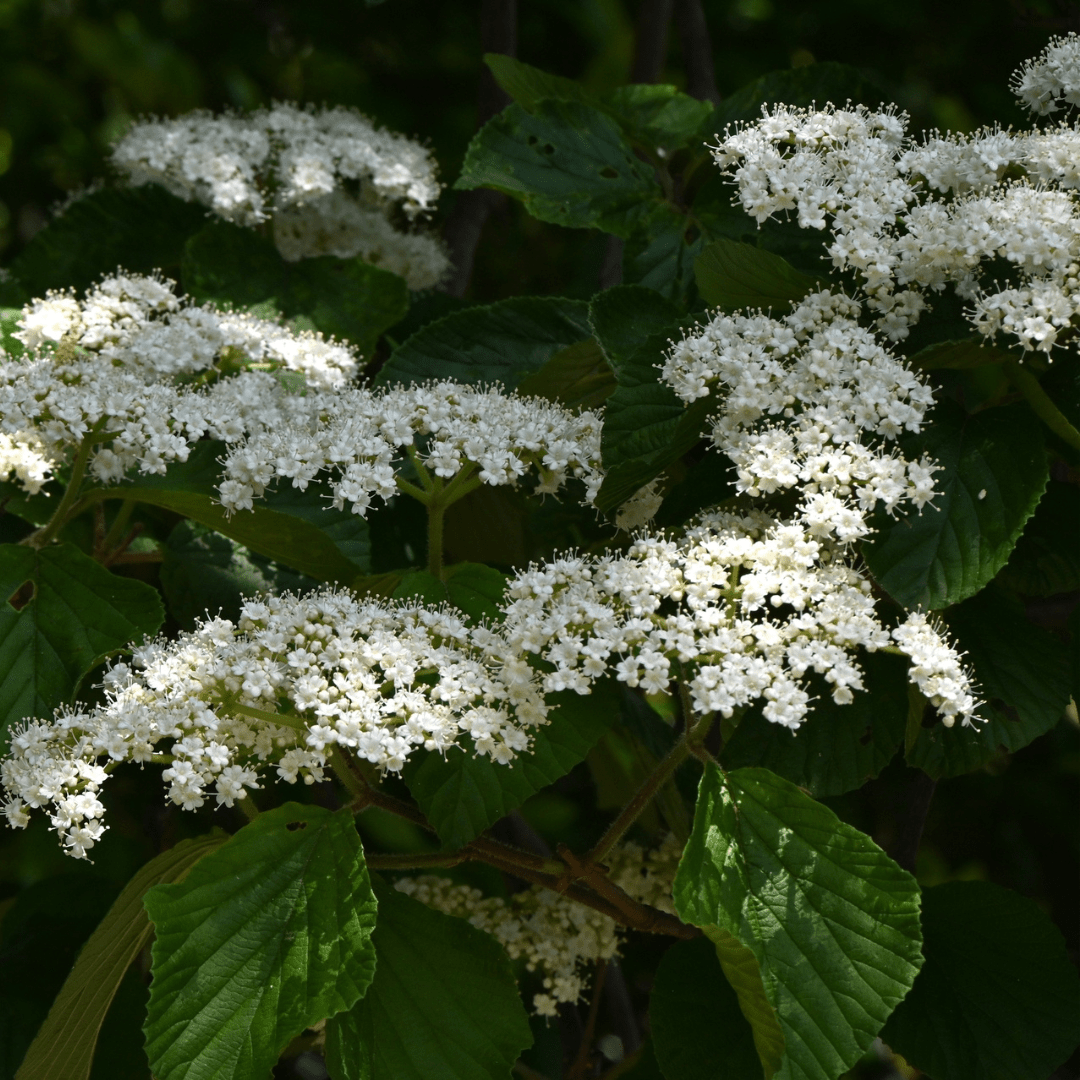
Viburnum dentatum, the Arrowwood Viburnum, is one of the most ecologically productive and reliably beautiful native shrubs available to eastern North American gardeners. It produces flat-topped clusters of creamy white flowers in late spring that are covered in native bees for weeks, followed by clusters of dark blue-black berries in late summer that are among the most important wildlife foods available to migrating songbirds in the fall. The foliage turns brilliant shades of red, orange, and burgundy in fall, making it as valuable for ornamental interest as for ecological function. It tolerates wet soils, dry soils, full sun, and partial shade with an adaptability that makes it one of the most reliably successful native shrubs across the widest range of conditions. If you are looking to buy Arrowwood Viburnum seeds or grow this native shrub from seed, this is the foundational native plant for any wildlife-supporting landscape in the East.
- Flat-topped white flower clusters in late spring visited intensively by native bees and beneficial insects
- Dark blue-black berries in late summer eaten by over 35 bird species during fall migration
- Brilliant red, orange, and burgundy fall foliage, outstanding among native shrubs
- Adaptable to wet and dry soils, full sun and partial shade, native across the entire eastern United States
- Dense multi-stemmed habit providing nesting cover for songbirds through the breeding season
Things you probably did not know about the Arrowwood Viburnum
The name comes from the Iroquois use of the straight stems for arrow shafts. Viburnum dentatum produces exceptionally straight, smooth, narrow stems that were harvested by Indigenous peoples of the eastern woodlands specifically for making arrow shafts. The wood is strong, lightweight, and naturally straight-grained, making it ideal for the purpose. This practical use gave the shrub its common name and connects it to a material culture that goes back thousands of years in eastern North America.
It is one of the most important plants in the fall migration of wood thrushes. Wood thrushes, one of the most beloved and declining songbirds in eastern North America, depend heavily on high-lipid berry sources during fall migration to fuel their journey to Central America. Arrowwood Viburnum berries have been identified in multiple studies as a critical preferred food source for migrating thrushes in the mid-Atlantic and Northeast. Properties with established Arrowwood frequently have significantly higher fall thrush counts than surrounding areas without it.
Cross-pollination between two different plants increases berry production significantly. Like many viburnums, Arrowwood produces more abundant berry crops when two or more genetically distinct individuals are present for cross-pollination. Plants grown from seed are genetically distinct, making seed-grown specimens ideal for establishing productive berry-producing thickets. A single plant produces some berries but a colony of several plants produces dramatically more.
The foliage is browsed selectively by deer but rarely devastated by them. Arrowwood Viburnum is listed as moderately deer-resistant by most wildlife agencies and extension services, meaning deer will browse it occasionally but rarely browse it to the point of killing it. In high deer-pressure areas, protection during establishment is advisable, but mature shrubs typically persist and recover even where deer browsing is regular.
Growing Details
- Botanical Name: Viburnum dentatum
- Stratification: Required, warm stratification of 60 days followed by 90 days cold stratification
- USDA Zones: 3 to 8
- Soil: Adaptable, tolerates wet, dry, poor, or clay soils
- Light: Full sun to partial shade
- Height: 6 to 10 feet
- Spread: 6 to 10 feet
- Growth Rate: Moderate, 1 to 2 feet per year
Plant it at a woodland edge or along a property line and let it be what it is. In October when the birds arrive for the berries, the planting will justify itself completely.
FAQ
FAQ
Do you pre-stratify the seeds?
Most of our seeds are not pre-stratified. They are stored under dry, cold conditions to preserve viability without initiating stratification, allowing you to time germination for your local growing season.
The exception is recalcitrant seeds. Because these seeds must remain moist to stay viable, they are kept in moist, cold storage and are therefore in a pre-stratified state. Depending on how long a particular batch has been stored, some may arrive with an emerging radicle and be ready to plant immediately. Radicle development is not guaranteed.
Please refer to the individual product page and included growing instructions for species-specific requirements.
Do any of your seeds need to stay moist? (Recalcitrant seeds)
Yes. Some species we offer, including Chestnut, Hazelnut, and Paw Paw, are recalcitrant and must remain moist to stay viable.
Please refrigerate these seeds immediately upon arrival unless they have already developed a radicle. Seeds with an emerging radicle should be planted promptly.
Do you ship internationally?
No. We currently ship within the United States only.
We previously shipped to Canada, but tariffs, duties, and import fees resulted in customers receiving significant and unpredictable additional charges upon delivery. Because we cannot reliably calculate or absorb these costs, we have suspended shipping to Canada.
At this time, we do not ship to Canada or other international destinations.
Shipping & What's Included
Shipping & What's Included
Shipping & Packaging
• Hand-packed in resealable kraft paper seed bags
• Stratification and planting instructions included on every seed pack
• Ships within 3–5 business days via USPS within the United States and U.S. territories
Return Policy
Return Policy
Due to the nature of our products, we do not accept returns on seeds.
If your order arrives damaged, contains incorrect items, or is missing items, please contact us within 7 days of delivery so we can resolve the issue.