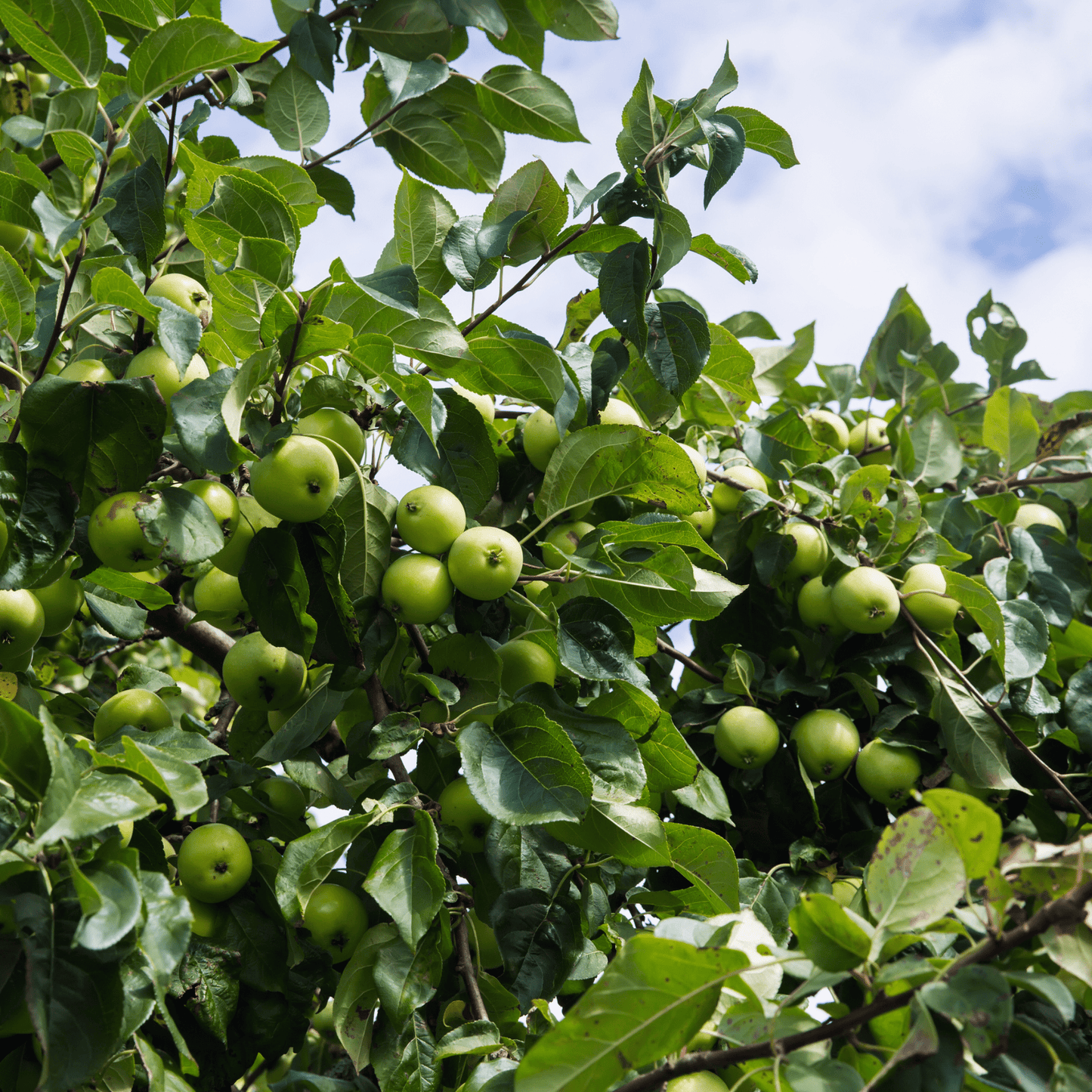


Antonovka Apple Tree Seeds | (Malus pumila ‘Antonovka’)
Antonovka Apple Tree Seeds | (Malus pumila ‘Antonovka’)
The coldest-hardy apple rootstock. The Russian apple that changed northern orcharding.
Malus pumila 'Antonovka' is the most cold-hardy named apple variety in commercial orchard use, a traditional Russian heirloom apple that has been grown in Russia and Eastern Europe for centuries and became one of the most important apple rootstocks and scion varieties in northern orcharding because of its extraordinary cold hardiness down to zone 3 and even zone 2b in sheltered locations. As an eating apple the fruit is medium to large, yellow-green to golden when fully ripe, tart, aromatic, and excellent for juice, cider, and cooking, with a distinctive flavor that was celebrated across Russian culture as one of the finest apple flavors available in the northern climate. If you are looking to buy Antonovka Apple seeds or grow this cold-hardy Russian heirloom from seed, this is the apple with the hardiest genetics available from any named variety in the orchard tradition.
- The most cold-hardy named apple variety in commercial use, surviving zone 2b in sheltered conditions
- Traditional Russian heirloom celebrated for centuries as one of the finest flavors in cold-climate apple growing
- Excellent for cider, juice, and cooking as well as fresh eating when fully ripe
- One of the most important apple rootstocks for breeding cold-hardy orchard trees in Siberian and Scandinavian programs
- Seed-grown trees develop their own unique genetics with the cold-hardiness of the Antonovka parent
Things you probably did not know about the Antonovka Apple
Anton Chekhov wrote about the Antonovka apple in one of his most celebrated stories. The short story The Smell of Apples, known in Russian as Antonovskie Yabloki, is one of Chekhov's most beloved works, a nostalgic meditation on the smell of Antonovka apples in the autumn orchards of the Russian countryside. The story is considered one of the finest pieces of Russian short fiction and connects the Antonovka apple to a specific strand of Russian literary culture that elevates an apple variety to the status of a cultural touchstone.
The apples were used as a natural air freshener in Russian homes throughout autumn and winter. Antonovka apples have an exceptionally strong, persistent fragrance that intensifies as the fruit ripens and remains detectable for weeks after harvest. Russian tradition involved placing bowls of Antonovka apples in rooms throughout the house in autumn for the scent alone, a practice that predates synthetic air fresheners by centuries and that Chekhov's story immortalized as a quintessential element of rural Russian autumn life.
It is one of the few apple varieties that survives Siberian winters without protection. Apple growing in Siberia requires varieties of extreme cold hardiness that most western apple breeding programs never attempted to develop. Antonovka became the foundation species for Siberian apple breeding programs in the 20th century because of its documented ability to survive winters that reach minus 40 degrees without significant damage, a cold hardiness that no other named apple variety from the western European tradition could approach.
Seed-grown Antonovka trees are used as rootstocks because the seedlings are extremely vigorous and uniform in cold hardiness. Unlike most apple varieties where seed-grown trees produce highly variable offspring, Antonovka seedlings tend to be relatively uniform in vigor and cold hardiness, making them a practical choice as seedling rootstocks for grafting superior apple varieties in cold climate orchards. This relatively low genetic variability compared to most apples makes Antonovka seed-grown rootstocks more predictable than most seedling apple rootstocks.
Growing Details
- Botanical Name: Malus pumila 'Antonovka'
- Stratification: Required, 60 to 90 days cold moist stratification
- USDA Zones: 2 to 7
- Soil: Well-drained, fertile, slightly acidic
- Light: Full sun
- Height: 20 to 30 feet standard
- Spread: 15 to 20 feet
- Growth Rate: Moderate, 1 to 2 feet per year
Plant it in zone 2 through 5 where cold hardiness is the first criterion for apple success. Grow it for the fruit, use it as a rootstock, or let it become the foundation for a cold-climate apple breeding project. The genetics it carries are among the most cold-tolerant in the entire Malus genus.
FAQ
FAQ
Do you pre-stratify the seeds?
Most of our seeds are not pre-stratified. They are stored under dry, cold conditions to preserve viability without initiating stratification, allowing you to time germination for your local growing season.
The exception is recalcitrant seeds. Because these seeds must remain moist to stay viable, they are kept in moist, cold storage and are therefore in a pre-stratified state. Depending on how long a particular batch has been stored, some may arrive with an emerging radicle and be ready to plant immediately. Radicle development is not guaranteed.
Please refer to the individual product page and included growing instructions for species-specific requirements.
Do any of your seeds need to stay moist? (Recalcitrant seeds)
Yes. Some species we offer, including Chestnut, Hazelnut, and Paw Paw, are recalcitrant and must remain moist to stay viable.
Please refrigerate these seeds immediately upon arrival unless they have already developed a radicle. Seeds with an emerging radicle should be planted promptly.
Do you ship internationally?
No. We currently ship within the United States only.
We previously shipped to Canada, but tariffs, duties, and import fees resulted in customers receiving significant and unpredictable additional charges upon delivery. Because we cannot reliably calculate or absorb these costs, we have suspended shipping to Canada.
At this time, we do not ship to Canada or other international destinations.
Shipping & What's Included
Shipping & What's Included
Shipping & Packaging
• Hand-packed in resealable kraft paper seed bags
• Stratification and planting instructions included on every seed pack
• Ships within 3–5 business days via USPS within the United States and U.S. territories
Return Policy
Return Policy
Due to the nature of our products, we do not accept returns on seeds.
If your order arrives damaged, contains incorrect items, or is missing items, please contact us within 7 days of delivery so we can resolve the issue.