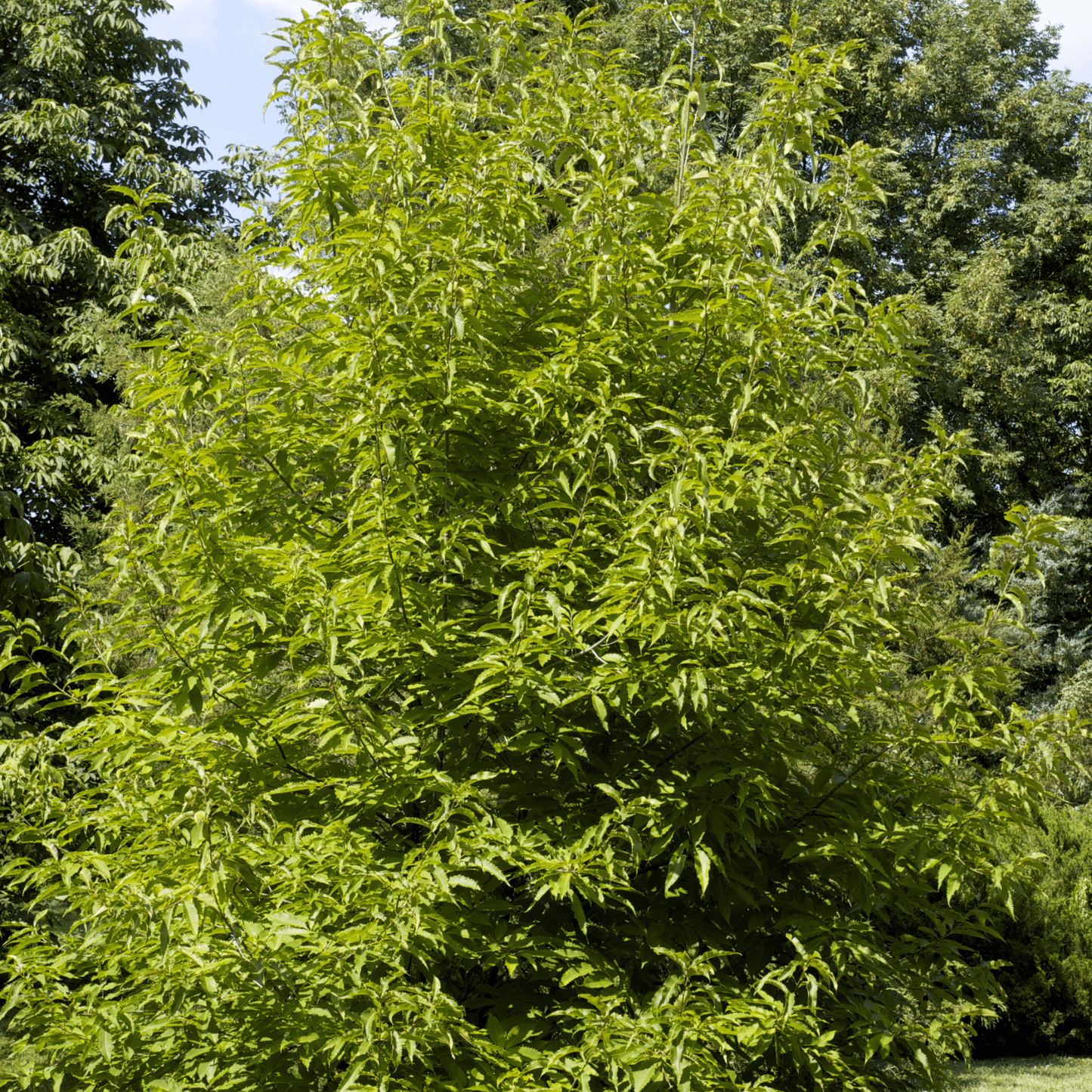


American x Chinese Hybrid Chestnut Tree Seeds | Castanea dentata x mollissima
American x Chinese Hybrid Chestnut Tree Seeds | Castanea dentata x mollissima
The comeback tree. The blight resistance the American Chestnut needed.
The American x Chinese Chestnut Hybrid is the product of one of the most important tree breeding efforts in American history, a cross between the magnificent American Chestnut, nearly wiped out by blight in the early 20th century, and the disease-resistant Chinese Chestnut, combining the size, flavor, and ecological significance of the American species with the blight tolerance that allowed the Chinese species to survive. These hybrids produce large, sweet nuts superior to most Chinese Chestnut varieties, on trees that demonstrate meaningful resistance to the Cryphonectria parasitica fungus that destroyed billions of American Chestnuts. Planting hybrid chestnuts is both a practical choice for nut production and a contribution to the broader effort to restore chestnut to the eastern forest. If you are looking to buy American Chestnut hybrid seeds or grow blight-resistant chestnut from seed, this is where the restoration of one of America's most important trees begins.
- Combines the superior nut flavor and size of American Chestnut with the blight resistance of Chinese Chestnut
- Produces large, sweet nuts in spiny husks in fall, one of the most productive nut crops available
- Contributes to the broader restoration of chestnut genetics across the eastern United States
- One of the most ecologically important trees to plant for food forest, wildlife, and timber values
- Begins producing nuts within 3 to 5 years, faster than most large nut trees
Things you probably did not know about the American Chestnut Hybrid
The American Chestnut Foundation has been working on full restoration for over 40 years. The American Chestnut Foundation was established in 1983 with the goal of developing a fully blight-resistant American Chestnut through backcross breeding, essentially breeding the Chinese Chestnut resistance into an otherwise American Chestnut genome. After nearly 50 years of work and hundreds of thousands of trees tested, the program is approaching its goal. The hybrid chestnuts available today represent an intermediate stage of this decades-long effort.
The blight does not kill the roots. Chestnut blight only kills the above-ground portions of the tree by girdling the trunk and branches with cankers. The root system of a blight-infected chestnut survives indefinitely and continues to send up new sprouts. American Chestnut stumps are still sprouting in eastern forests a century after blight killed the original trees. The hybrid chestnuts, with their blight resistance, can survive long enough to produce seed before blight progresses, contributing to natural regeneration.
A mature chestnut forest once fed the eastern United States. Before the blight, a single mature American Chestnut could produce 6,000 pounds of nuts in a mast year. These nuts fed Appalachian communities, schoolchildren who gathered them for pocket money, and the livestock that roamed the mountains eating fallen nuts in fall. The economic and ecological loss when the trees disappeared was staggering and has never been fully replaced.
The nuts must be planted fresh. Chestnut seeds are recalcitrant, meaning they cannot be dried without losing viability. They must be kept moist and cool from harvest through planting. This characteristic is why chestnuts are typically planted in fall soon after harvest or stored in cold moist conditions for spring planting. A dried chestnut seed is a dead chestnut seed.
Growing Details
- Botanical Name: Castanea dentata x mollissima
- Stratification: Required, 60 to 90 days cold moist stratification, recalcitrant seed, must be kept moist
- USDA Zones: 4 to 9
- Soil: Well-drained, slightly acidic, avoid compacted or waterlogged conditions
- Light: Full sun
- Height: 40 to 60 feet
- Spread: 40 to 60 feet
- Growth Rate: Moderate to fast, 2 to 3 feet per year
Plant two or more for cross-pollination and nut production. You are growing something that matters beyond your property line.
FAQ
FAQ
Do you pre-stratify the seeds?
Most of our seeds are not pre-stratified. They are stored under dry, cold conditions to preserve viability without initiating stratification, allowing you to time germination for your local growing season.
The exception is recalcitrant seeds. Because these seeds must remain moist to stay viable, they are kept in moist, cold storage and are therefore in a pre-stratified state. Depending on how long a particular batch has been stored, some may arrive with an emerging radicle and be ready to plant immediately. Radicle development is not guaranteed.
Please refer to the individual product page and included growing instructions for species-specific requirements.
Do any of your seeds need to stay moist? (Recalcitrant seeds)
Yes. Some species we offer, including Chestnut, Hazelnut, and Paw Paw, are recalcitrant and must remain moist to stay viable.
Please refrigerate these seeds immediately upon arrival unless they have already developed a radicle. Seeds with an emerging radicle should be planted promptly.
Do you ship internationally?
No. We currently ship within the United States only.
We previously shipped to Canada, but tariffs, duties, and import fees resulted in customers receiving significant and unpredictable additional charges upon delivery. Because we cannot reliably calculate or absorb these costs, we have suspended shipping to Canada.
At this time, we do not ship to Canada or other international destinations.
Shipping & What's Included
Shipping & What's Included
Shipping & Packaging
• Hand-packed in resealable kraft paper seed bags
• Stratification and planting instructions included on every seed pack
• Ships within 3–5 business days via USPS within the United States and U.S. territories
Return Policy
Return Policy
Due to the nature of our products, we do not accept returns on seeds.
If your order arrives damaged, contains incorrect items, or is missing items, please contact us within 7 days of delivery so we can resolve the issue.