

American Wisteria Tree Seeds | (Wisteria frutescens)
American Wisteria Tree Seeds | (Wisteria frutescens)
Native. Fragrant. The wisteria that does not eat your house.
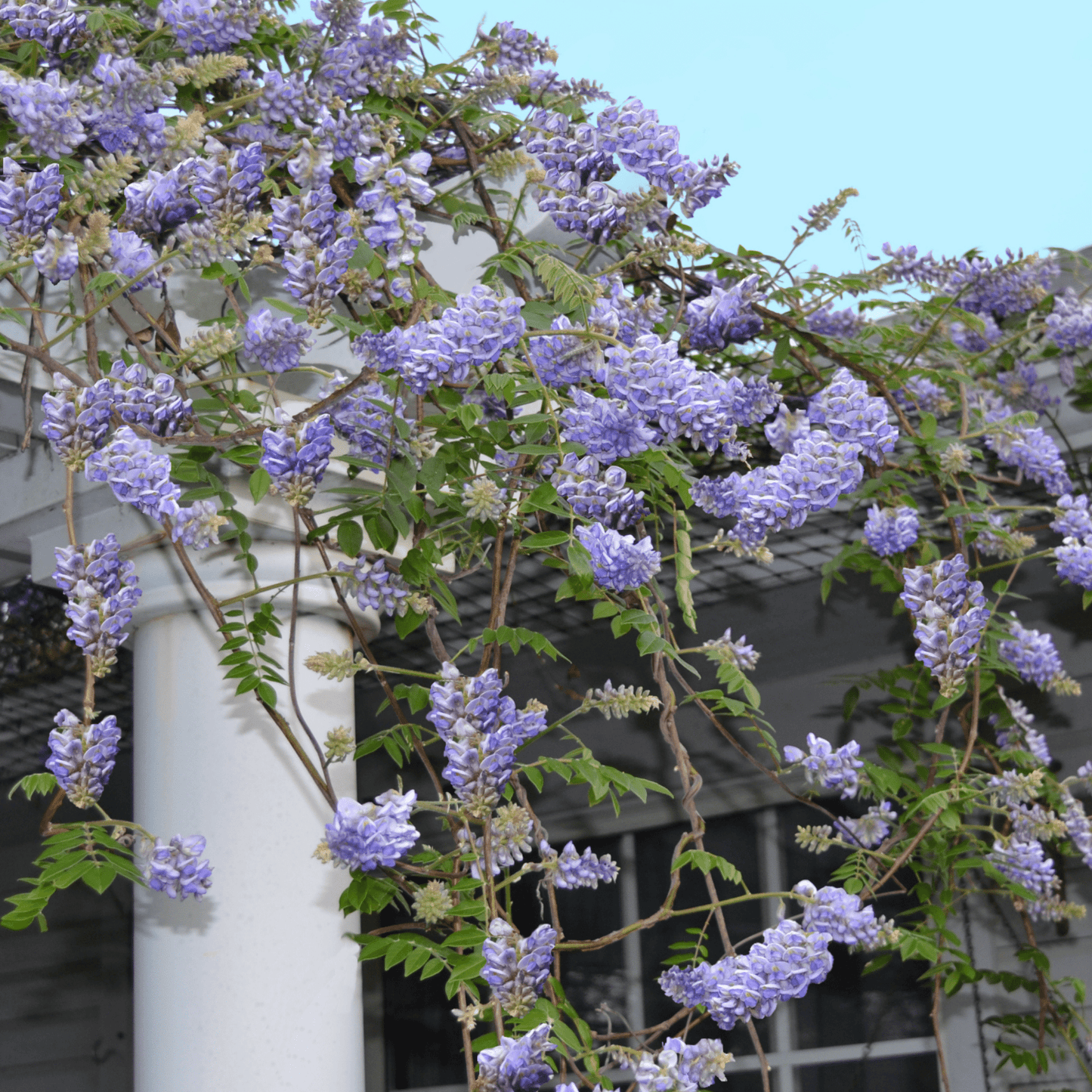
Wisteria frutescens, the American Wisteria, is the better-behaved, native alternative to the invasive Asian wisterias that escape gardens and smother trees across the eastern United States. It produces the same beautiful, fragrant flower clusters in shades of lavender-blue, blooming in late spring after the leaves have emerged, and continues to rebloom sporadically through summer, but it does so with a growth habit that is vigorous rather than overwhelming, controllable rather than destructive, and ecologically appropriate rather than invasive. Native from Virginia to Florida and west to Texas, it is the wisteria that belongs in an eastern garden on every level from ecological to aesthetic. If you are looking to buy American Wisteria seeds or grow native wisteria from seed, this is the wisteria you plant without worrying about what it will become in twenty years.
- Dense lavender-blue fragrant flower clusters in late spring blooming after leaves emerge, unlike Asian species
- Reblooms sporadically through summer with additional flower clusters after the main bloom
- Native to the eastern United States, cold-hardy and ecologically appropriate in eastern gardens
- Significantly less aggressive than Japanese or Chinese wisteria, manageable as a vine or trained shrub
- Sole larval host plant for the long-tailed skipper butterfly in eastern North America
Things you probably did not know about the American Wisteria
The Asian wisterias are destroying eastern forests. Japanese Wisteria and Chinese Wisteria, introduced as ornamentals in the 1800s, have naturalized across the eastern United States and are classified as invasive in multiple states. They climb trees and shrubs, girdle trunks with their twisting stems, and create such dense canopy shade that native vegetation beneath them dies. American Wisteria grows in the same places without this destructive behavior, providing the same floral display without the ecological cost.
The blooming sequence is different from Asian wisterias and often preferred. Asian wisterias produce flowers before leaves, creating a dramatic bare-stem flower display. American Wisteria blooms after its leaves emerge, which some gardeners find more subtly beautiful, with the lavender flower clusters visible among the green foliage rather than against bare winter wood. The fragrance is comparable between species.
It is the only known larval host plant for the long-tailed skipper butterfly in eastern North America. The long-tailed skipper, a striking butterfly with iridescent blue-green wings and distinctive long hindwing tails, requires wisteria foliage as the sole food source for its caterpillars in the eastern United States. American Wisteria is the native host, making its cultivation directly relevant to the persistence of this butterfly in areas where it occurs.
Native Americans used the seeds and pods medicinally with care. Wisteria seeds and pods contain wisterin and lectin, toxic compounds that cause nausea and can be dangerous in quantity. Cherokee and other southeastern nations used carefully prepared wisteria preparations medicinally but with full awareness of the toxicity. The plant requires respectful handling.
Growing Details
- Botanical Name: Wisteria frutescens
- Stratification: Required, scarification followed by 30 to 60 days cold stratification
- USDA Zones: 5 to 9
- Soil: Adaptable, prefers moist, well-drained soil
- Light: Full sun to partial shade, best flowering in full sun
- Habit: Twining vine, requires support, reaches 15 to 30 feet
- Growth Rate: Moderate to fast, 3 to 5 feet per year with support
Plant it on a pergola, trellis, or fence where you want fragrance and lavender color in late May. Then enjoy it without worrying about what it will do to the oak tree next to it.
FAQ
FAQ
Do you pre-stratify the seeds?
Most of our seeds are not pre-stratified. They are stored under dry, cold conditions to preserve viability without initiating stratification, allowing you to time germination for your local growing season.
The exception is recalcitrant seeds. Because these seeds must remain moist to stay viable, they are kept in moist, cold storage and are therefore in a pre-stratified state. Depending on how long a particular batch has been stored, some may arrive with an emerging radicle and be ready to plant immediately. Radicle development is not guaranteed.
Please refer to the individual product page and included growing instructions for species-specific requirements.
Do any of your seeds need to stay moist? (Recalcitrant seeds)
Yes. Some species we offer, including Chestnut, Hazelnut, and Paw Paw, are recalcitrant and must remain moist to stay viable.
Please refrigerate these seeds immediately upon arrival unless they have already developed a radicle. Seeds with an emerging radicle should be planted promptly.
Do you ship internationally?
No. We currently ship within the United States only.
We previously shipped to Canada, but tariffs, duties, and import fees resulted in customers receiving significant and unpredictable additional charges upon delivery. Because we cannot reliably calculate or absorb these costs, we have suspended shipping to Canada.
At this time, we do not ship to Canada or other international destinations.
Shipping & What's Included
Shipping & What's Included
Shipping & Packaging
• Hand-packed in resealable kraft paper seed bags
• Stratification and planting instructions included on every seed pack
• Ships within 3–5 business days via USPS within the United States and U.S. territories
Return Policy
Return Policy
Due to the nature of our products, we do not accept returns on seeds.
If your order arrives damaged, contains incorrect items, or is missing items, please contact us within 7 days of delivery so we can resolve the issue.