

American Hazelnut Tree Seeds | (Corylus americana)
American Hazelnut Tree Seeds | (Corylus americana)
Native nut. Wildlife magnet. The most productive edible shrub in the eastern forest.
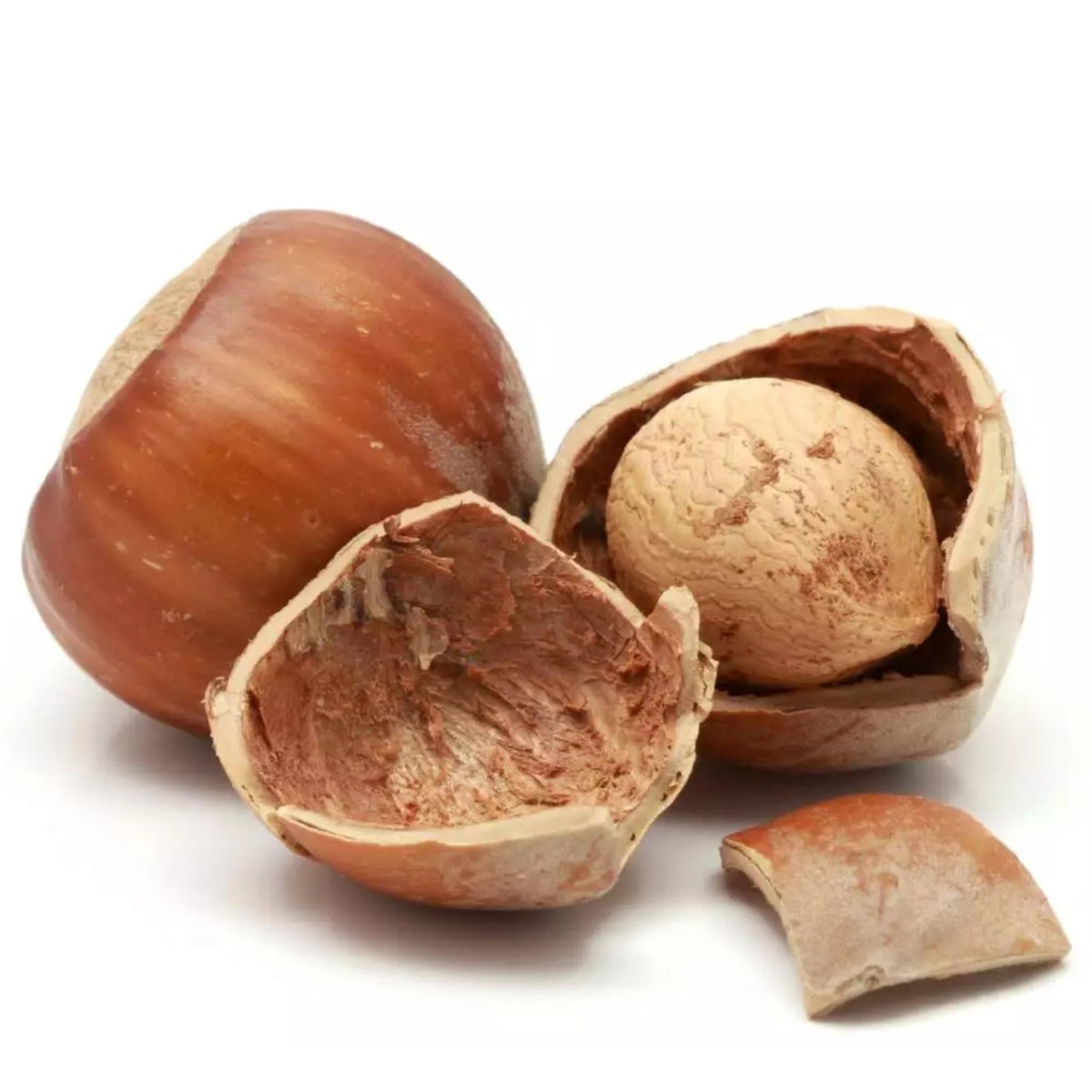
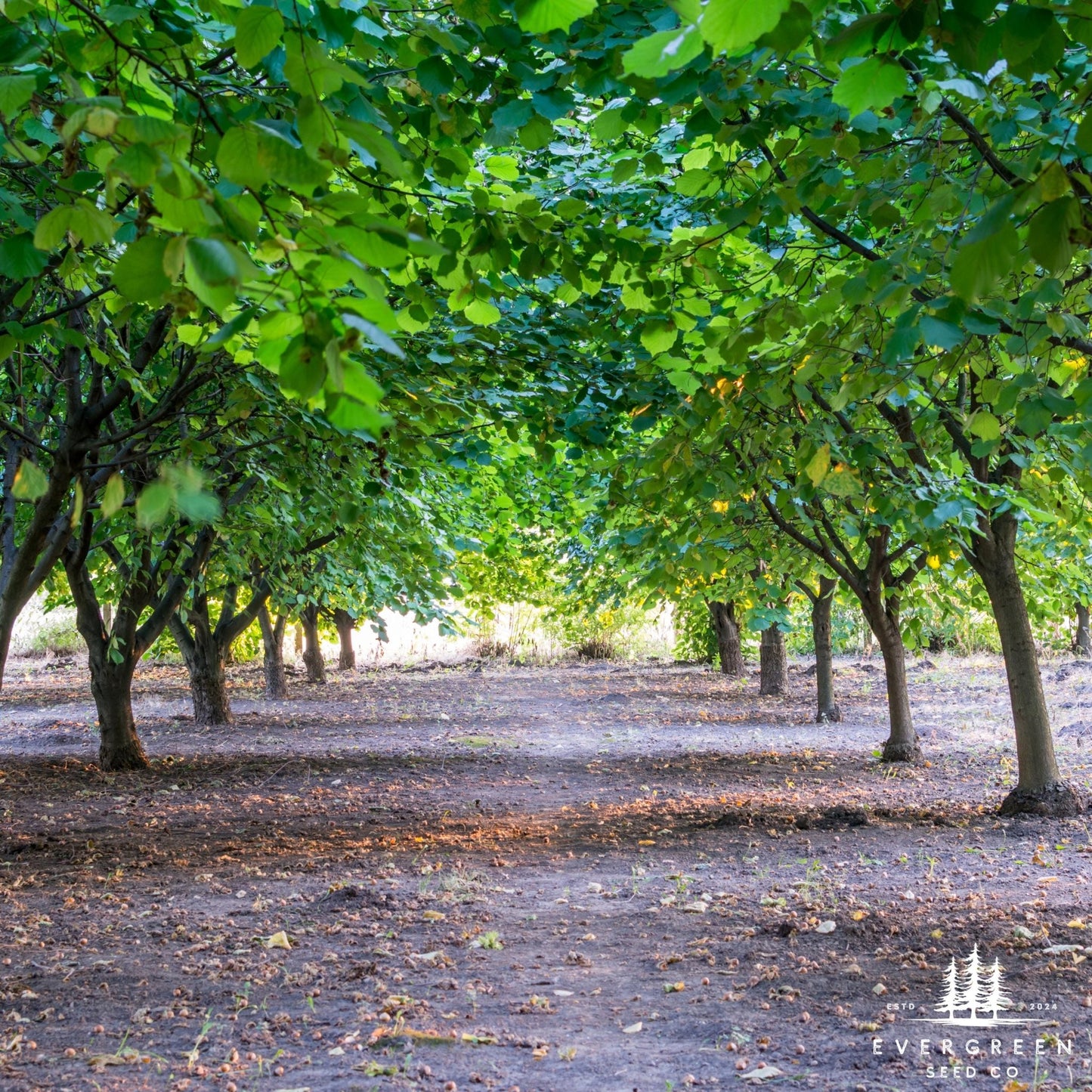
Corylus americana, the American Hazelnut, is the native nut shrub that every food forester, wildlife manager, and habitat gardener should be growing. It produces clusters of small, sweet hazelnuts that ripen in late summer, establishing faster than any nut tree and beginning to fruit in as little as three to five years from seed. It tolerates shade, poor soils, wet sites, and dry hillsides with the same easy reliability and spreads naturally by root suckers to form dense, productive thickets that provide nesting cover and food for dozens of wildlife species. Squirrels, deer, turkeys, grouse, and over 20 bird species rely on American Hazelnut for food. If you are looking to buy American Hazelnut seeds or grow this native nut shrub from seed, nothing else produces edible nuts this quickly and this reliably in the eastern United States.
- Begins producing edible hazelnuts within 3 to 5 years of planting, faster than any nut tree
- Spreads by root suckers to form dense wildlife thickets providing cover and food
- Tolerates shade, poor soils, wet sites, and dry slopes with exceptional adaptability
- Native across the eastern United States and Great Lakes region, extremely cold-hardy to zone 4
- Catkins provide one of the earliest pollen sources of spring for native bees emerging from winter dormancy
Things you probably did not know about the American Hazelnut
Indigenous peoples selected and managed hazelnut groves for thousands of years. Archaeological evidence from sites across the eastern United States shows hazelnut shells in abundance, indicating that hazelnuts were a major caloric food source in pre-contact North America. Many Native American communities actively managed hazelnut thickets by burning them on rotation to encourage vigorous new growth and higher nut production. The hazelnuts were eaten fresh, dried for winter storage, and ground into a flour used in soups and porridges.
The catkins open before any leaves emerge and before most insects are active. American Hazelnut is wind-pollinated, releasing pollen from its dangling catkins in late winter and early spring when temperatures barely rise above freezing. The tiny, bright red female flowers that receive the pollen are almost invisible to the naked eye. The entire pollination event happens in a few weeks before most gardeners notice anything is happening.
A single hazelnut provides more energy per gram than a handful of blueberries. Hazelnuts are roughly 60 percent fat, primarily heart-healthy oleic acid, and contain significant protein, Vitamin E, and B vitamins. They are among the most calorie-dense whole foods produced by any native plant, which is why wildlife compete for them so intensively in the weeks before they ripen.
It can be coppiced for wildlife cover and increased nut production. American Hazelnut cut to the ground re-sprouts vigorously within a single season, producing dense multi-stemmed regrowth that provides superior nesting cover for ground-nesting birds. Coppicing on a 5 to 10 year rotation cycle also tends to increase nut production on the regrowth compared to older stems. This management technique was used by Indigenous peoples across its range for exactly this reason.
Growing Details
- Botanical Name: Corylus americana
- Stratification: Required, 60 to 90 days cold moist stratification
- USDA Zones: 4 to 9
- Soil: Extremely adaptable, tolerates poor, dry, rocky, wet, or clay soils
- Light: Full sun to full shade, best nut production in full sun
- Height: 8 to 16 feet
- Spread: 8 to 15 feet, spreads by root suckers
- Growth Rate: Moderate to fast, 1 to 2 feet per year
Plant it at the edge of a garden, along a fence line, or anywhere you want productive native cover within a few years. The squirrels will find it. Let them.
FAQ
FAQ
Do you pre-stratify the seeds?
Most of our seeds are not pre-stratified. They are stored under dry, cold conditions to preserve viability without initiating stratification, allowing you to time germination for your local growing season.
The exception is recalcitrant seeds. Because these seeds must remain moist to stay viable, they are kept in moist, cold storage and are therefore in a pre-stratified state. Depending on how long a particular batch has been stored, some may arrive with an emerging radicle and be ready to plant immediately. Radicle development is not guaranteed.
Please refer to the individual product page and included growing instructions for species-specific requirements.
Do any of your seeds need to stay moist? (Recalcitrant seeds)
Yes. Some species we offer, including Chestnut, Hazelnut, and Paw Paw, are recalcitrant and must remain moist to stay viable.
Please refrigerate these seeds immediately upon arrival unless they have already developed a radicle. Seeds with an emerging radicle should be planted promptly.
Do you ship internationally?
No. We currently ship within the United States only.
We previously shipped to Canada, but tariffs, duties, and import fees resulted in customers receiving significant and unpredictable additional charges upon delivery. Because we cannot reliably calculate or absorb these costs, we have suspended shipping to Canada.
At this time, we do not ship to Canada or other international destinations.
Shipping & What's Included
Shipping & What's Included
Shipping & Packaging
• Hand-packed in resealable kraft paper seed bags
• Stratification and planting instructions included on every seed pack
• Ships within 3–5 business days via USPS within the United States and U.S. territories
Return Policy
Return Policy
Due to the nature of our products, we do not accept returns on seeds.
If your order arrives damaged, contains incorrect items, or is missing items, please contact us within 7 days of delivery so we can resolve the issue.