

American Cranberry Seeds | Cranberry | (Vaccinium macrocarpon)
American Cranberry Seeds | Cranberry | (Vaccinium macrocarpon)
The most American berry. The one that saved the Pilgrims. The bog fruit that built an industry.
Vaccinium macrocarpon, the American Cranberry, is the native North American berry that has been harvested from cold bogs and wetlands since the last Ice Age, eaten by Indigenous peoples across the northeastern United States and Canada for thousands of years, and transformed into one of the most commercially important native fruit crops in American agriculture. It produces brilliant red berries in fall that are intensely tart, extraordinarily rich in antioxidants, and so deeply embedded in American holiday tradition that they appear on virtually every Thanksgiving table in the country. It is a low-growing, trailing evergreen shrub perfectly adapted to acidic, saturated bog soils where almost no other fruit plant can survive, and in the right conditions it forms dense, persistent mats of evergreen foliage that produce berries annually for decades without replanting. If you are looking to buy Cranberry seeds or grow American Cranberry from seed, this is the native fruit that shaped American food culture and continues to be one of the most medicinally studied berries in the world. :contentReference[oaicite:0]{index=0}
- Produces the brilliantly red, intensely tart native berries of American Thanksgiving and holiday tradition
- One of the most antioxidant-rich fruits known to science, extensively studied for health benefits
- Trailing evergreen shrub perfectly adapted to acidic, saturated bog conditions where other fruit plants fail
- Native across the northeastern United States and Canada, forming persistent mats in cold, wet, acidic sites
- Has been harvested and consumed by Indigenous peoples of the northeastern woodlands for thousands of years
Things you probably did not know about the American Cranberry
The word cranberry comes from a Low German word used by Dutch and German settlers meaning crane berry. Early European settlers in New England observed that the flowers of the cranberry plant resemble the head and beak of a sandhill crane, with the stamens forming the beak and the petals the head. The Dutch and German word kranebeere meaning crane berry was applied by settlers in the mid-17th century and became the English word cranberry. The Indigenous peoples of the region used their own names for the berry, including ibimi in Wampanoag and sassamanesh in Algonquin.
Cranberry juice prevents bacteria from adhering to cell walls rather than killing bacteria directly. The mechanism by which cranberry reduces urinary tract infections, one of the most extensively studied health claims associated with any food, is not bacterial killing but interference with bacterial adhesion. The proanthocyanidins in cranberry juice create a surface on the bladder wall that prevents certain bacteria, particularly E. coli, from attaching to the cells they would normally colonize and infect. This anti-adhesion mechanism is confirmed in multiple clinical studies and explains both the effectiveness and the limitation of cranberry for urinary health.
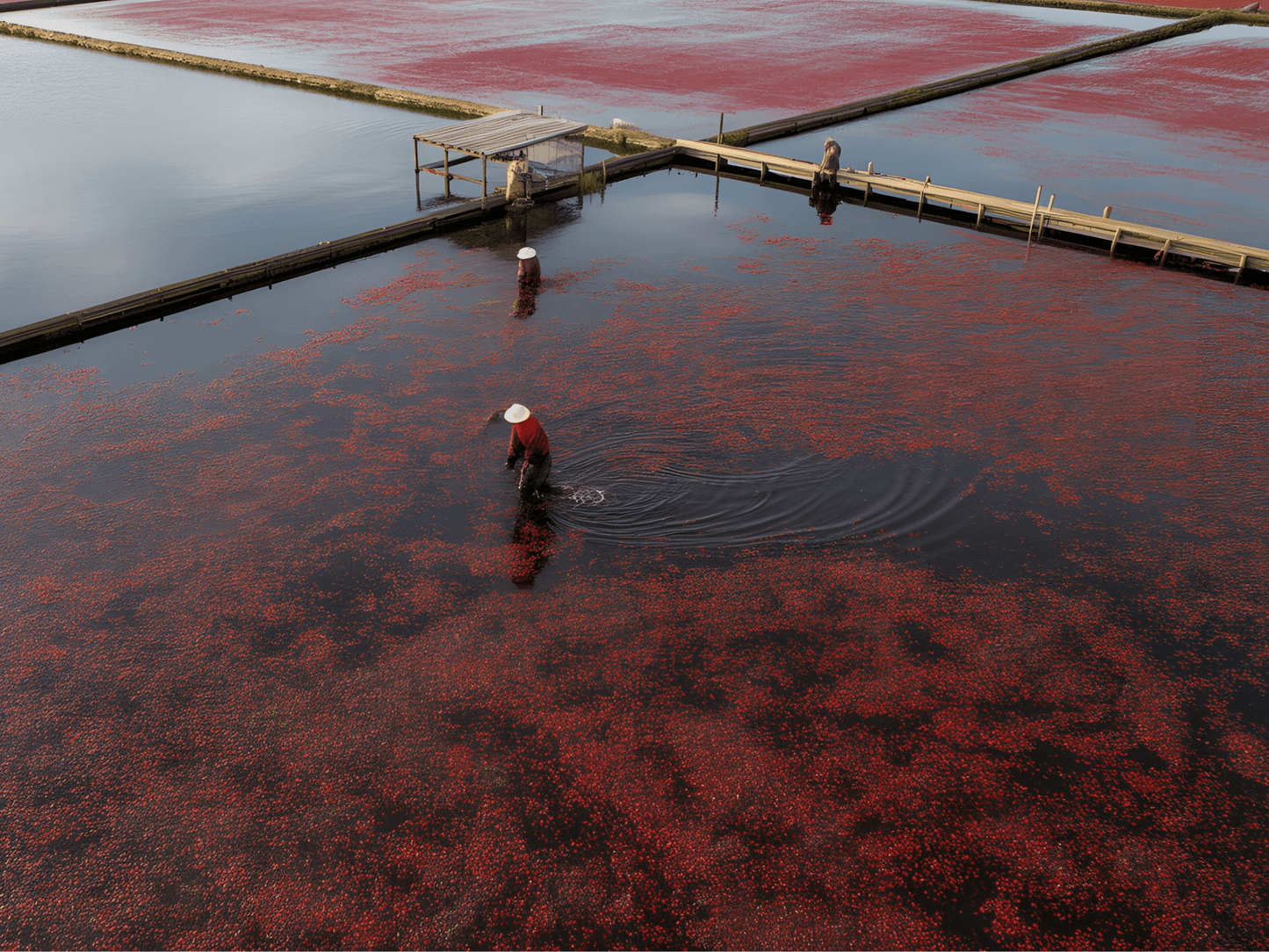
Commercial cranberry harvesting is done by flooding the bogs. The iconic images of red cranberry harvests showing berries floating on the surface of flooded fields are accurate depictions of wet harvesting, the primary commercial harvest method. Cranberry bogs are flooded in fall and the ripe berries, which contain air pockets that make them buoyant, float to the surface where they are corralled by booms and conveyed to processing equipment. This wet harvest method was developed in the 20th century and dramatically increased harvest efficiency, but the berries harvested this way are primarily used for juice and processed products. Fresh eating cranberries are still dry harvested by mechanical combing.
The berry was used as a preservative for meat by Indigenous peoples and early American explorers. The high acidity and antimicrobial compound content of cranberries made them effective meat preservatives in pre-refrigeration food storage. Pemmican and other preserved meat preparations across the northeastern woodlands and Great Lakes often incorporated dried cranberries as both a food and a preservative. The same antimicrobial properties that make cranberries effective against urinary tract bacteria also inhibit the spoilage organisms that would decompose stored meat.
Growing Details
- Botanical Name: Vaccinium macrocarpon
- Stratification: Required, 90 days cold stratification
- USDA Zones: 2 to 6
- Soil: Acidic, saturated or consistently moist, sandy to peaty, pH 4.0 to 5.5 essential
- Light: Full sun
- Height: 6 to 12 inches, trailing and mat-forming
- Spread: Trailing to several feet over time
- Growth Rate: Slow to moderate, 6 to 12 inches per year, spreading gradually by runners
Plant it in a consistently moist, very acidic site such as a bog garden, pond edge, or container with acidic peat-based mix. The specific soil pH requirement of 4.0 to 5.5 is non-negotiable. In the right conditions it will spread, persist, and produce berries annually without any significant intervention.
FAQ
FAQ
Do you pre-stratify the seeds?
Most of our seeds are not pre-stratified. They are stored under dry, cold conditions to preserve viability without initiating stratification, allowing you to time germination for your local growing season.
The exception is recalcitrant seeds. Because these seeds must remain moist to stay viable, they are kept in moist, cold storage and are therefore in a pre-stratified state. Depending on how long a particular batch has been stored, some may arrive with an emerging radicle and be ready to plant immediately. Radicle development is not guaranteed.
Please refer to the individual product page and included growing instructions for species-specific requirements.
Do any of your seeds need to stay moist? (Recalcitrant seeds)
Yes. Some species we offer, including Chestnut, Hazelnut, and Paw Paw, are recalcitrant and must remain moist to stay viable.
Please refrigerate these seeds immediately upon arrival unless they have already developed a radicle. Seeds with an emerging radicle should be planted promptly.
Do you ship internationally?
No. We currently ship within the United States only.
We previously shipped to Canada, but tariffs, duties, and import fees resulted in customers receiving significant and unpredictable additional charges upon delivery. Because we cannot reliably calculate or absorb these costs, we have suspended shipping to Canada.
At this time, we do not ship to Canada or other international destinations.
Shipping & What's Included
Shipping & What's Included
Shipping & Packaging
• Hand-packed in resealable kraft paper seed bags
• Stratification and planting instructions included on every seed pack
• Ships within 3–5 business days via USPS within the United States and U.S. territories
Return Policy
Return Policy
Due to the nature of our products, we do not accept returns on seeds.
If your order arrives damaged, contains incorrect items, or is missing items, please contact us within 7 days of delivery so we can resolve the issue.