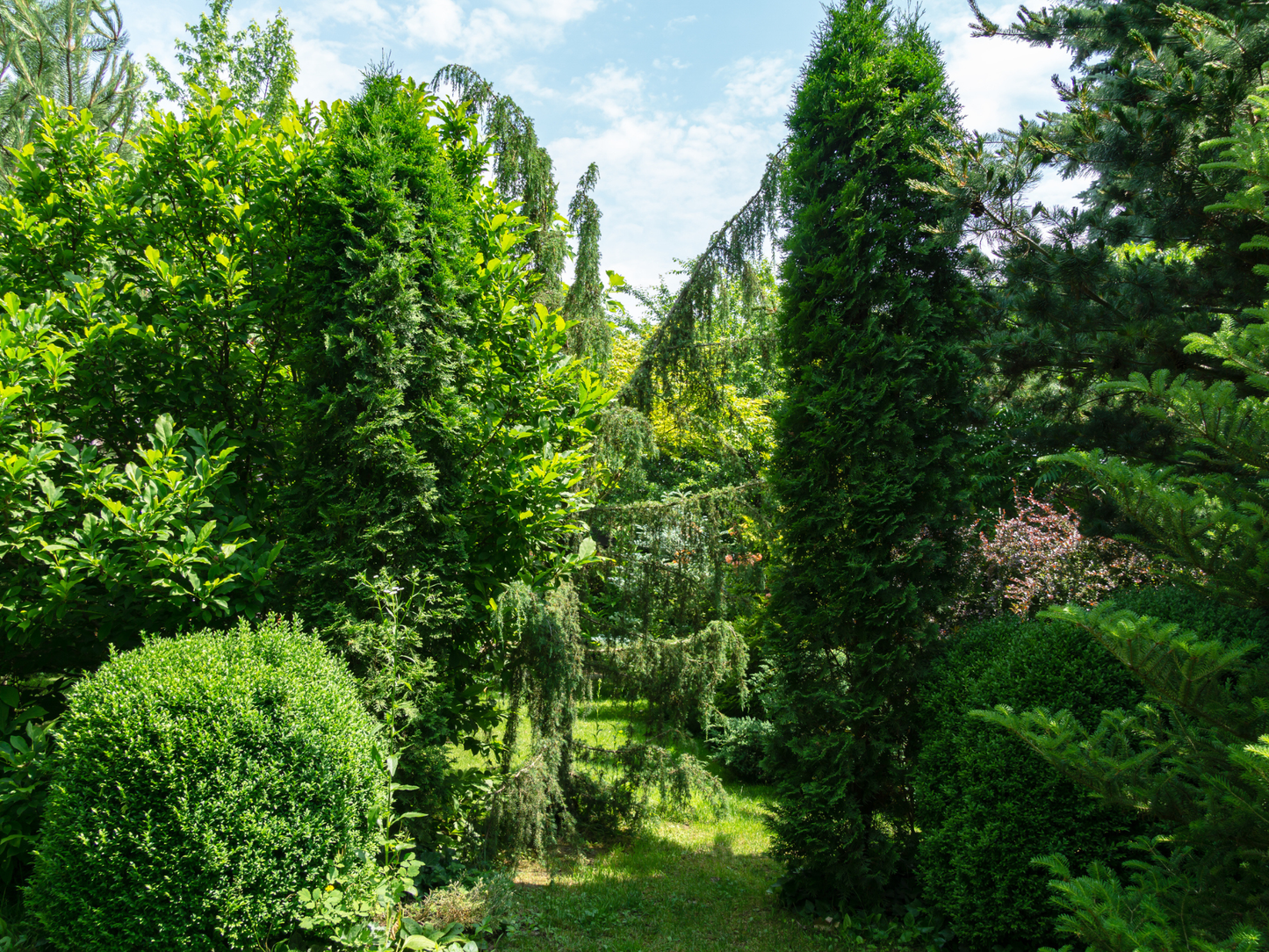


American Arborvitae Tree Seeds | (Thuja occidentalis ‘Pyramidalis’)
American Arborvitae Tree Seeds | (Thuja occidentalis ‘Pyramidalis’)
The original privacy screen. Native, narrow, and built to last.
Thuja occidentalis 'Pyramidalis', the Pyramidal Arborvitae, is the most planted native privacy screen tree in North America, selected for its tightly columnar, upright form that maintains its shape without shearing and provides dense year-round screening in a relatively narrow footprint. Unlike clonally propagated nursery arborvitae, seed-grown specimens develop on their own roots and express the natural adaptability of the native Thuja occidentalis species, which is cold-hardy to zone 2 and has been used for shelter and privacy planting across the northern United States and Canada for generations. If you are looking to buy Arborvitae seeds or grow privacy screen trees from seed, this is the native evergreen with the longest track record in North American landscape use.
- Dense, narrow, columnar form maintaining shape without trimming
- Extremely cold-hardy to zone 2, one of the most cold-tolerant evergreen hedge trees available
- Native eastern arborvitae with the full adaptability of the wild species
- Provides year-round privacy, windbreak, and wildlife cover with minimal maintenance
- Fast-establishing compared to most conifers, creating effective screening within a few years
Things you probably did not know about the American Arborvitae
Jacques Cartier's crew survived scurvy by drinking a tea made from Arborvitae. During Cartier's second voyage to Canada in 1535, his crew was devastated by scurvy during the winter at Quebec. Local Iroquois people showed them how to make a tea from the bark and needles of what they called Annedda, almost certainly Thuja occidentalis. The tea, rich in Vitamin C, saved the lives of over 100 men. When Cartier returned to France, he brought the tree with him, and it became one of the first North American trees cultivated in European gardens. The name arborvitae, tree of life in Latin, was given to it in recognition of this event.
It is one of the longest-cultivated North American trees in European horticulture. Following Cartier's introduction in 1536, American Arborvitae was planted in the royal gardens of France and became one of the first North American native trees grown extensively outside North America. Specimens from those early introductions are still growing in historic gardens in France and Belgium nearly 500 years later.
The foliage contains natural fungicidal compounds. Thuja oil, distilled from Arborvitae foliage and wood, contains thujone and other compounds with documented antifungal and antimicrobial properties. It has been used medicinally by Indigenous peoples across the Great Lakes and Northeast for respiratory conditions, skin ailments, and fever for thousands of years, which is entirely consistent with the life-saving tea that rescued Cartier's crew.
Deer browse it heavily in winter when other food is scarce. American Arborvitae is a preferred winter browse for white-tailed deer in areas with high deer pressure, which is one reason many property owners struggle to maintain arborvitae hedges. In low deer-pressure areas it establishes and grows freely. In high deer-pressure areas, protection during the first few winters is often necessary.
Growing Details
- Botanical Name: Thuja occidentalis 'Pyramidalis'
- Stratification: Required, 30 to 60 days cold stratification
- USDA Zones: 2 to 8
- Soil: Adaptable, prefers moist, well-drained soil, tolerates a range of conditions
- Light: Full sun to partial shade
- Height: 15 to 30 feet
- Spread: 3 to 5 feet
- Growth Rate: Moderate to fast, 1 to 2 feet per year
Plant them 3 to 4 feet apart in a row for a privacy screen that closes in within 3 to 5 years and requires almost nothing from you after that.
FAQ
FAQ
Do you pre-stratify the seeds?
Most of our seeds are not pre-stratified. They are stored under dry, cold conditions to preserve viability without initiating stratification, allowing you to time germination for your local growing season.
The exception is recalcitrant seeds. Because these seeds must remain moist to stay viable, they are kept in moist, cold storage and are therefore in a pre-stratified state. Depending on how long a particular batch has been stored, some may arrive with an emerging radicle and be ready to plant immediately. Radicle development is not guaranteed.
Please refer to the individual product page and included growing instructions for species-specific requirements.
Do any of your seeds need to stay moist? (Recalcitrant seeds)
Yes. Some species we offer, including Chestnut, Hazelnut, and Paw Paw, are recalcitrant and must remain moist to stay viable.
Please refrigerate these seeds immediately upon arrival unless they have already developed a radicle. Seeds with an emerging radicle should be planted promptly.
Do you ship internationally?
No. We currently ship within the United States only.
We previously shipped to Canada, but tariffs, duties, and import fees resulted in customers receiving significant and unpredictable additional charges upon delivery. Because we cannot reliably calculate or absorb these costs, we have suspended shipping to Canada.
At this time, we do not ship to Canada or other international destinations.
Shipping & What's Included
Shipping & What's Included
Shipping & Packaging
• Hand-packed in resealable kraft paper seed bags
• Stratification and planting instructions included on every seed pack
• Ships within 3–5 business days via USPS within the United States and U.S. territories
Return Policy
Return Policy
Due to the nature of our products, we do not accept returns on seeds.
If your order arrives damaged, contains incorrect items, or is missing items, please contact us within 7 days of delivery so we can resolve the issue.