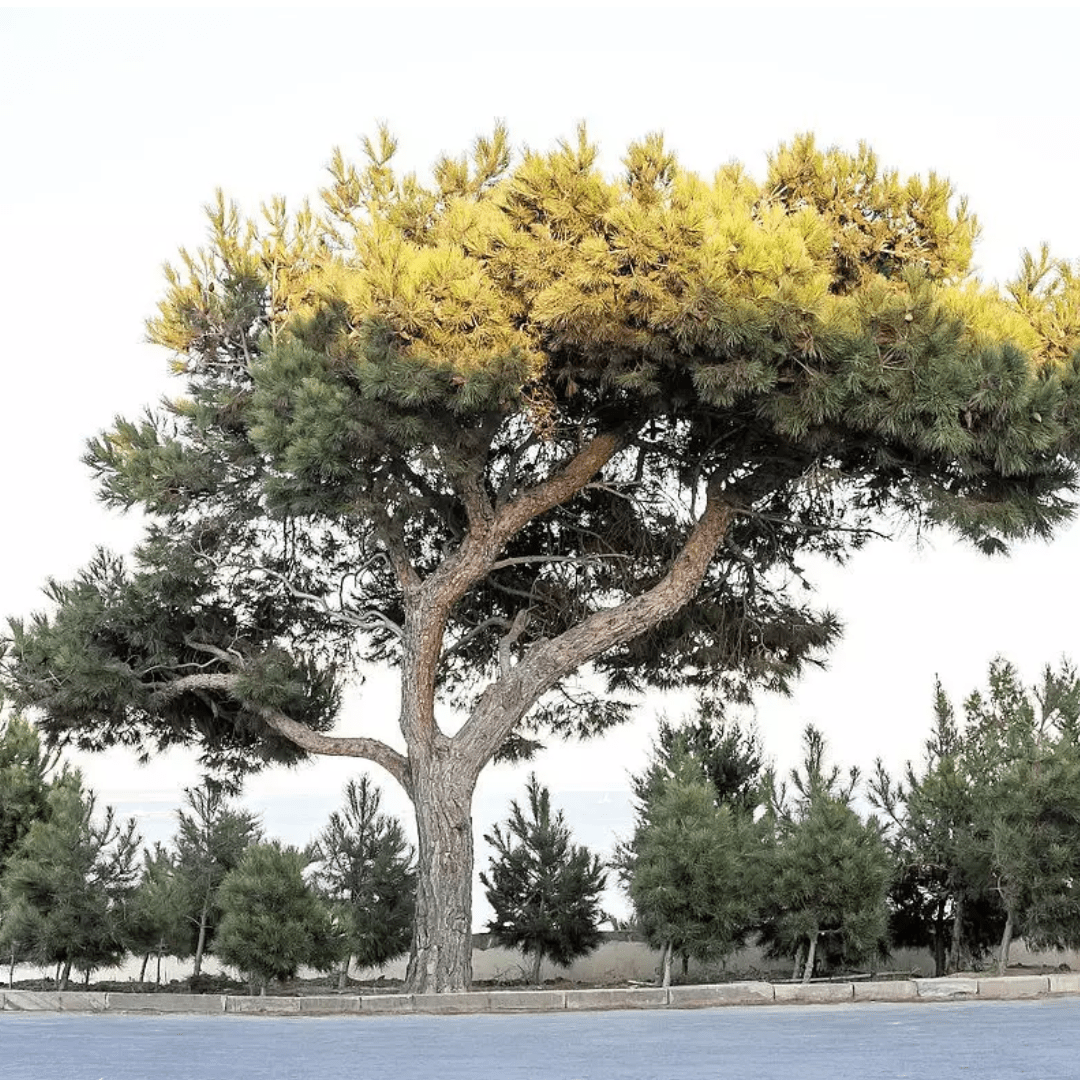


Afghan Pine Tree Seeds | (Pinus eldarica)
Afghan Pine Tree Seeds | (Pinus eldarica)
Desert-tough. Fast-growing. Built for the dry side.
Pinus eldarica, the Afghan Pine, is one of the most heat- and drought-tolerant conifers available. Native to the arid mountains of Afghanistan, Pakistan, and Iran, it thrives where summers are intense, rainfall is limited, and soils are less than ideal. Fast-growing and resilient, it provides reliable evergreen structure, privacy, and wind protection in climates where most pines struggle to survive.
- Exceptional drought tolerance once established
- Fast-growing evergreen for screening and windbreaks
- Performs well in alkaline, sandy, or rocky soils
- Tolerates extreme heat, low humidity, and reflected heat
- Widely used in arid-region reforestation and shelterbelts
Things You Probably Didn’t Know
It helps fight desert expansion.
Afghan Pine is used in large-scale planting projects to stabilize soils and combat desertification due to its extreme tolerance of heat and drought.
It thrives in heat.
Unlike many conifers, Afghan Pine grows faster in hot climates, often putting on significant annual growth in warm regions.
It has deep historical roots.
Native stands have been part of Middle Eastern landscapes for thousands of years, valued for timber and fuel.
It tolerates difficult soil chemistry.
Afghan Pine thrives in highly alkaline soils that cause many other conifers to fail, making it uniquely suited for challenging sites.
Growing Details
- Botanical Name: Pinus eldarica
- Stratification: Recommended; 30–60 days cold stratification
- USDA Zones: 6–11
- Soil: Extremely adaptable; tolerates dry, sandy, rocky, or alkaline soils
- Light: Full sun
- Height: 30–80 feet
- Spread: 15–25 feet
- Growth Rate: Fast (2–4 ft/year in warm climates)
Plant it where the summer is too hot and dry for anything else. This is the pine that was built for exactly those conditions.
FAQ
FAQ
Do you pre-stratify the seeds?
Most of our seeds are not pre-stratified. They are stored under dry, cold conditions to preserve viability without initiating stratification, allowing you to time germination for your local growing season.
The exception is recalcitrant seeds. Because these seeds must remain moist to stay viable, they are kept in moist, cold storage and are therefore in a pre-stratified state. Depending on how long a particular batch has been stored, some may arrive with an emerging radicle and be ready to plant immediately. Radicle development is not guaranteed.
Please refer to the individual product page and included growing instructions for species-specific requirements.
Do any of your seeds need to stay moist? (Recalcitrant seeds)
Yes. Some species we offer, including Chestnut, Hazelnut, and Paw Paw, are recalcitrant and must remain moist to stay viable.
Please refrigerate these seeds immediately upon arrival unless they have already developed a radicle. Seeds with an emerging radicle should be planted promptly.
Do you ship internationally?
No. We currently ship within the United States only.
We previously shipped to Canada, but tariffs, duties, and import fees resulted in customers receiving significant and unpredictable additional charges upon delivery. Because we cannot reliably calculate or absorb these costs, we have suspended shipping to Canada.
At this time, we do not ship to Canada or other international destinations.
Shipping & What's Included
Shipping & What's Included
Shipping & Packaging
• Hand-packed in resealable kraft paper seed bags
• Stratification and planting instructions included on every seed pack
• Ships within 3–5 business days via USPS within the United States and U.S. territories
Return Policy
Return Policy
Due to the nature of our products, we do not accept returns on seeds.
If your order arrives damaged, contains incorrect items, or is missing items, please contact us within 7 days of delivery so we can resolve the issue.