

Flying Dragon Tree Seeds | Trifoliate Orange | Hardy Orange | (Poncirus trifoliata 'Flying Dragon')
Flying Dragon Tree Seeds | Trifoliate Orange | Hardy Orange | (Poncirus trifoliata 'Flying Dragon')
The most dramatically weird citrus relative you will ever grow. Completely cold-hardy.
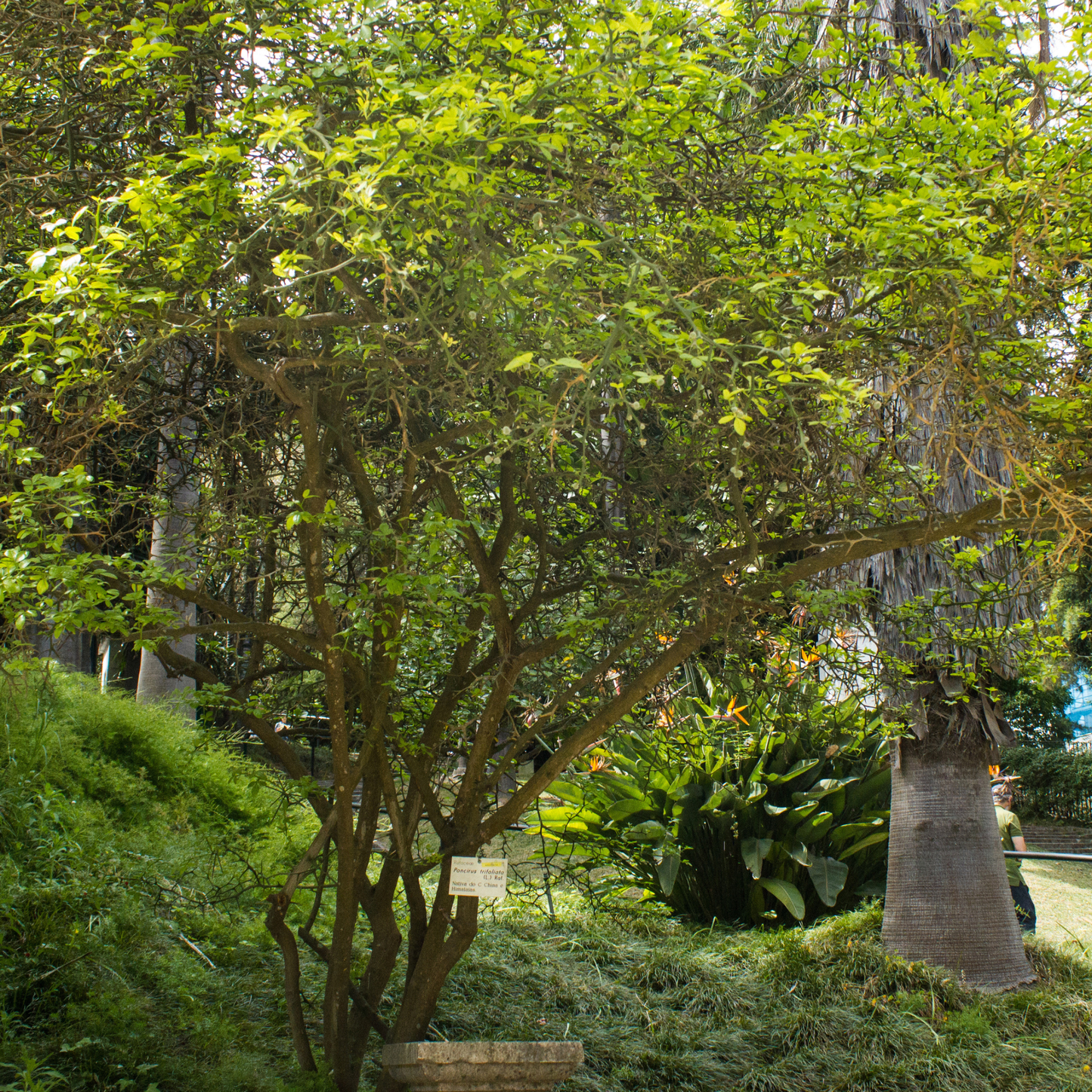
Poncirus trifoliata 'Flying Dragon', the Flying Dragon Tree, is one of the most visually bizarre and fascinating small trees available in temperate horticulture, a cold-hardy citrus relative with wickedly curved, contorted thorns spiraling along dramatically twisted stems and branches that create a silhouette in winter that looks like something between a sculpture and a fever dream. Despite its tropical family connections, it is cold-hardy to zone 5 and grows in conditions where no other citrus relative survives. It produces small, intensely fragrant white flowers in spring and small, ornamental but intensely bitter orange-like fruits in fall that are edible in small quantities after cooking. If you are looking to buy Flying Dragon seeds or grow this extraordinary ornamental from seed, nothing in the temperate garden produces a winter silhouette this dramatic and this unusual.
- Dramatically twisted, contorted stems and branches creating an extraordinary sculptural winter silhouette
- Wickedly curved thorns spiraling along the contorted branches unlike any other temperate tree
- Cold-hardy citrus relative thriving to zone 5, one of the hardiest members of the entire citrus family
- Fragrant white flowers in spring followed by small ornamental bitter orange fruits in fall
- Used as an impenetrable barrier hedge in its native China and Japan for centuries
Things you probably did not know about the Flying Dragon Tree
The thorns are curved in a way that makes them more effective than straight thorns. The dramatically hooked, downward-curving thorns of Flying Dragon are structurally optimized to snag and hold anything that pushes into the plant from outside. Once caught on a Flying Dragon thorn, cloth, skin, or animal fur is held more effectively than by a straight thorn because pulling away drives the hook deeper rather than releasing it. A mature hedge of Flying Dragon is essentially a biological barbed wire fence.
It is used in rootstock breeding for commercial citrus. Poncirus trifoliata is one of the primary rootstocks used in commercial citrus production because of its cold hardiness and disease resistance. Trees grafted onto Poncirus roots survive cold that would kill the same variety on its own roots. The Flying Dragon form, being genetically identical to the standard species, carries the same valuable rootstock characteristics.
The fruit is the most bitter thing in the citrus family but has genuine culinary applications. The small fruits of Flying Dragon are intensely bitter and sour when eaten raw but have been used in Japanese cuisine, particularly in the preparation of ponzu sauce, as a souring agent. The peel contains aromatic citrus compounds that are fragrant and flavorful when used in small quantities in cooking, preserves, and fermented beverages.
The twisted form is a stable genetic mutation. The contorted growth habit of 'Flying Dragon' is caused by a genetic mutation that affects cell elongation during growth, causing the stems to twist as they extend. This mutation is stable, meaning seed-grown Flying Dragon trees reproduce the twisted form reliably from seed, unlike many ornamental mutations that revert to normal form when grown from seed.
Growing Details
- Botanical Name: Poncirus trifoliata 'Flying Dragon'
- Stratification: Required, 60 to 90 days cold moist stratification
- USDA Zones: 5 to 9
- Soil: Well-drained, slightly acidic, tolerates a range of conditions
- Light: Full sun
- Height: 8 to 15 feet
- Spread: 6 to 10 feet
- Growth Rate: Slow to moderate, 6 to 12 inches per year
Plant it where the winter silhouette will be visible against a wall, fence, or open sky. The bare twisted stems and curved thorns in January are the whole point.
FAQ
FAQ
Do you pre-stratify the seeds?
Most of our seeds are not pre-stratified. We ship them unstratified so you can control germination timing based on your local growing season. We sell to all 50 U.S. states and Canadian provinces, and since each region has different planting windows, pre-stratifying would risk seeds germinating in transit or before you're ready to plant.
True stratification requires cold, moist conditions, which can lead to premature sprouting or mold if not timed properly. To avoid this, we store most seeds in dry cold conditions to preserve viability — but this does not initiate stratification.
Do any of your seeds need to stay moist? (Recalcitrant seeds)
Yes — some species we offer are recalcitrant, meaning they must remain moist to stay viable and cannot be dried out. Examples include: Chestnut, Hazelnut, Paw Paw, etc.
These seeds are shipped in moist cold storage and are clearly labeled on the product page when applicable. Please refrigerate immediately upon arrival and follow included care instructions.
Do you ship internationally?
We currently ship to the United States and Canada only. Unfortunately, we cannot ship to other countries without a phytosanitary certificate, which is required by most international customs agencies.
If you're interested in shipping outside North America, please contact us. Note that a phytosanitary certificate typically adds $60–$80 USD per seed type and must be arranged in advance.
Shipping & What's Included
Shipping & What's Included
Shipping & Packaging
Hand-packed in resealable zipper kraft paper seed bags
Stratification and planting instructions included with every order
1 free bonus seed pack included with every order
Ships within 3–5 business days via USPS
Return Policy
Return Policy
Due to the nature of our products, we do not accept returns on seeds.
However, if your order arrives damaged or incorrect, please contact us within 7 days and we’ll make it right.