



River Birch Tree Seeds | Black Birch | (Betula nigra)
River Birch Tree Seeds | Black Birch | (Betula nigra)
Fast. Native. The most beautiful bark in any backyard.
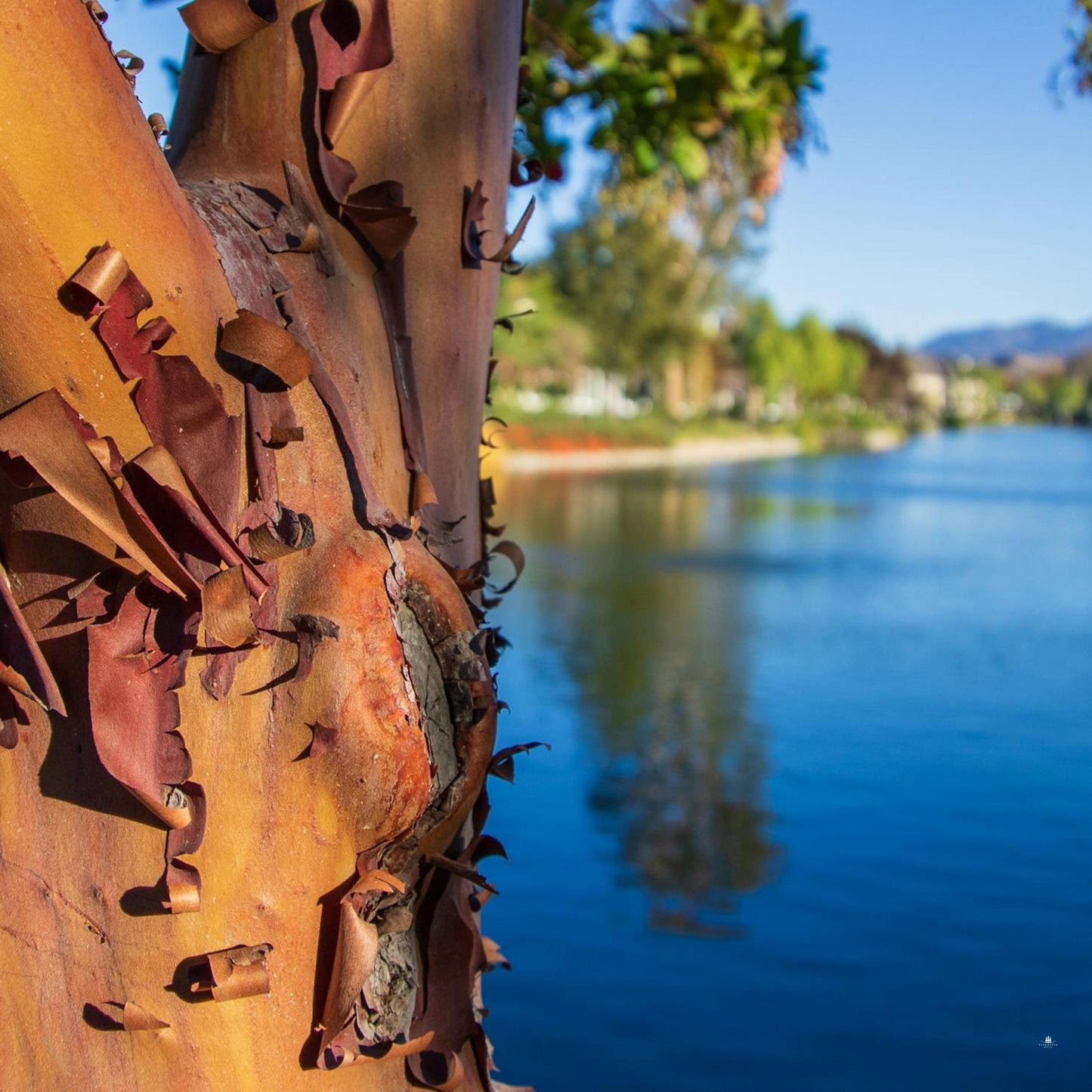
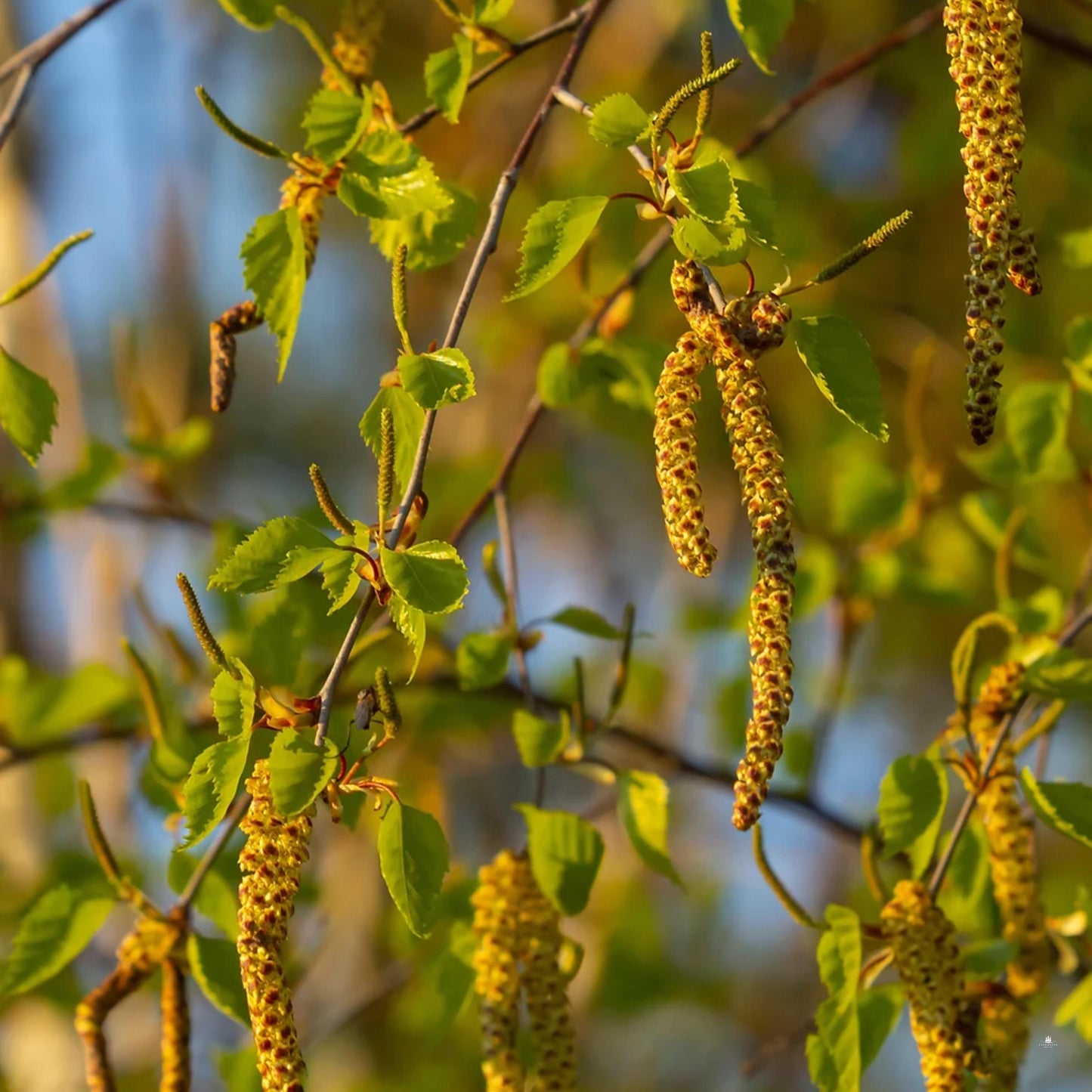
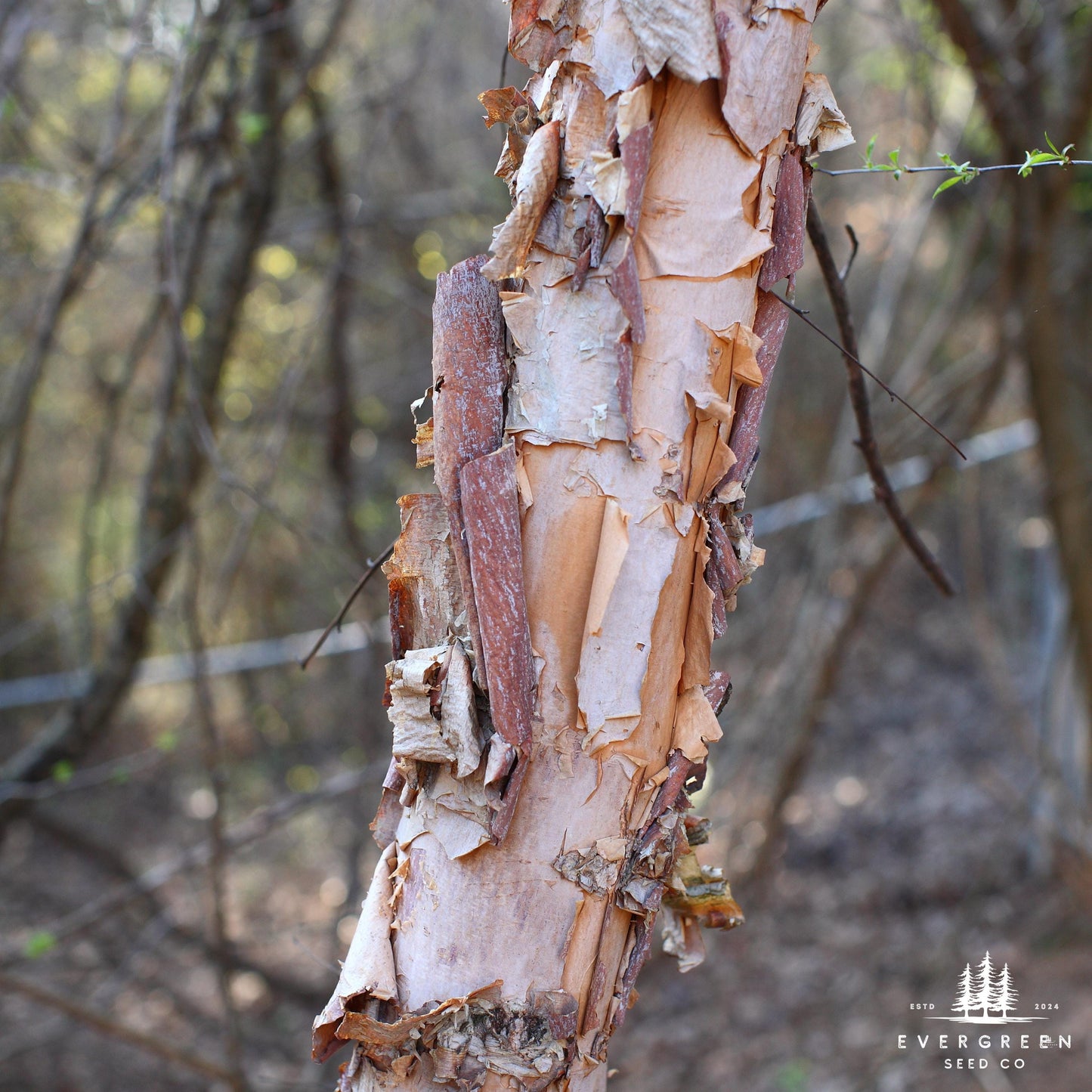
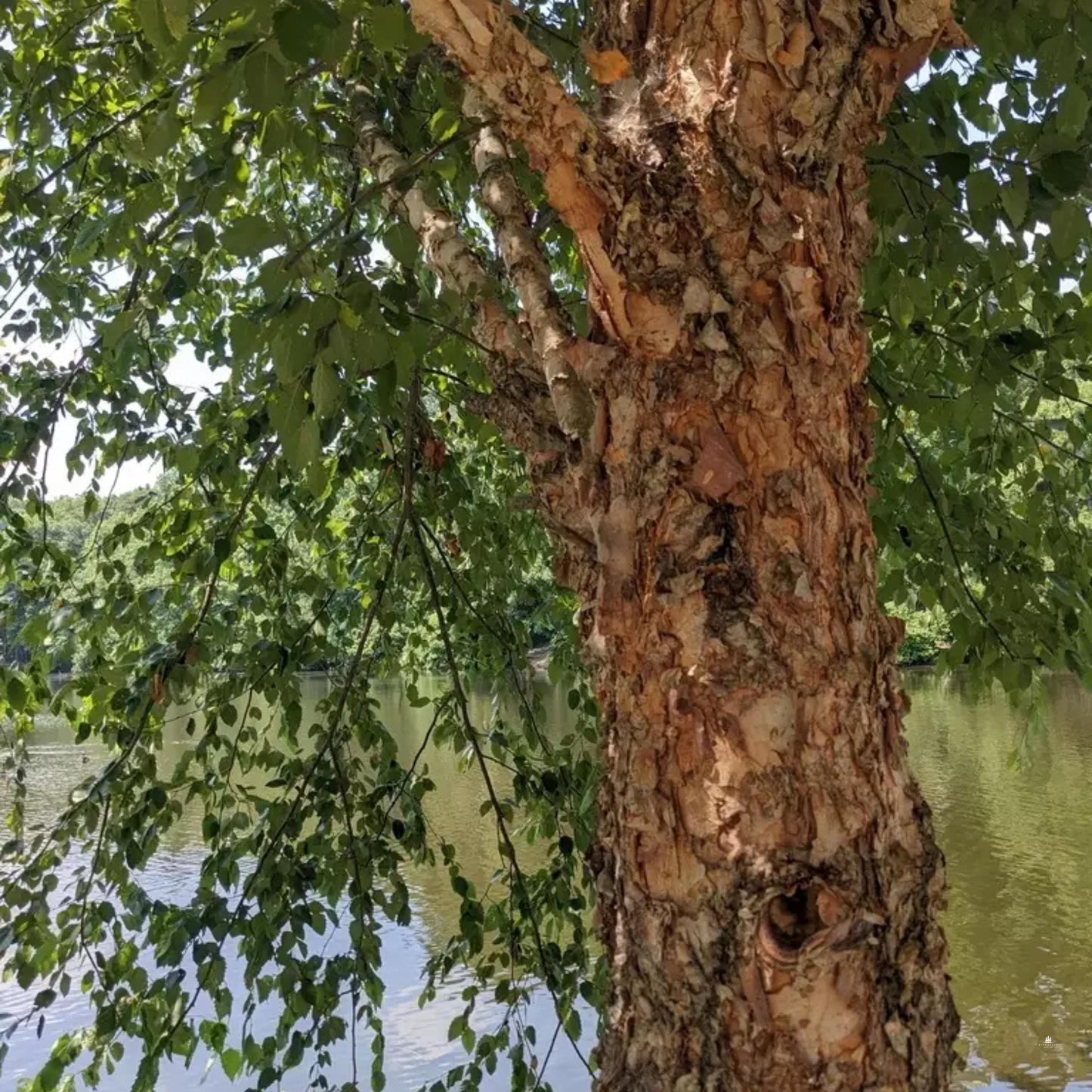
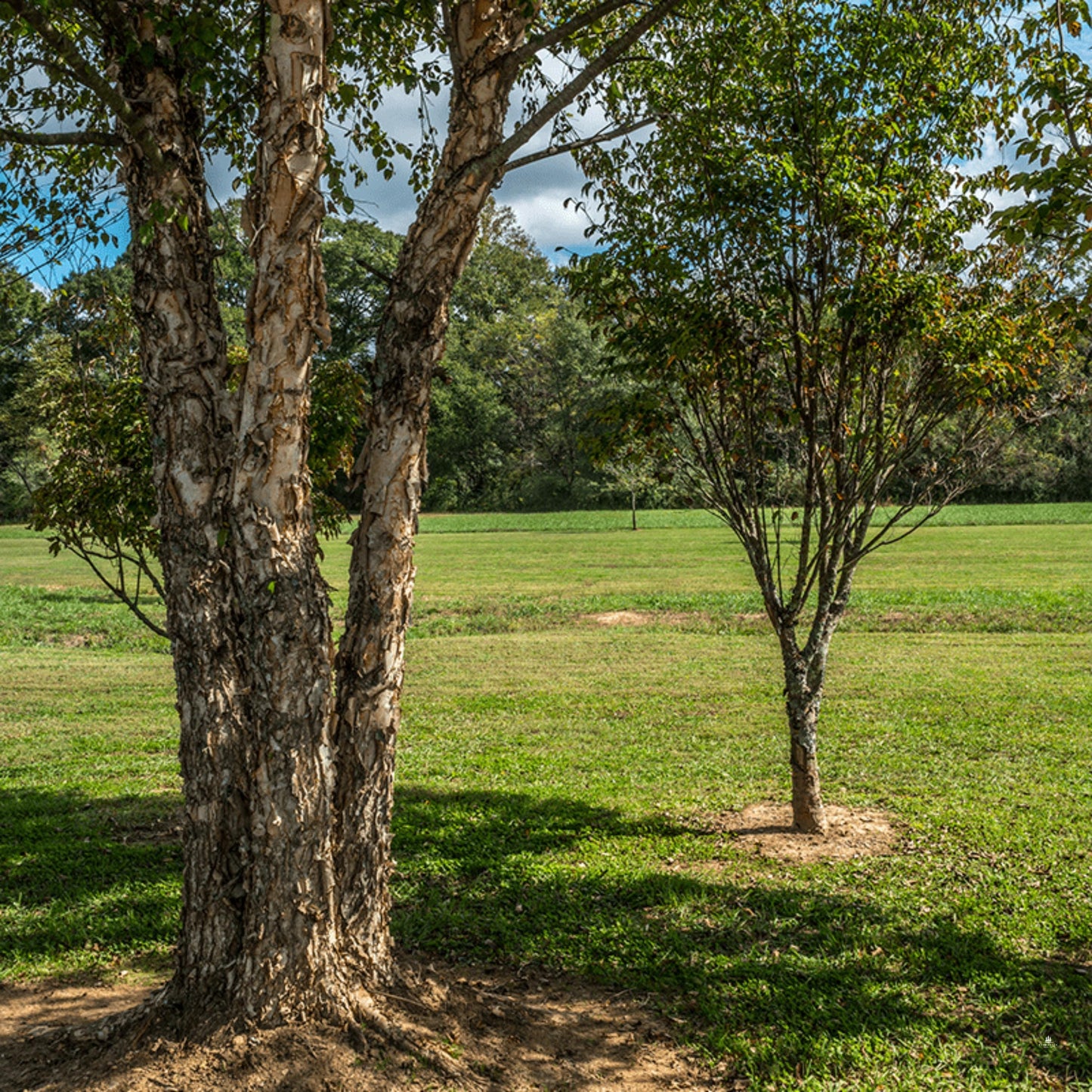
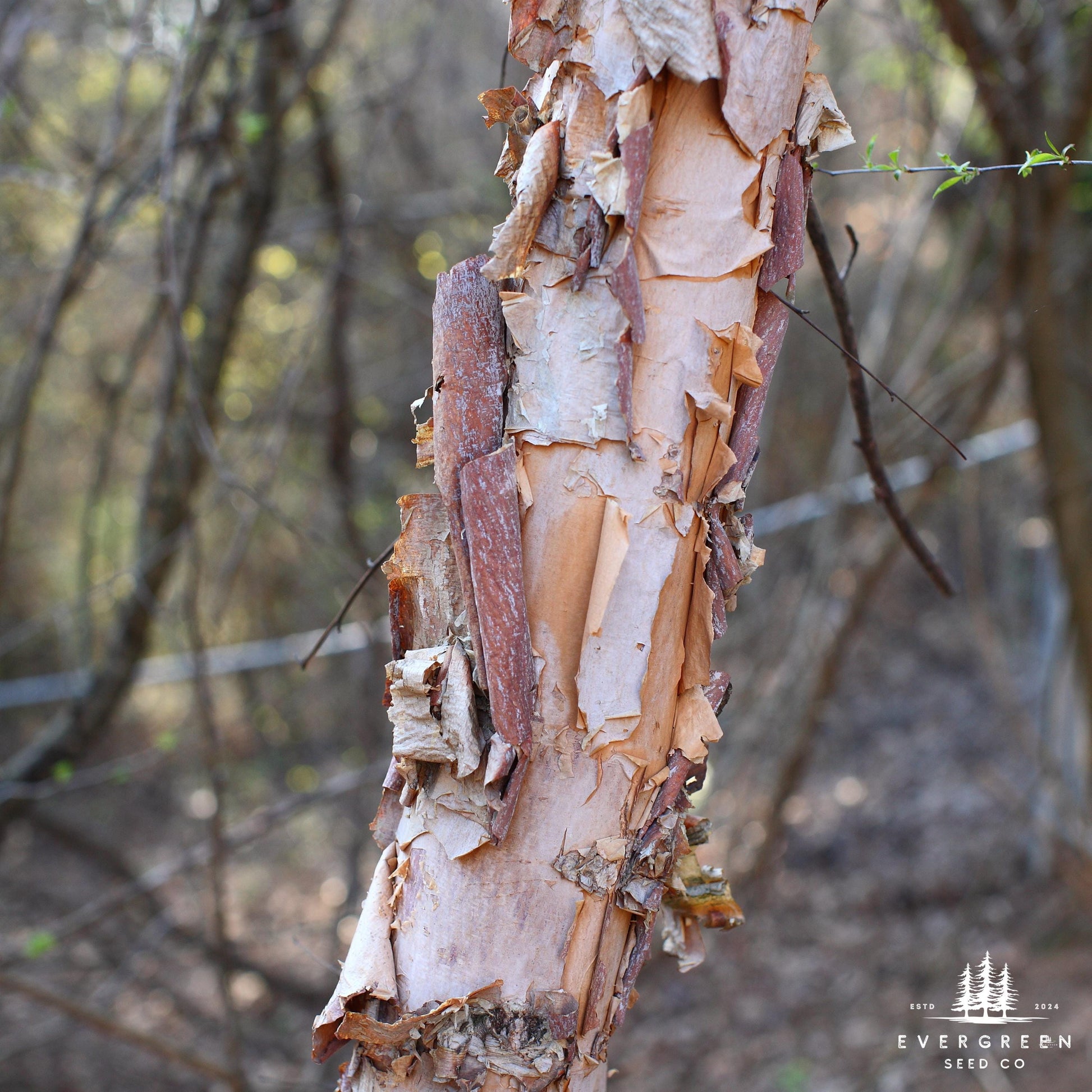
Betula nigra, the River Birch, is the most popular native tree in American landscaping for a reason. Its exfoliating bark peels back in papery layers of cinnamon, cream, and salmon that no other tree replicates, creating year-round visual interest that is spectacular in winter when the rest of the landscape goes gray. It grows faster than any other native birch, tolerates wet and dry soils with equal success, and resists the bronze birch borer that kills most other birch species. Plant it near water or in the middle of a lawn, in sun or partial shade, in the deep South or the upper Midwest. River Birch does not care. It grows. If you are looking to buy River Birch seeds or grow this native birch from seed, this is the most adaptable and visually distinctive birch available in North American horticulture.
- Spectacular exfoliating bark in layers of cinnamon, cream, and salmon, the most ornamental bark of any native birch
- The fastest-growing native birch in North America, gaining 1.5 to 3 feet per year
- Naturally resistant to bronze birch borer, which kills most other birch species in eastern North America
- Tolerates both wet soils and moderate drought, exceptionally adaptable compared to other birches
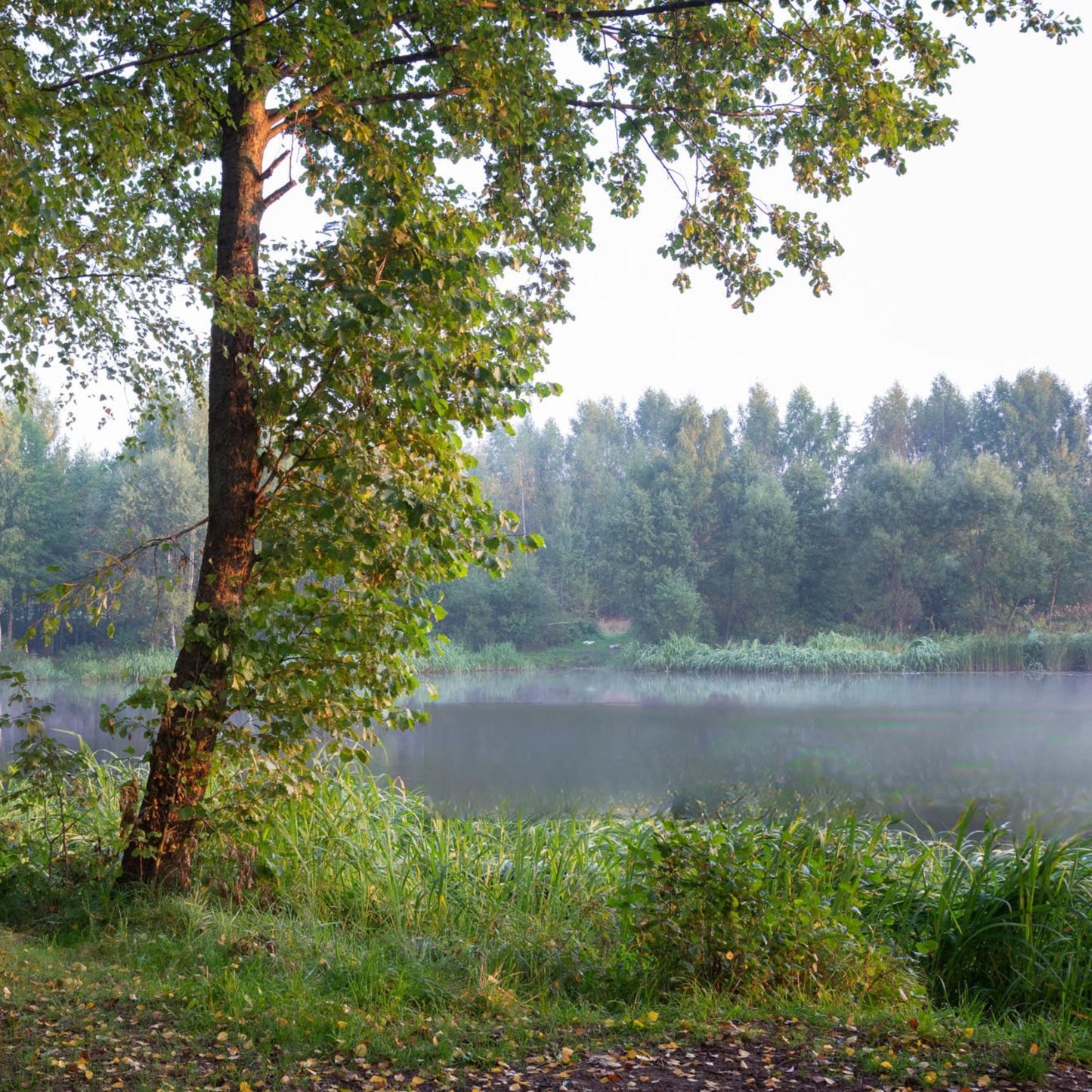
- Native across the eastern United States, important for bank stabilization along streams and rivers
Things you probably did not know about the River Birch
It is the only birch native to the southeastern United States.
All other native birches are cold-climate species that need long winters and cool summers. River Birch is unique in being comfortable in the heat and humidity of the Deep South, growing naturally along stream banks from Massachusetts to Florida and west to Kansas. This adaptability is why it succeeds in climates where other birches simply cannot survive.
The bark peels for structural reasons.
The papery exfoliating layers of River Birch bark are shed continuously as the tree grows, preventing the accumulation of lichens, mosses, and fungi that colonize the rough bark of slower-growing trees. The constant shedding is essentially the tree keeping its own skin clean. Each new layer beneath is smooth, fresh, and beautifully colored.
It was used for medicinal purposes by many Indigenous cultures.
The inner bark of River Birch was used by various Native American nations to treat fever, stomach complaints, and as a diuretic. The sap was consumed fresh in spring similarly to other birches. The bark oil contains methyl salicylate, a compound chemically related to aspirin that accounts for some of its traditional medicinal applications.
Planted in multiples it becomes architectural.
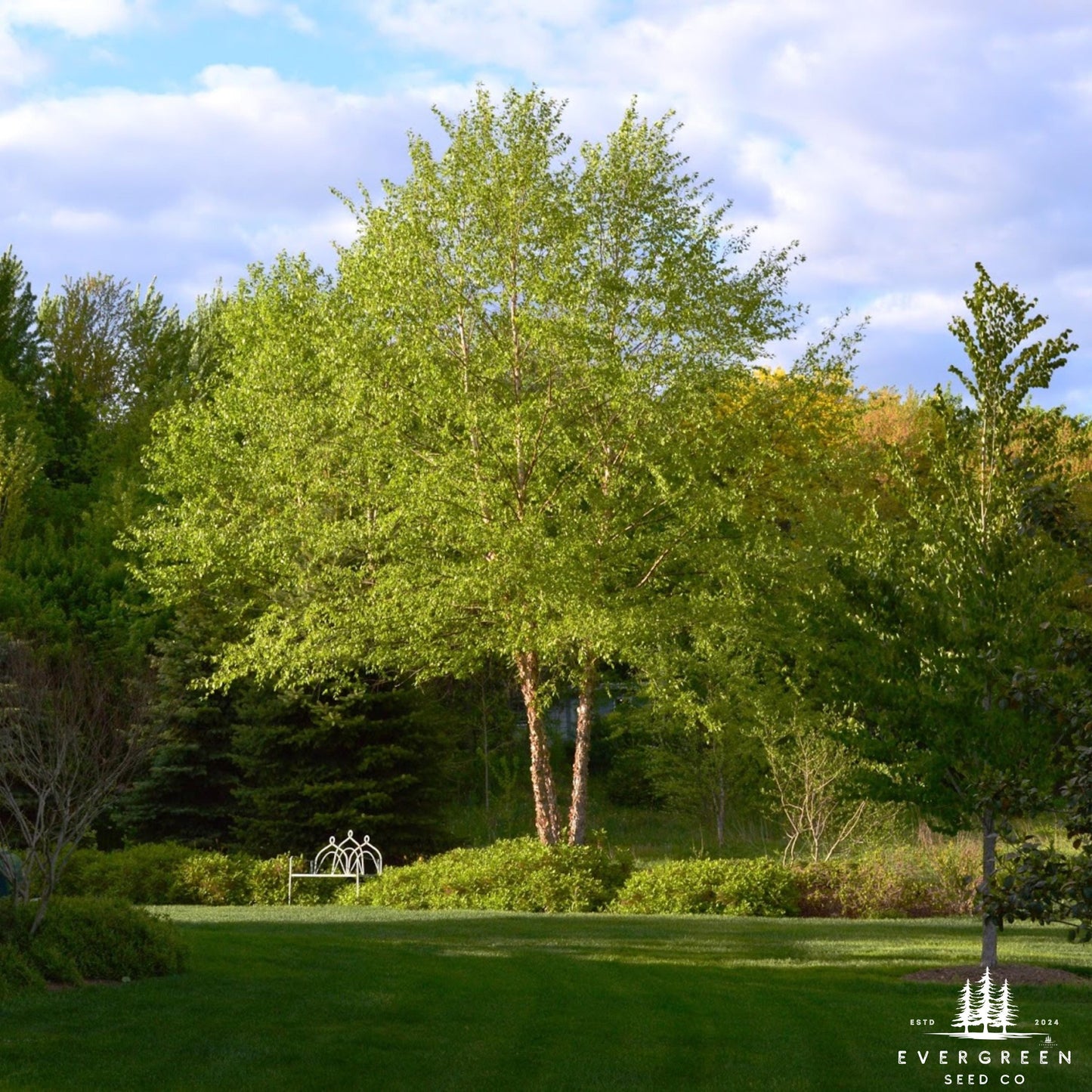
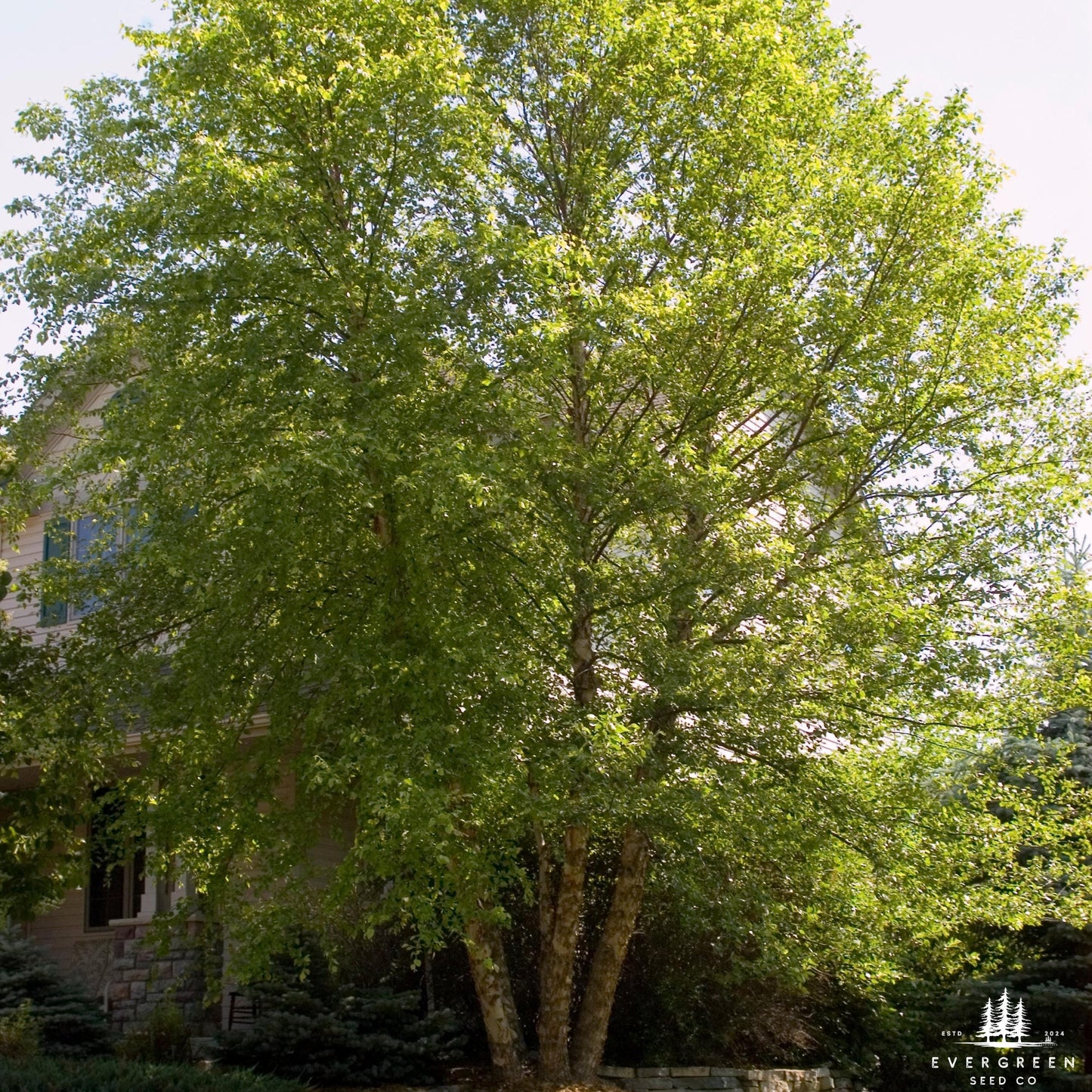
Landscape designers frequently specify River Birch in clumps of three or five stems to create a grove effect that accelerates the development of the distinctive multi-stemmed natural form. A clump planting reaches its full ornamental impact within 10 to 15 years and creates a focal point that defines the entire landscape around it.
Growing Details
- Botanical Name: Betula nigra
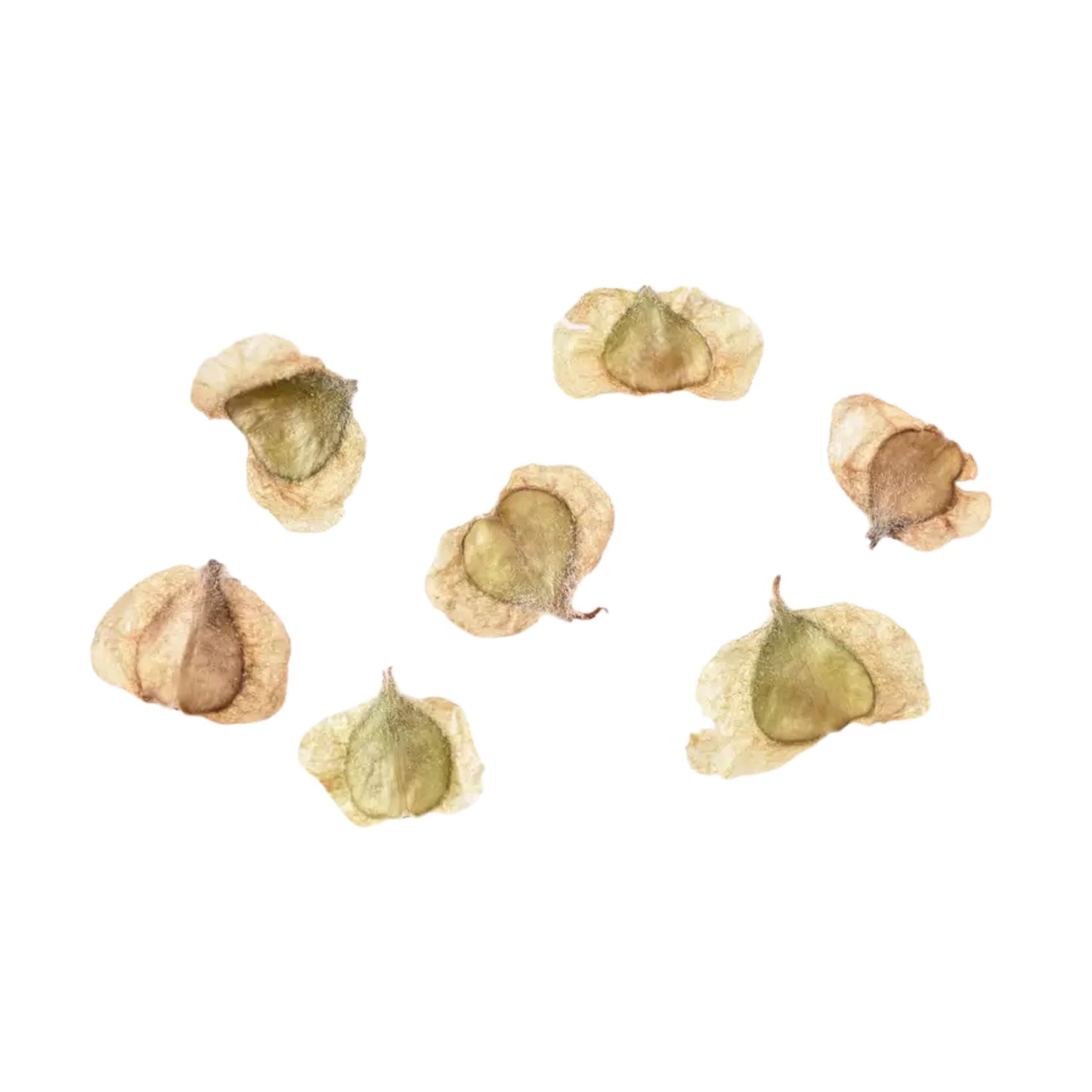
- Stratification: Required, surface sow on moist medium immediately after collecting, or 30 to 60 days cold stratification, seeds need light to germinate
- USDA Zones: 4 to 9
- Soil: Adaptable, prefers moist, slightly acidic soil but tolerates average to dry conditions
- Light: Full sun to partial shade
- Height: 40 to 70 feet
- Spread: 40 to 60 feet
- Growth Rate: Fast, 1.5 to 3 feet per year
Plant it near water if you have it, or anywhere else if you do not. Either way, when the afternoon sun hits that cinnamon bark in October you will be glad you did.
FAQ
FAQ
Do you pre-stratify the seeds?
Most of our seeds are not pre-stratified. We ship them unstratified so you can control germination timing based on your local growing season. We sell to all 50 U.S. states and Canadian provinces, and since each region has different planting windows, pre-stratifying would risk seeds germinating in transit or before you're ready to plant.
True stratification requires cold, moist conditions, which can lead to premature sprouting or mold if not timed properly. To avoid this, we store most seeds in dry cold conditions to preserve viability — but this does not initiate stratification.
Do any of your seeds need to stay moist? (Recalcitrant seeds)
Yes — some species we offer are recalcitrant, meaning they must remain moist to stay viable and cannot be dried out. Examples include: Chestnut, Hazelnut, Paw Paw, etc.
These seeds are shipped in moist cold storage and are clearly labeled on the product page when applicable. Please refrigerate immediately upon arrival and follow included care instructions.
Do you ship internationally?
We currently ship to the United States and Canada only. Unfortunately, we cannot ship to other countries without a phytosanitary certificate, which is required by most international customs agencies.
If you're interested in shipping outside North America, please contact us. Note that a phytosanitary certificate typically adds $60–$80 USD per seed type and must be arranged in advance.
Shipping & What's Included
Shipping & What's Included
Shipping & Packaging
Hand-packed in resealable zipper kraft paper seed bags
Stratification and planting instructions included with every order
1 free bonus seed pack included with every order
Ships within 3–5 business days via USPS
Return Policy
Return Policy
Due to the nature of our products, we do not accept returns on seeds.
However, if your order arrives damaged or incorrect, please contact us within 7 days and we’ll make it right.