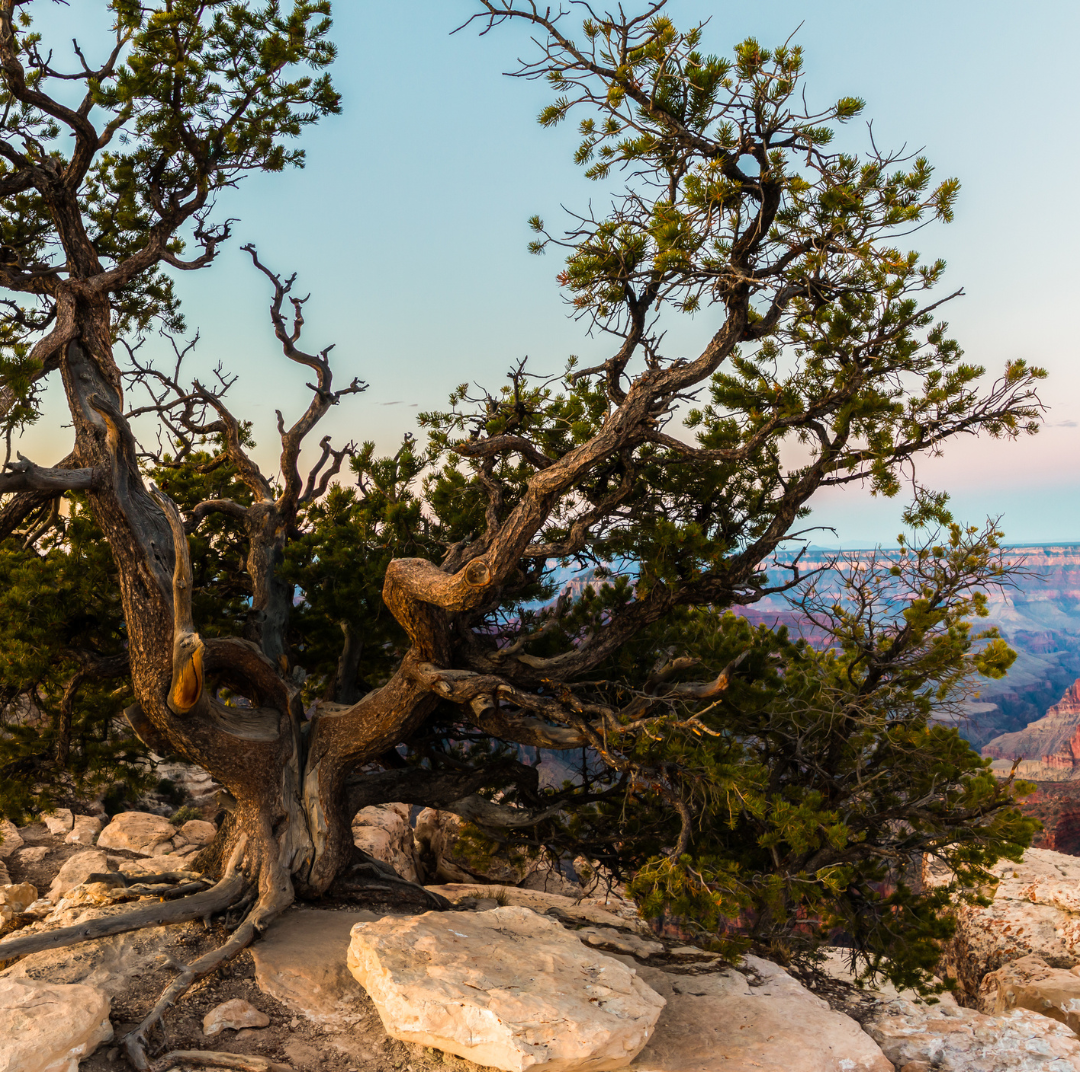


Pinyon Pine Tree Seeds (Pinus Edulis)
Pinyon Pine Tree Seeds (Pinus Edulis)
The pine nut tree. Ancient food of the desert west.
Pinus edulis, the Pinyon Pine, is the tree that produces the pine nuts sold in every grocery store, a slow-growing, drought-adapted conifer native to the high desert and mountain foothills of the American Southwest that has been one of the most important food trees for Indigenous peoples across the region for thousands of years. Its plump, wingless seeds are among the most calorie-dense and flavorful wild foods available from any North American tree, and in good mast years a single Pinyon Pine can produce pounds of edible nuts. It grows in conditions where most other trees refuse to establish, on dry, rocky, alkaline soils at elevations where summer temperatures swing 50 degrees between day and night, and it lives for centuries in those conditions with extraordinary patience. If you are looking to buy Pinyon Pine seeds or grow pine nuts from seed, this is the most productive edible conifer available in the dry mountain west.
- Produces the edible pine nuts sold commercially, among the most nutritious seeds of any native tree
- Adapted to arid, rocky, alkaline soils at high elevation where most trees cannot survive
- Extremely drought-tolerant once established, requiring almost no supplemental water in its native range
- Slow-growing and extremely long-lived, with documented specimens over 1,000 years old
- Fragrant resin and blue-green needles in pairs, a distinctive and beautiful small conifer
Things you probably did not know about the Pinyon Pine
The pine nut harvest once fed millions of people. Before European contact, the annual Pinyon nut harvest was the most important food gathering event of the year for dozens of Indigenous nations across the Great Basin and Southwest including the Navajo, Hopi, Ute, Paiute, and dozens of others. Families traveled hundreds of miles to traditional harvest grounds, gathered nuts in enormous quantities, and stored them as a primary winter staple. The failure of the Pinyon nut crop was one of the most serious food security events that could befall a community.
Clark's Nutcrackers are essential to Pinyon reproduction. The Pinyon Pine depends almost entirely on a single bird, Clark's Nutcracker, for its seed dispersal. The birds harvest thousands of Pinyon seeds each fall, cache them in the ground across the landscape as a winter food supply, and fail to retrieve some percentage of them. Those forgotten caches germinate and become the next generation of Pinyon forest. The spatial memory of a single nutcracker plants thousands of trees per year.
The nuts are high in unsaturated fat and protein unlike most seeds from conifers. Pinyon Pine seeds are approximately 65 percent fat, primarily heart-healthy oleic and linoleic acids, and contain roughly 14 percent protein. They are one of the few conifer seeds nutritious enough to be a significant caloric food source for humans, and their flavor is richer and more complex than cultivated pine nuts imported from Asia.
A Pinyon Pine growing on a rocky slope may be 700 years old without appearing old. The slow growth rate of Pinyon Pine in its native habitat means that trees adding less than a quarter inch of trunk diameter per decade look much younger than they are. A Pinyon in a rocky bajada that looks like a modest 20-foot shrub-tree may have germinated before Columbus arrived in the Americas.
Growing Details
- Botanical Name: Pinus edulis
- Stratification: Recommended, 30 to 60 days cold stratification
- USDA Zones: 4 to 8
- Soil: Well-drained, rocky, sandy, or poor quality, tolerates alkaline conditions, requires excellent drainage
- Light: Full sun
- Height: 10 to 35 feet
- Spread: 8 to 20 feet
- Growth Rate: Slow, 6 to 12 inches per year
Plant it in full sun in the driest, rockiest spot on your property and expect it to still be there in 300 years. Some investments pay out on a timeline that has nothing to do with yours.
FAQ
FAQ
Do you pre-stratify the seeds?
Most of our seeds are not pre-stratified. We ship them unstratified so you can control germination timing based on your local growing season. We sell to all 50 U.S. states and Canadian provinces, and since each region has different planting windows, pre-stratifying would risk seeds germinating in transit or before you're ready to plant.
True stratification requires cold, moist conditions, which can lead to premature sprouting or mold if not timed properly. To avoid this, we store most seeds in dry cold conditions to preserve viability — but this does not initiate stratification.
Do any of your seeds need to stay moist? (Recalcitrant seeds)
Yes — some species we offer are recalcitrant, meaning they must remain moist to stay viable and cannot be dried out. Examples include: Chestnut, Hazelnut, Paw Paw, etc.
These seeds are shipped in moist cold storage and are clearly labeled on the product page when applicable. Please refrigerate immediately upon arrival and follow included care instructions.
Do you ship internationally?
We currently ship to the United States and Canada only. Unfortunately, we cannot ship to other countries without a phytosanitary certificate, which is required by most international customs agencies.
If you're interested in shipping outside North America, please contact us. Note that a phytosanitary certificate typically adds $60–$80 USD per seed type and must be arranged in advance.
Shipping & What's Included
Shipping & What's Included
Shipping & Packaging
Hand-packed in resealable zipper kraft paper seed bags
Stratification and planting instructions included with every order
1 free bonus seed pack included with every order
Ships within 3–5 business days via USPS
Return Policy
Return Policy
Due to the nature of our products, we do not accept returns on seeds.
However, if your order arrives damaged or incorrect, please contact us within 7 days and we’ll make it right.