

Korean Fir Tree Seeds (Abies koreana)
Korean Fir Tree Seeds (Abies koreana)
The compact fir with the most spectacular cones. Ornamental in every season.
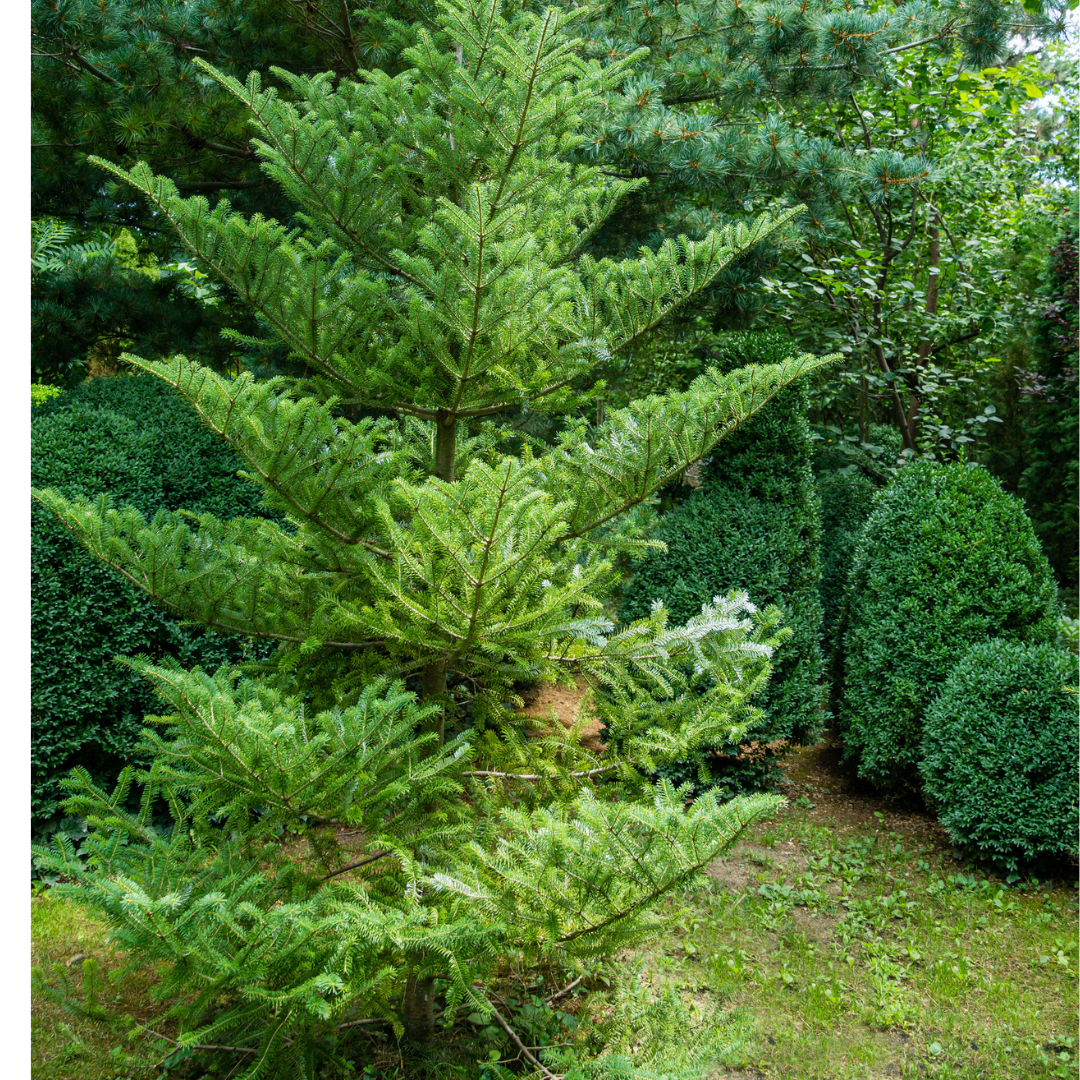
Abies koreana, the Korean Fir, is one of the most ornamentally complete conifers available to temperate growers, a slow-growing, compact fir that produces violet-blue upright cones at a younger age than almost any other fir, on even small specimens, creating a display of color and texture through late spring and summer that rivals the flowering display of broadleaf ornamentals. Native to the high mountains of South Korea, it is cold-hardy, disease-resistant, and develops into a neat pyramidal form that requires no pruning to maintain its shape. The needle undersides are brilliant silver-white, making the canopy shimmer when wind moves through it. If you are looking to buy Korean Fir seeds or grow this ornamental conifer from seed, this is the fir that produces cones before most other firs are tall enough to notice.
- Produces violet-blue upright cones on young specimens, before most other firs cone at all
- Brilliant silver-white needle undersides creating a shimmering two-toned canopy effect
- Slow-growing, compact, and naturally pyramidal, requiring no pruning to maintain form
- Cold-hardy and disease-resistant, one of the most reliable ornamental firs for temperate gardens
- Multi-season interest from the silver needle undersides in summer to the violet cones in late spring
Things you probably did not know about the Korean Fir
It cones at a smaller size than any other fir species. Most fir species require considerable age and height before producing cones, typically 20 or more years. Korean Fir produces cones on specimens only 3 to 5 feet tall, sometimes within 5 years of planting. This precocious coning is the characteristic that makes it so valued as an ornamental, providing the extraordinary violet-blue upright cone display on a tree that fits in a modest garden space.
The cones disintegrate on the tree rather than falling intact. Fir cones, unlike spruce and pine cones, shatter while still attached to the branch, releasing their scales and seeds while the central cone axis remains on the tree for months. This disintegration process is dramatic when it happens and leaves the distinctive upright central stalks visible on the branches through winter after the cone scales have fallen.
It is endemic to a small island and mountain range in South Korea. Korean Fir grows naturally only on Jeju Island and in the high mountains of the southern Korean peninsula, an extremely restricted native range that makes it one of the more geographically limited native conifers in temperate Asia. This limited range and its ornamental value make conservation of wild populations relevant, and cultivated trees represent a meaningful population outside the native range.
The silver needle undersides are a structural adaptation for mountain snow. The bright silver wax coating on the underside of Korean Fir needles reflects light and helps shed snow loads in its native mountain habitat where snowfall can be extreme. In a garden setting, this adaptation creates the ornamental shimmering effect that makes Korean Fir so distinctive when wind moves through the canopy.
Growing Details
- Botanical Name: Abies koreana
- Stratification: Required, 30 to 60 days cold stratification
- USDA Zones: 4 to 7
- Soil: Well-drained, moist, slightly acidic, cool sites preferred
- Light: Full sun to partial shade
- Height: 15 to 30 feet
- Spread: 5 to 10 feet
- Growth Rate: Slow, 6 to 12 inches per year
Plant it where the cones will be visible from a path or window in June. The violet blue against the dark green needles is one of the most quietly remarkable things a conifer garden can show.
FAQ
FAQ
Do you pre-stratify the seeds?
Most of our seeds are not pre-stratified. We ship them unstratified so you can control germination timing based on your local growing season. We sell to all 50 U.S. states and Canadian provinces, and since each region has different planting windows, pre-stratifying would risk seeds germinating in transit or before you're ready to plant.
True stratification requires cold, moist conditions, which can lead to premature sprouting or mold if not timed properly. To avoid this, we store most seeds in dry cold conditions to preserve viability — but this does not initiate stratification.
Do any of your seeds need to stay moist? (Recalcitrant seeds)
Yes — some species we offer are recalcitrant, meaning they must remain moist to stay viable and cannot be dried out. Examples include: Chestnut, Hazelnut, Paw Paw, etc.
These seeds are shipped in moist cold storage and are clearly labeled on the product page when applicable. Please refrigerate immediately upon arrival and follow included care instructions.
Do you ship internationally?
We currently ship to the United States and Canada only. Unfortunately, we cannot ship to other countries without a phytosanitary certificate, which is required by most international customs agencies.
If you're interested in shipping outside North America, please contact us. Note that a phytosanitary certificate typically adds $60–$80 USD per seed type and must be arranged in advance.
Shipping & What's Included
Shipping & What's Included
Shipping & Packaging
Hand-packed in resealable zipper kraft paper seed bags
Stratification and planting instructions included with every order
1 free bonus seed pack included with every order
Ships within 3–5 business days via USPS
Return Policy
Return Policy
Due to the nature of our products, we do not accept returns on seeds.
However, if your order arrives damaged or incorrect, please contact us within 7 days and we’ll make it right.