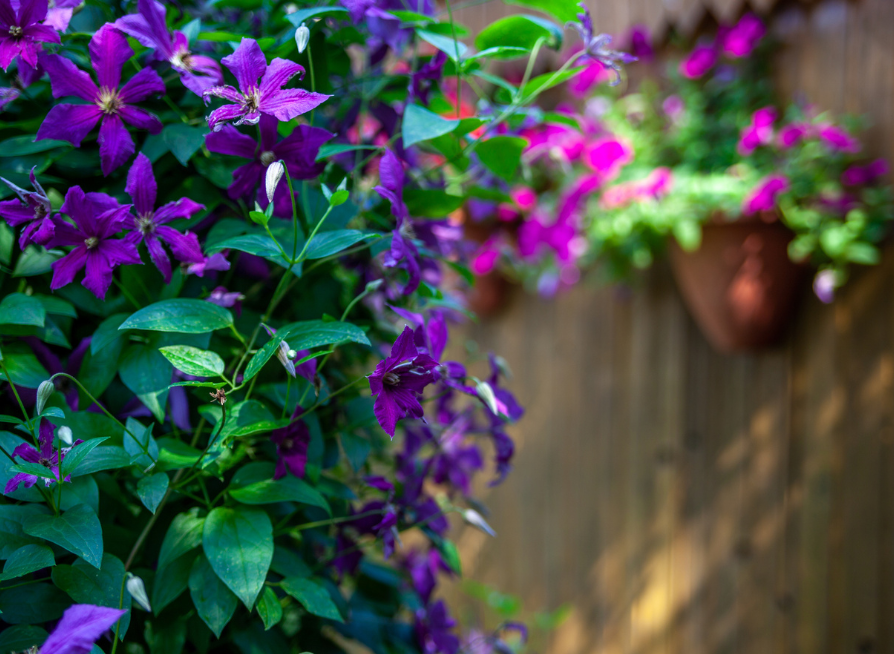


Italian Clematis Seeds | Italian Leather Flower | (Clematis viticella)
Italian Clematis Seeds | Italian Leather Flower | (Clematis viticella)
The most floriferous climbing vine in temperate horticulture. Thousands of flowers. All summer.
Clematis viticella, the Italian Clematis or Italian Leather Flower, is the most prolific-flowering clematis species available, a vigorous climbing vine native to southern Europe and western Asia that produces hundreds to thousands of small, nodding flowers in shades of purple, violet, rose, and wine-red throughout summer from June through September in a continuous display that no other clematis species matches for sheer quantity. Unlike many clematis species that produce a single flush of flowers in spring or early summer, Italian Clematis blooms on new growth throughout the season, meaning the longer it grows the more it flowers. It is also exceptionally disease-resistant, essentially immune to the clematis wilt that devastates large-flowered hybrid clematis varieties, making it the most reliable and lowest-maintenance clematis available for temperate gardens. If you are looking to buy Italian Clematis seeds or grow viticella clematis from seed, this is the clematis that serious clematis growers consider the most essential in any collection.
- Produces hundreds to thousands of small, nodding flowers throughout the entire growing season from June through September
- Blooms on new growth continuously, increasing in flower production as the season progresses
- Essentially immune to clematis wilt, the disease that destroys most large-flowered hybrid clematis varieties
- Seed-grown plants produce natural variation in flower color from purple through violet, rose, and wine-red
- Vigorous, fast-growing, and adaptable to a wide range of soils and conditions
Things you probably did not know about the Italian Clematis
Virtually all the most popular large-flowered clematis hybrids have Clematis viticella in their parentage. The viticella group of clematis hybrids, which includes hundreds of named garden cultivars, was developed primarily by crossing Clematis viticella with other species and then selecting for larger flowers while retaining the disease resistance and continuous blooming of the viticella parent. When a large-flowered clematis is described as viticella-type, it means the wilt resistance and summer-blooming characteristics derive from this species. The entire culture of clematis as garden plants owes an enormous debt to Clematis viticella's disease-resistant genetics.
It was one of the first garden plants introduced from the Ottoman Empire to England. Clematis viticella was introduced to English gardens from Turkey in 1569, making it one of the earliest exotic garden plants to reach Britain from the eastern Mediterranean. The timing of its introduction, during the reign of Elizabeth I, places it in the period of the first sustained plant exchanges between Britain and the Ottoman Empire, and it has been grown in English gardens continuously for over 450 years.
The flowers nod downward specifically to protect the pollen from rain. The pendant, nodding orientation of Clematis viticella flowers, with the petals turned downward and the reproductive structures hanging within the shelter of the flower, is an adaptation to rainy temperate European climates where upward-facing flowers would have their pollen washed away in summer showers. The nodding habit protects the pollen and nectar beneath a floral umbrella while still remaining accessible to the bees and butterflies that pollinate the flowers from below.
Cutting back to near the ground in late winter produces the strongest summer display. Italian Clematis belongs to pruning Group 3, meaning it blooms entirely on current season growth and benefits from hard pruning to 12 to 18 inches from the ground each late winter or early spring. This annual hard pruning removes the previous year's woody stems, stimulates vigorous new growth, and produces the most floriferous display of the season. Without pruning the vine eventually produces most of its flowers at the top of an increasingly woody base.
Growing Details
- Botanical Name: Clematis viticella
- Stratification: Required, 60 to 90 days cold stratification
- USDA Zones: 3 to 9
- Soil: Well-drained, moderately fertile, slightly alkaline to neutral, cool root zone preferred
- Light: Full sun to partial shade, classic advice is feet in shade and head in sun
- Height: 8 to 15 feet as a climbing vine
- Spread: 4 to 8 feet
- Growth Rate: Fast, 6 to 12 feet of new growth per season from established plants
Plant it at the base of a trellis, fence, or shrub where the roots will be shaded by a low perennial or stone mulch and the flowering stems can reach full sun. Cut it back hard every February and let it do the rest.
FAQ
FAQ
Do you pre-stratify the seeds?
Most of our seeds are not pre-stratified. We ship them unstratified so you can control germination timing based on your local growing season. We sell to all 50 U.S. states and Canadian provinces, and since each region has different planting windows, pre-stratifying would risk seeds germinating in transit or before you're ready to plant.
True stratification requires cold, moist conditions, which can lead to premature sprouting or mold if not timed properly. To avoid this, we store most seeds in dry cold conditions to preserve viability — but this does not initiate stratification.
Do any of your seeds need to stay moist? (Recalcitrant seeds)
Yes — some species we offer are recalcitrant, meaning they must remain moist to stay viable and cannot be dried out. Examples include: Chestnut, Hazelnut, Paw Paw, etc.
These seeds are shipped in moist cold storage and are clearly labeled on the product page when applicable. Please refrigerate immediately upon arrival and follow included care instructions.
Do you ship internationally?
We currently ship to the United States and Canada only. Unfortunately, we cannot ship to other countries without a phytosanitary certificate, which is required by most international customs agencies.
If you're interested in shipping outside North America, please contact us. Note that a phytosanitary certificate typically adds $60–$80 USD per seed type and must be arranged in advance.
Shipping & What's Included
Shipping & What's Included
Shipping & Packaging
Hand-packed in resealable zipper kraft paper seed bags
Stratification and planting instructions included with every order
1 free bonus seed pack included with every order
Ships within 3–5 business days via USPS
Return Policy
Return Policy
Due to the nature of our products, we do not accept returns on seeds.
However, if your order arrives damaged or incorrect, please contact us within 7 days and we’ll make it right.