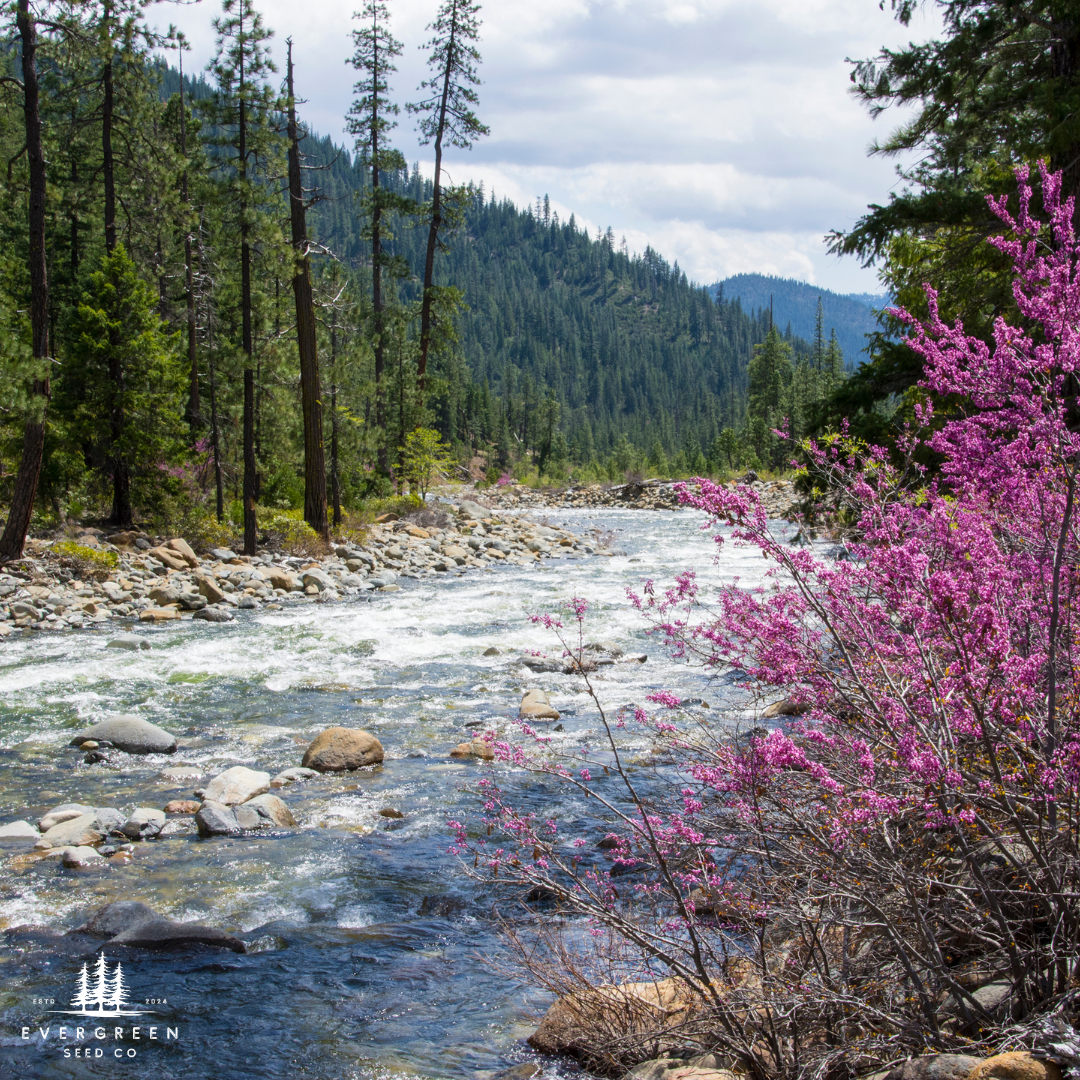


Eastern Redbud Tree Seeds-(Cercis canadensis)
Eastern Redbud Tree Seeds-(Cercis canadensis)
Spring's first announcement. The most beloved flowering native tree in the East.
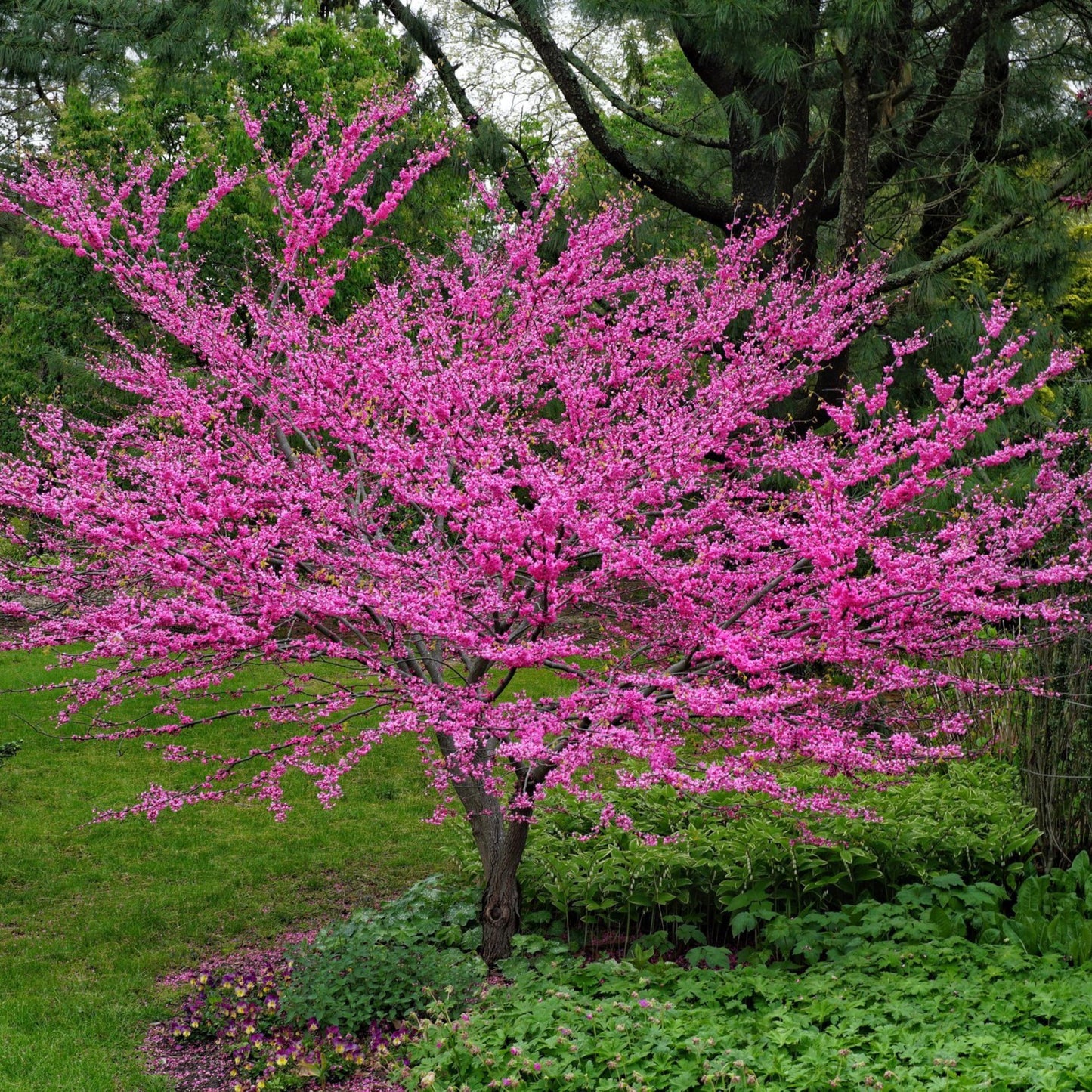
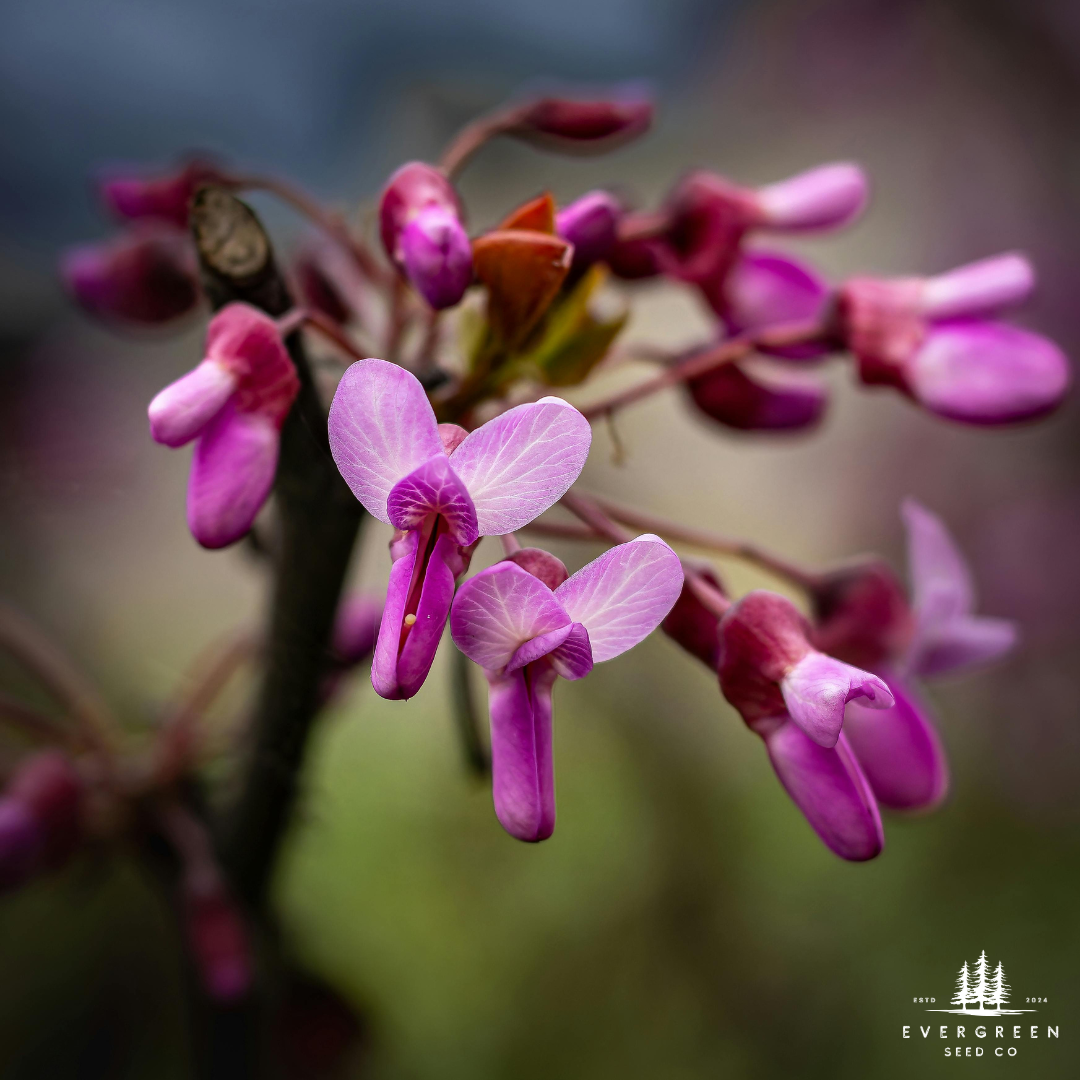
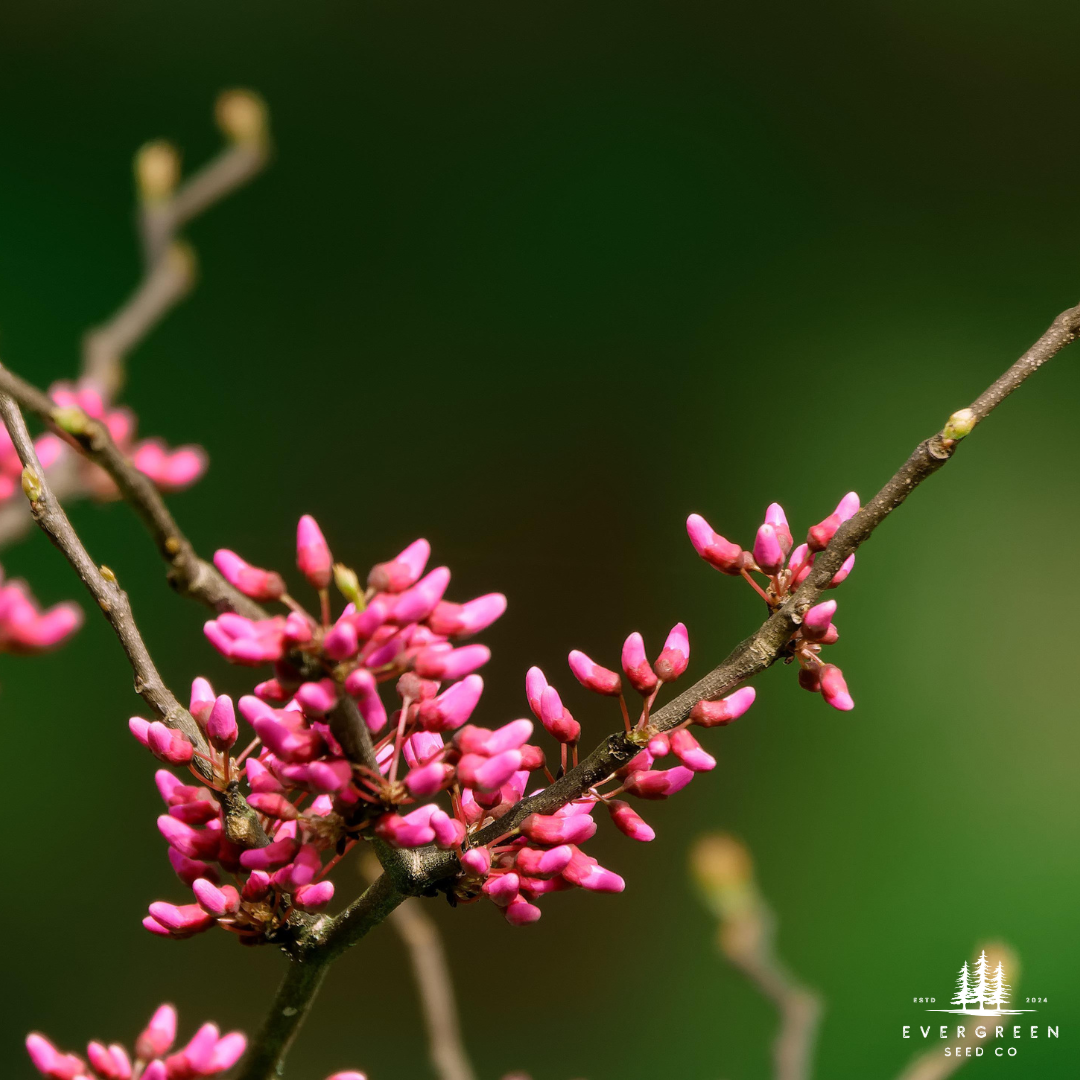
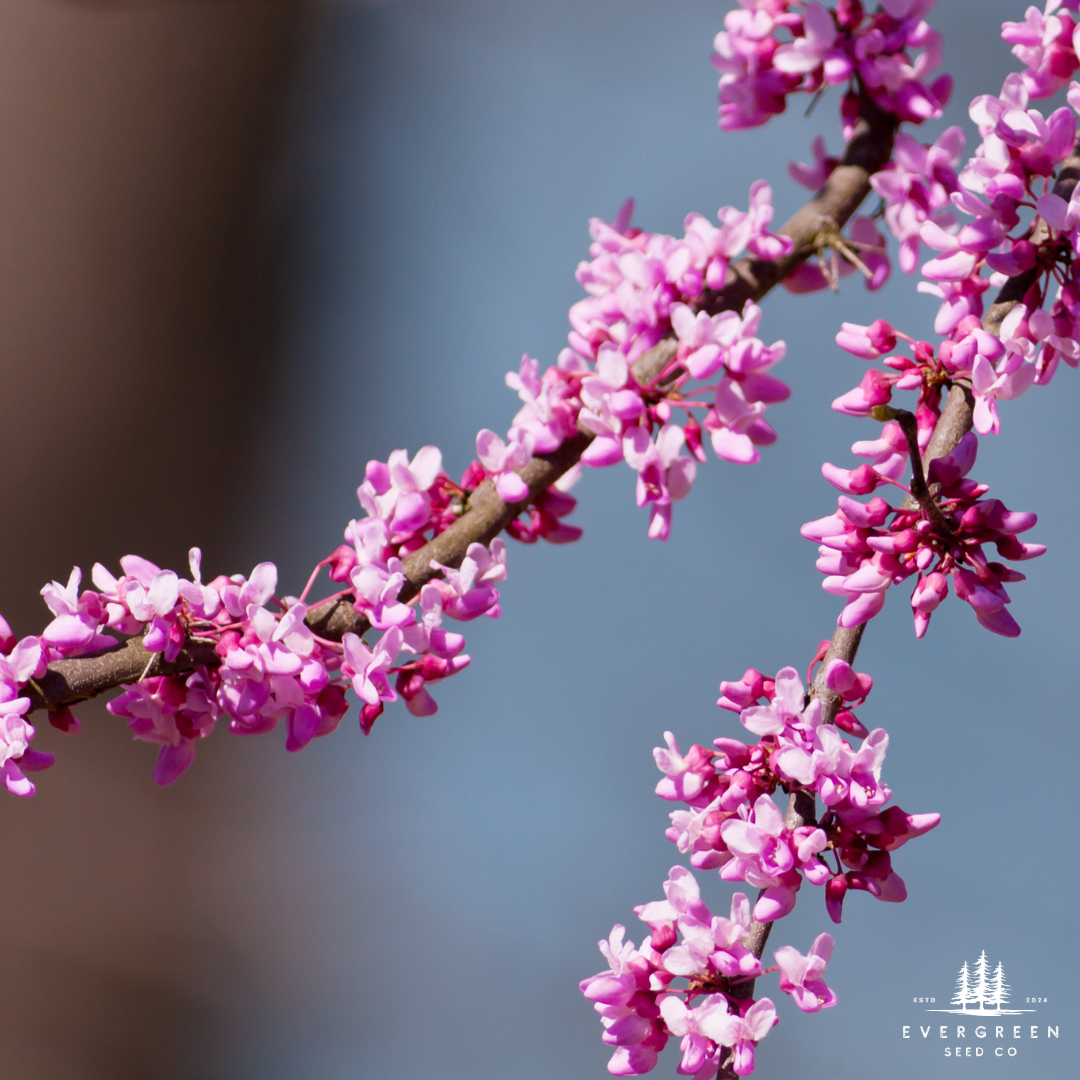
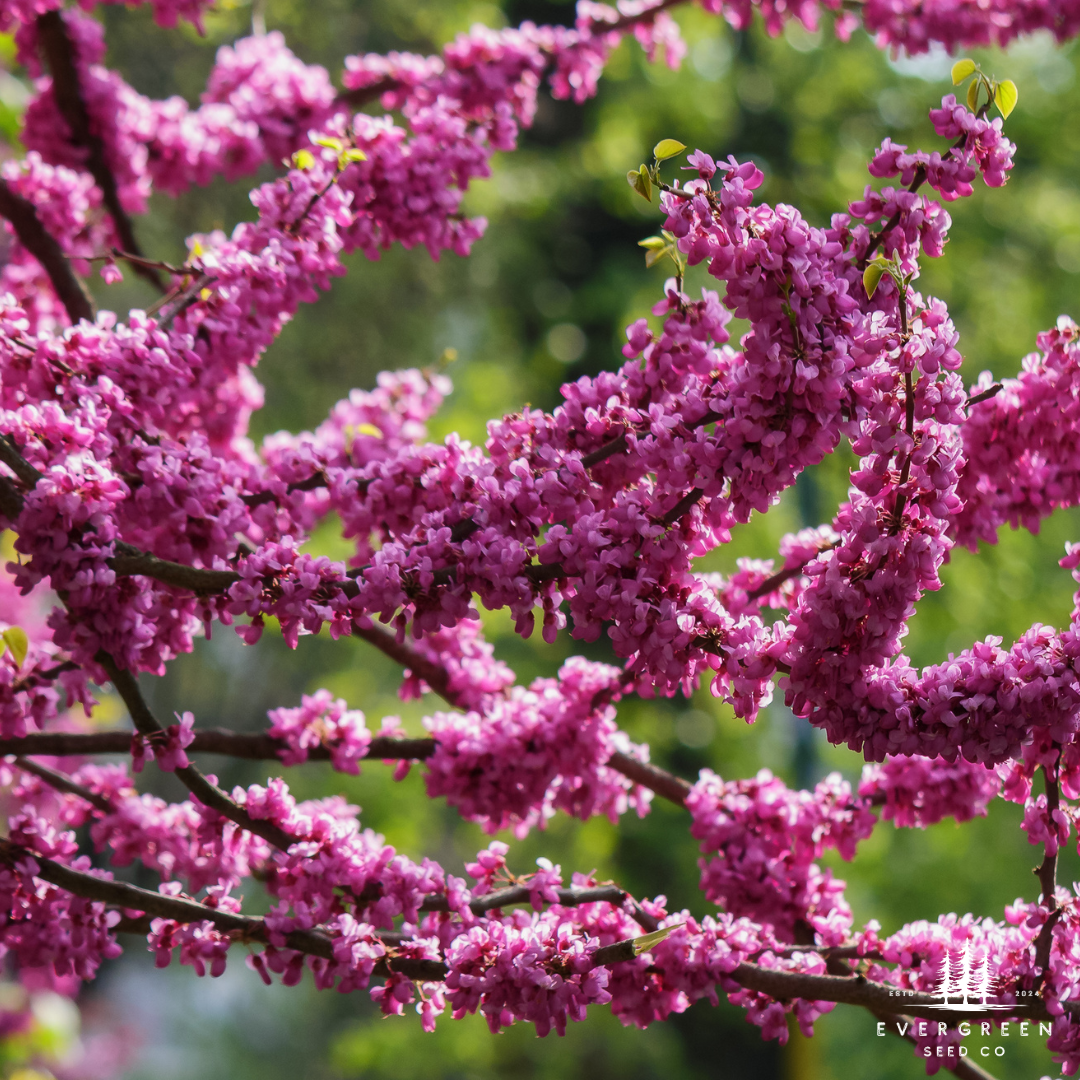
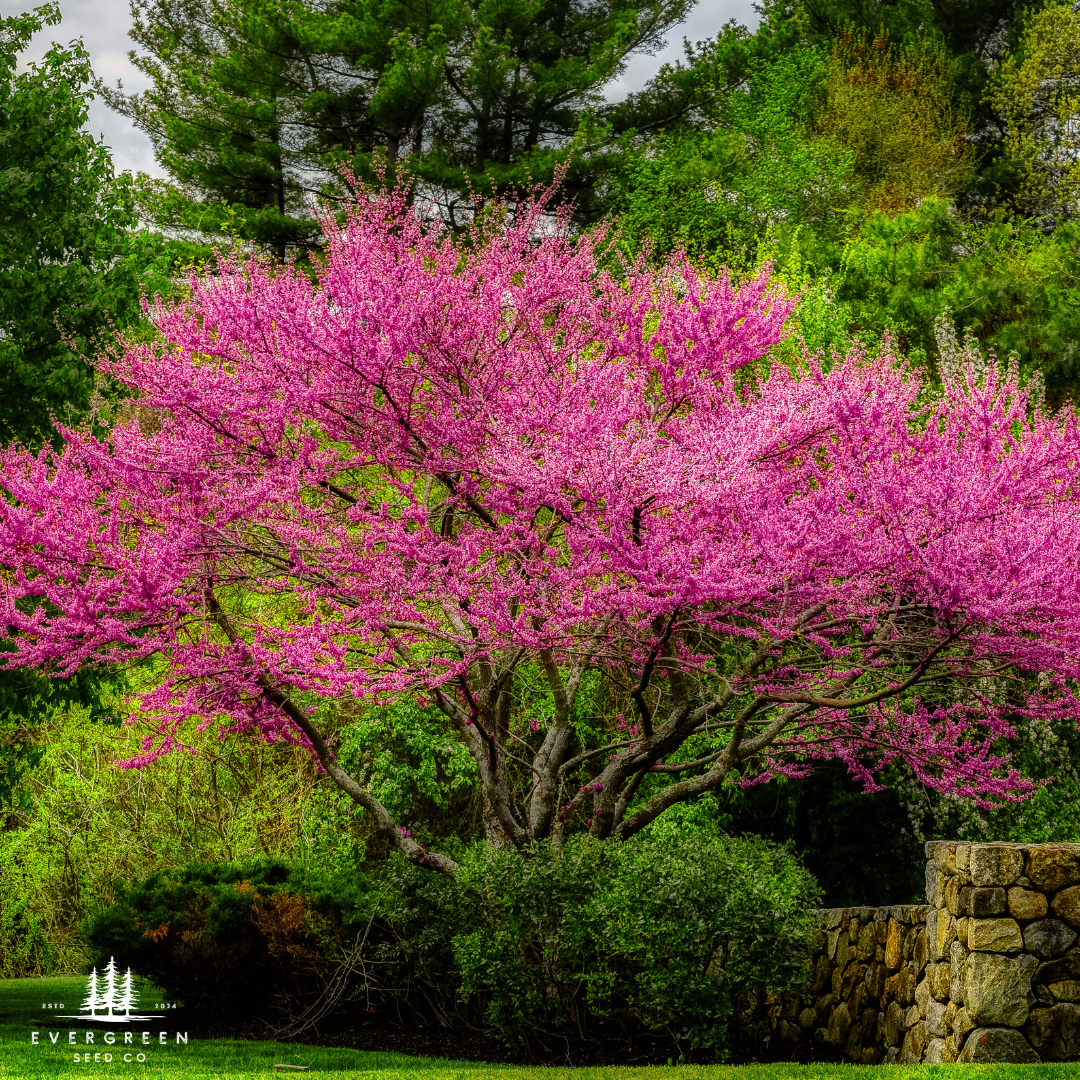
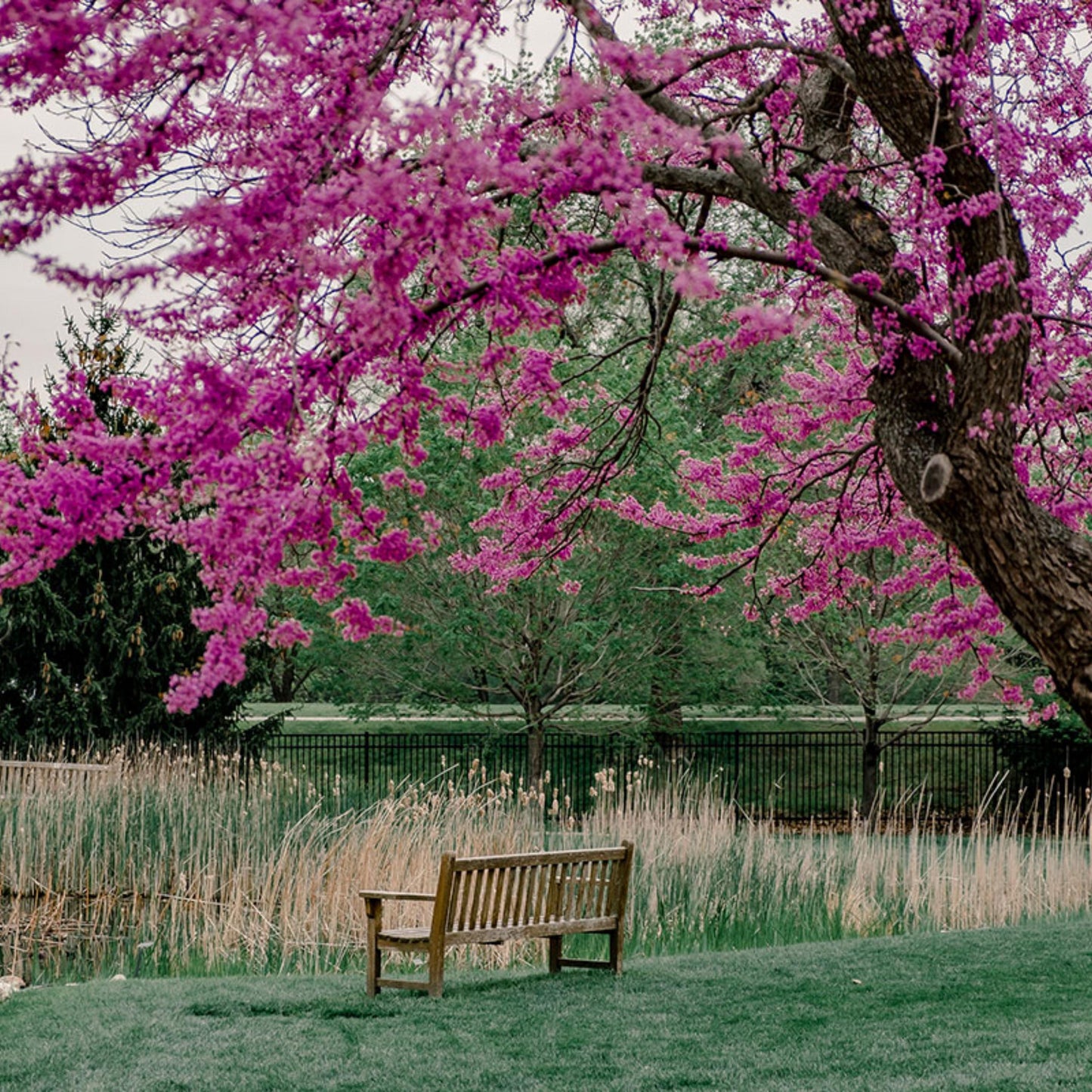
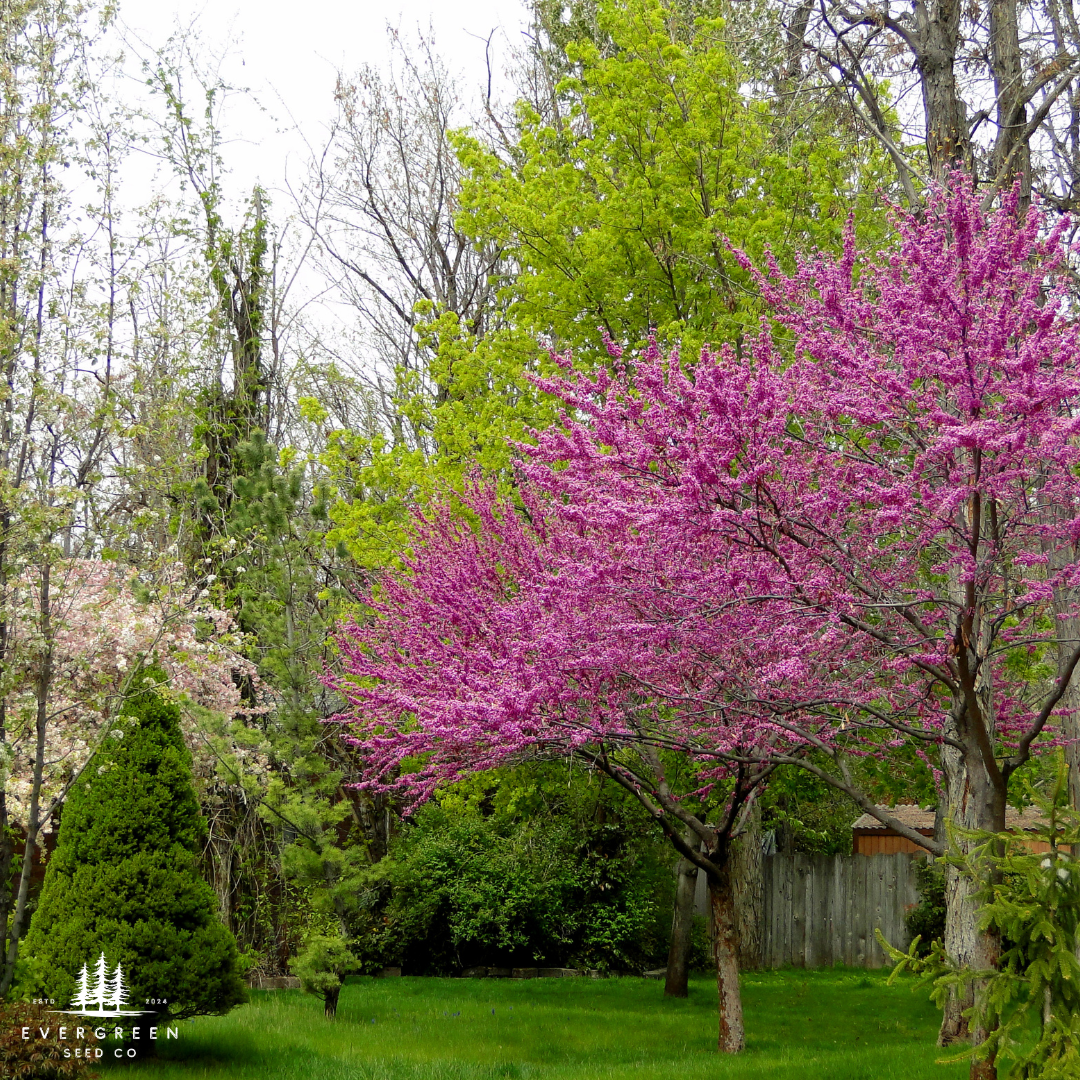
Cercis canadensis, the Eastern Redbud, is the tree that tells you winter is over. Before a single leaf has opened anywhere in the landscape, Redbud covers its bare branches in dense clusters of rosy-pink flowers from trunk to twig tip, creating one of the most vivid and hopeful displays in the spring garden. It is native across a wide swath of eastern North America, grows in full sun and partial shade, tolerates poor soils, and stays at a size that fits almost any property. It is also one of the most important early-season nectar trees for native bees emerging from winter. If you are looking to buy Eastern Redbud seeds or grow redbud from seed, this is the flowering native tree most likely to stop traffic in spring.
- One of the earliest flowering trees in spring, blooming on bare branches before leaves emerge
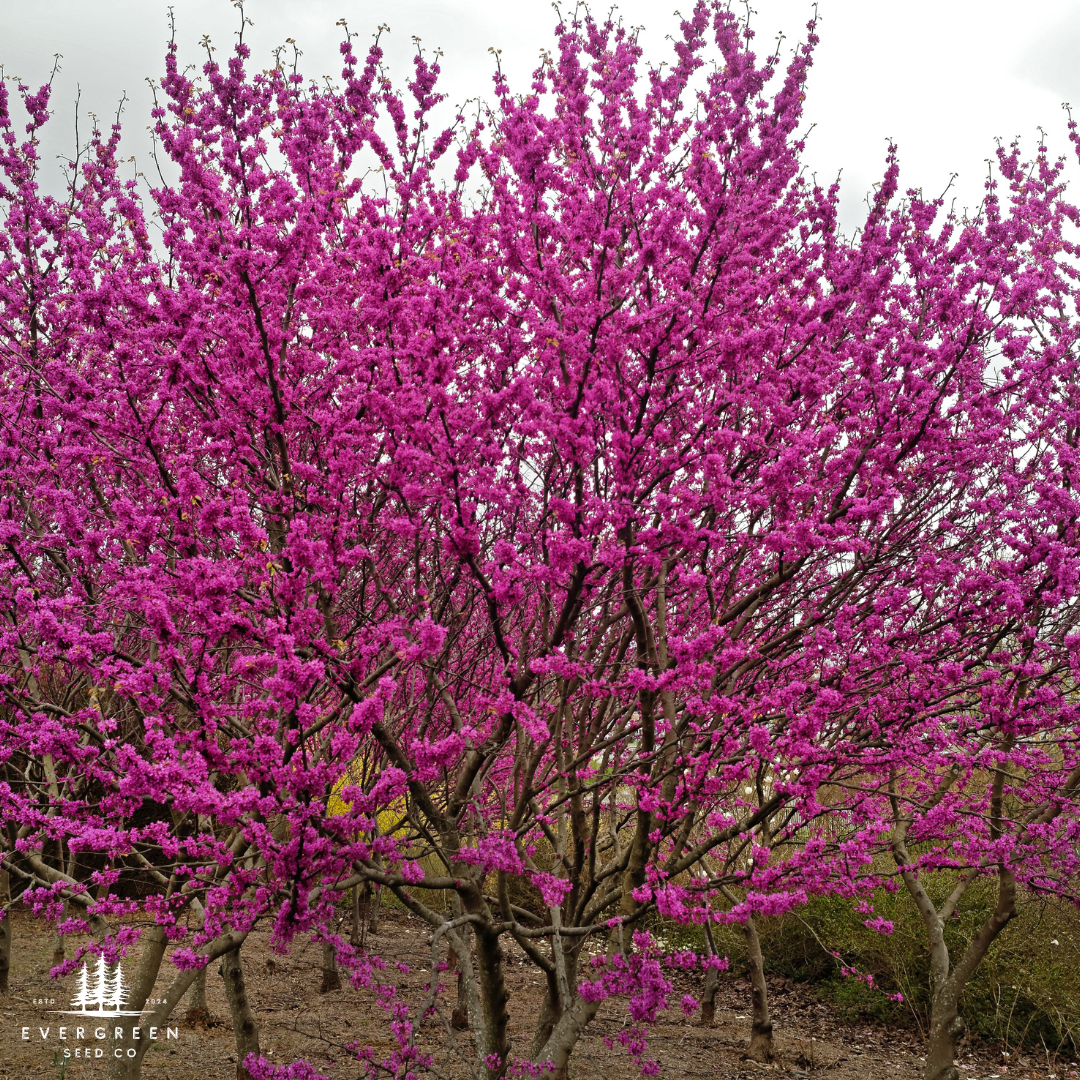
- Rosy-pink flower clusters cover every branch, twig, and even the trunk and roots
- Native across eastern North America, exceptionally adaptable to a wide range of conditions
- Provides critical early-season nectar when native bees are first emerging from winter dormancy
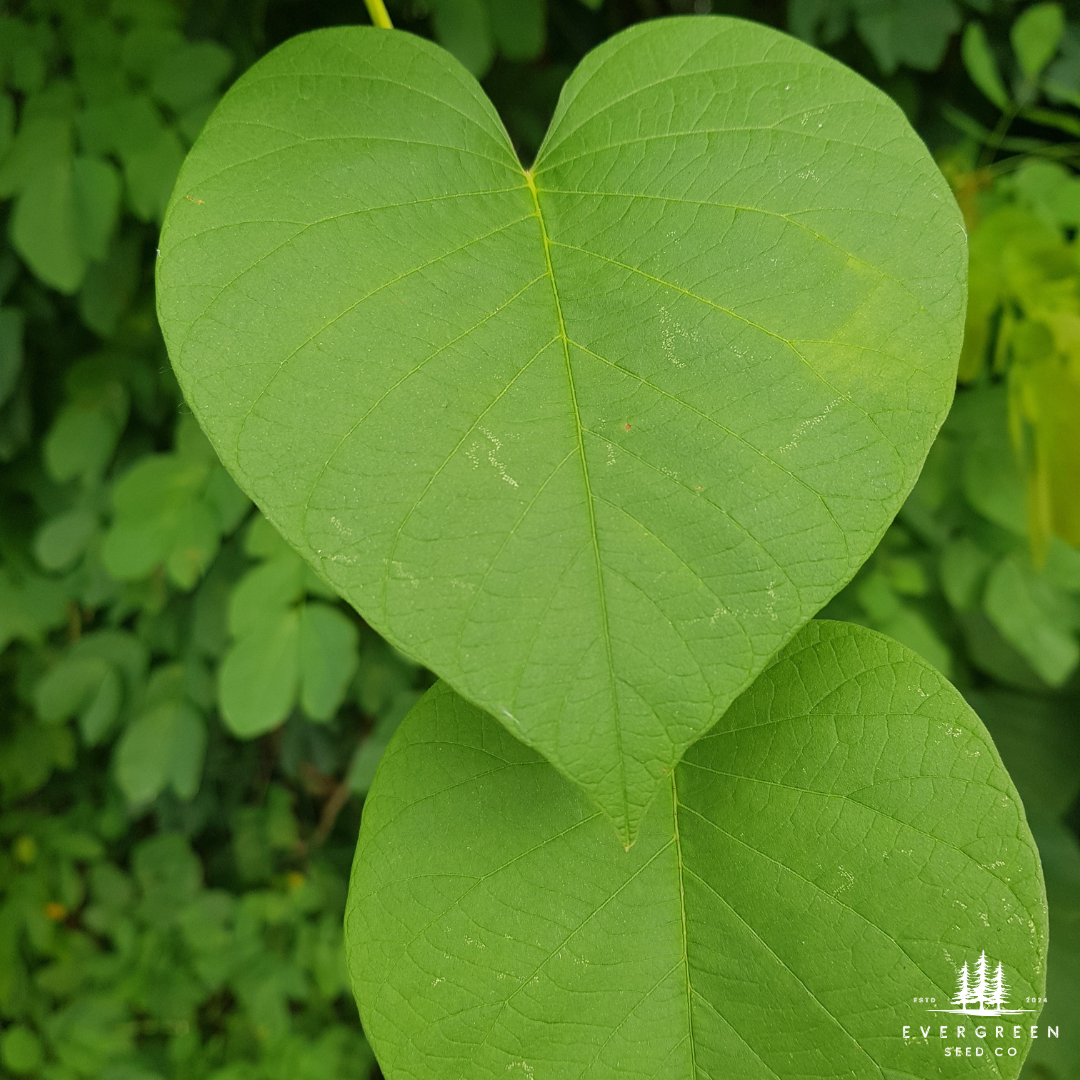
- Heart-shaped leaves provide summer interest and clear yellow fall color
Things you probably did not know about the Eastern Redbud
The flowers are edible.
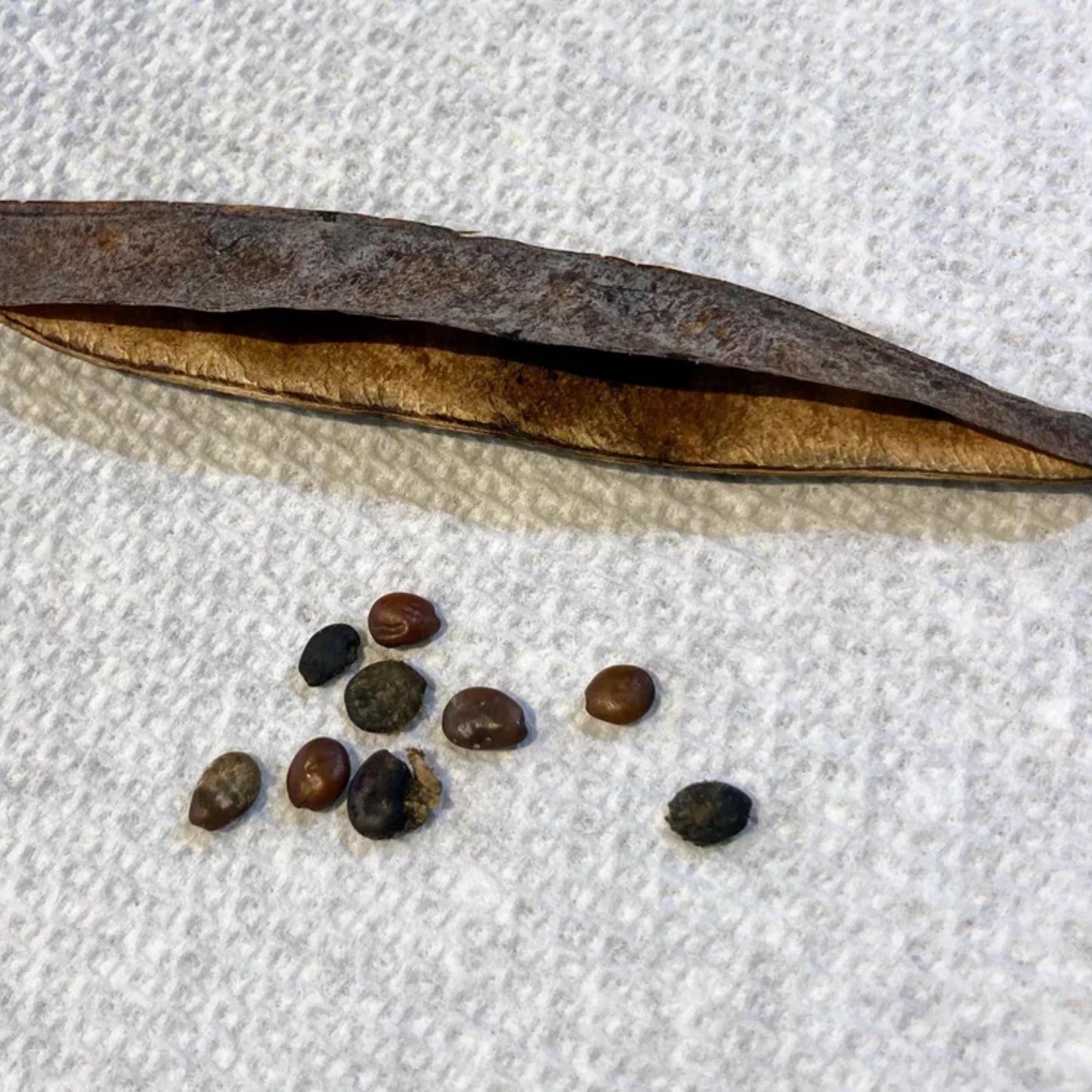
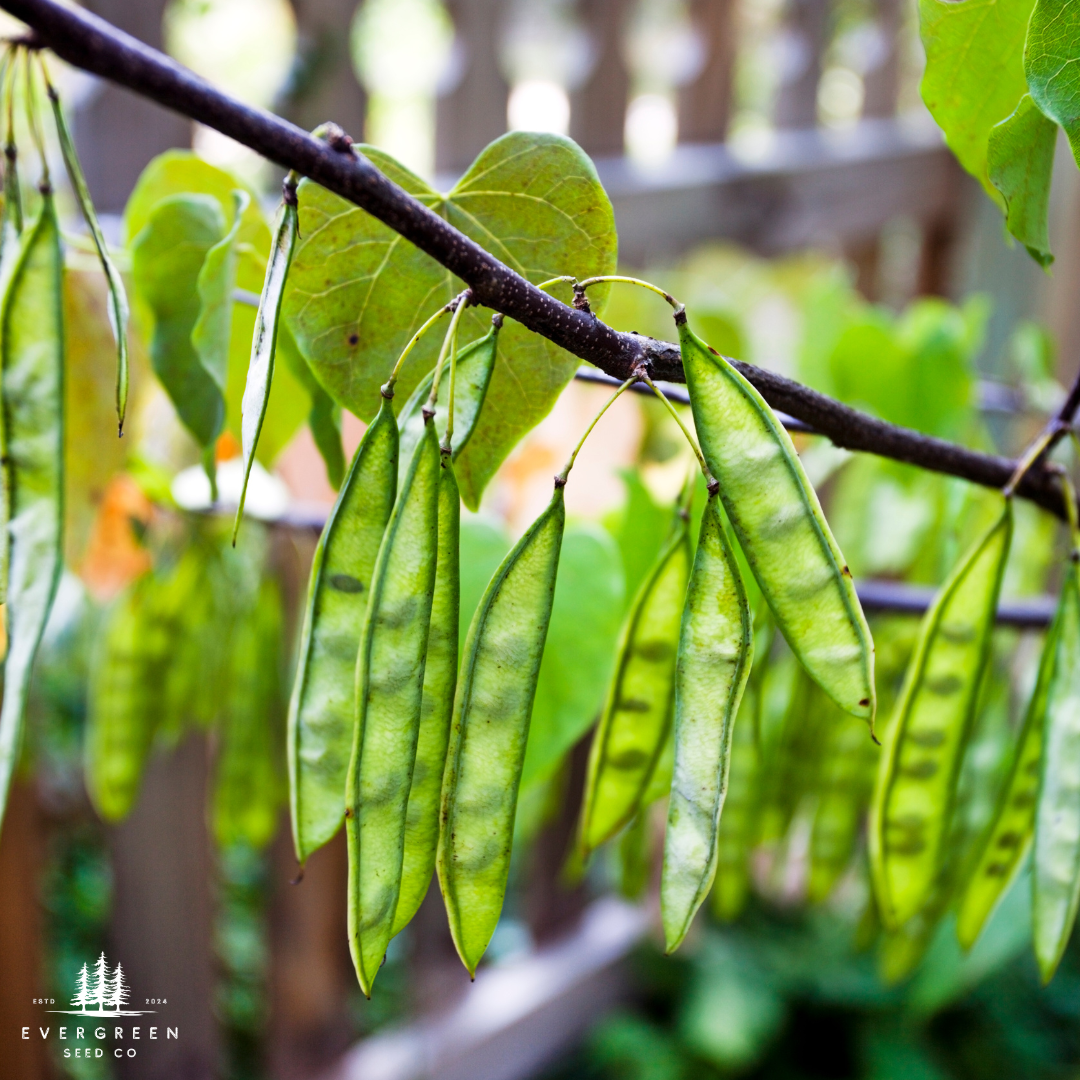
Eastern Redbud flowers have a mildly sweet, slightly tangy flavor and have been eaten by Indigenous peoples and settlers for centuries. They can be eaten raw in salads, pickled as a caper substitute, or added to baked goods. The young seed pods that follow are also edible when very young and tender. It is one of the few flowering ornamental trees with genuinely useful edible parts.
It blooms on wood that is years old.
Unlike most flowering trees whose blooms appear only on the current season's growth, Eastern Redbud produces flowers directly from older wood, including trunks and major branches that may be decades old. This cauliflory, the ability to flower from old wood, is characteristic of tropical plants and is extraordinary in a temperate tree. It is part of what makes the Redbud display so enveloping and unlike anything else.
Native bees depend on it critically.
Eastern Redbud blooms several weeks before most other native flowering trees, providing an essential nectar and pollen bridge for queen bumblebees, mason bees, and mining bees that emerge early but find little else in bloom. In gardens where Redbud is present, early-season pollinator populations are measurably higher.
It has a near-perfect natural form.
Eastern Redbud develops a naturally layered, horizontal branching structure that landscape architects describe as requiring almost no pruning to achieve a beautiful form. Its structure in winter, summer, and fall is as attractive as its brief spring flowering. Few trees are as visually interesting across all four seasons.
Growing Details
- Botanical Name: Cercis canadensis
- Stratification: Required, scarification followed by 60 to 90 days cold stratification
- USDA Zones: 4 to 9
- Soil: Adaptable, prefers well-drained, slightly acidic to neutral soil
- Light: Full sun to partial shade
- Height: 20 to 30 feet
- Spread: 25 to 35 feet
- Growth Rate: Moderate, 1 to 1.5 feet per year
Plant it where you will see it from a window in early spring. You will not regret it on that first morning in March when everything else is still gray and the Redbud is already pink.
FAQ
FAQ
Do you pre-stratify the seeds?
Most of our seeds are not pre-stratified. We ship them unstratified so you can control germination timing based on your local growing season. We sell to all 50 U.S. states and Canadian provinces, and since each region has different planting windows, pre-stratifying would risk seeds germinating in transit or before you're ready to plant.
True stratification requires cold, moist conditions, which can lead to premature sprouting or mold if not timed properly. To avoid this, we store most seeds in dry cold conditions to preserve viability — but this does not initiate stratification.
Do any of your seeds need to stay moist? (Recalcitrant seeds)
Yes — some species we offer are recalcitrant, meaning they must remain moist to stay viable and cannot be dried out. Examples include: Chestnut, Hazelnut, Paw Paw, etc.
These seeds are shipped in moist cold storage and are clearly labeled on the product page when applicable. Please refrigerate immediately upon arrival and follow included care instructions.
Do you ship internationally?
We currently ship to the United States and Canada only. Unfortunately, we cannot ship to other countries without a phytosanitary certificate, which is required by most international customs agencies.
If you're interested in shipping outside North America, please contact us. Note that a phytosanitary certificate typically adds $60–$80 USD per seed type and must be arranged in advance.
Shipping & What's Included
Shipping & What's Included
Shipping & Packaging
Hand-packed in resealable zipper kraft paper seed bags
Stratification and planting instructions included with every order
1 free bonus seed pack included with every order
Ships within 3–5 business days via USPS
Return Policy
Return Policy
Due to the nature of our products, we do not accept returns on seeds.
However, if your order arrives damaged or incorrect, please contact us within 7 days and we’ll make it right.