

California Coastal Redwood Tree Seeds (Sequoia sempervirens)
California Coastal Redwood Tree Seeds (Sequoia sempervirens)
The tallest living things on Earth. Starting in your hands.
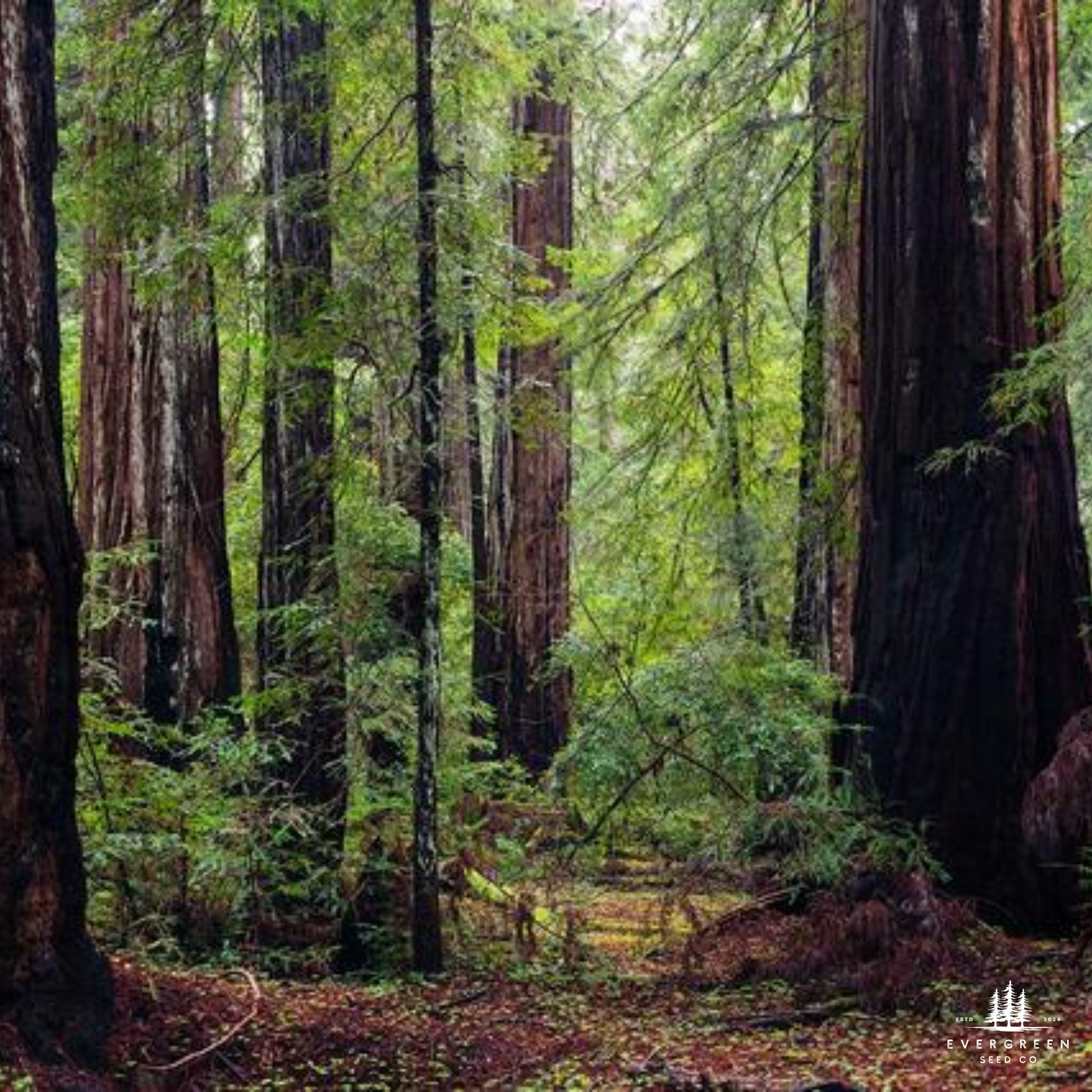
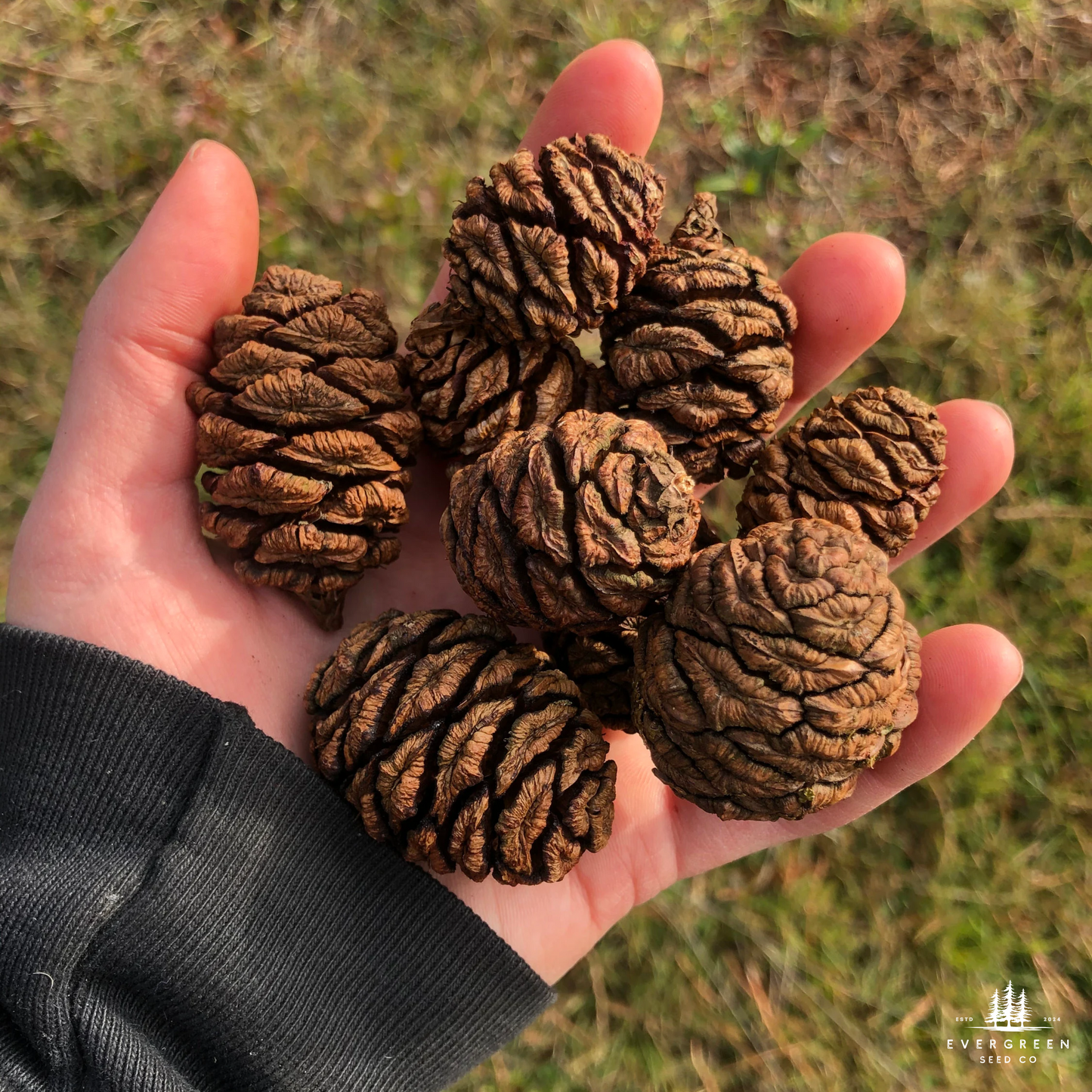
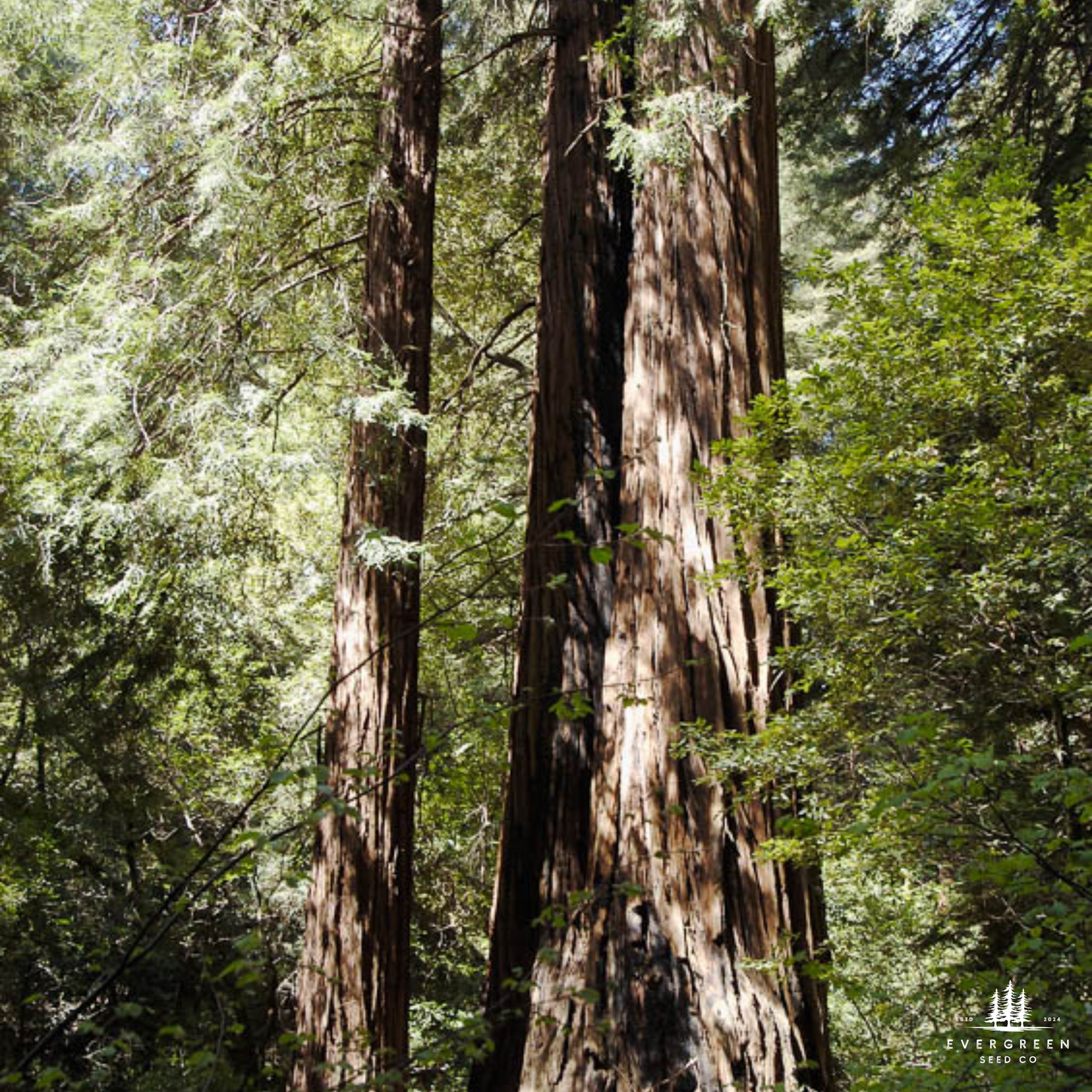
Sequoia sempervirens, the California Coastal Redwood, is the tallest tree species on the planet. The tallest known specimen stands 380 feet. The oldest living individuals are over 2,200 years old. And yet the seeds that produce them are smaller than a tomato seed. The Coastal Redwood is a tree of superlatives in every direction, combining extraordinary height, exceptional longevity, remarkable fire resistance, and a regenerative capacity unmatched by any other conifer. It grows faster than its ancient reputation suggests and adapts to a wider range of climates outside California than most growers expect. If you are looking to buy Redwood seeds or grow Coastal Redwood from seed, this is where the tallest forest on Earth begins.
- The tallest tree species on Earth, with documented specimens exceeding 380 feet
- Extraordinarily fast-growing for a tree of its eventual size, gaining 3 to 5 feet per year when young
- Naturally fire-resistant bark containing high moisture content and virtually no flammable resin
- Regenerates readily from the base after fire, cutting, or storm damage
- Can be grown successfully outside California in the Pacific Northwest, UK, and humid regions of the eastern US
Things you probably did not know about the Coastal Redwood
It can regrow from its own stump indefinitely.
When a Coastal Redwood is cut or toppled, it sprouts vigorously from the root crown, often sending up a circle of new trunks called a fairy ring. Some of these rings are growing on root systems that have been regenerating since the last Ice Age. The tree above ground is temporary. The root system below is ancient.
The fog feeds it.
Coastal Redwoods absorb water directly through their needles from the coastal fog that rolls in from the Pacific. Studies have shown that fog drip from Redwood canopies can contribute the equivalent of several inches of annual rainfall to the forest floor. The trees are so effective at capturing atmospheric moisture that they essentially harvest water from clouds.
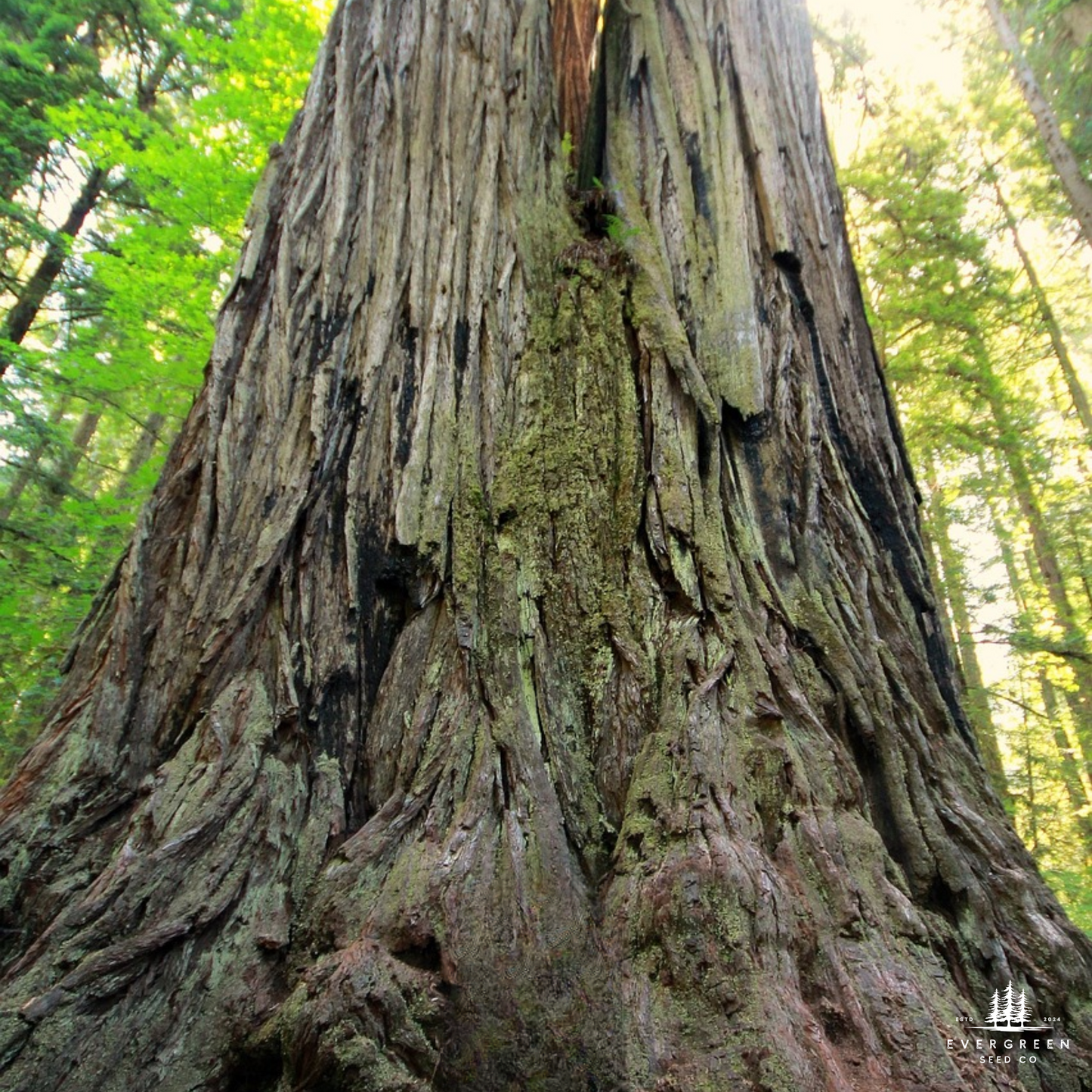
The bark can be over a foot thick.
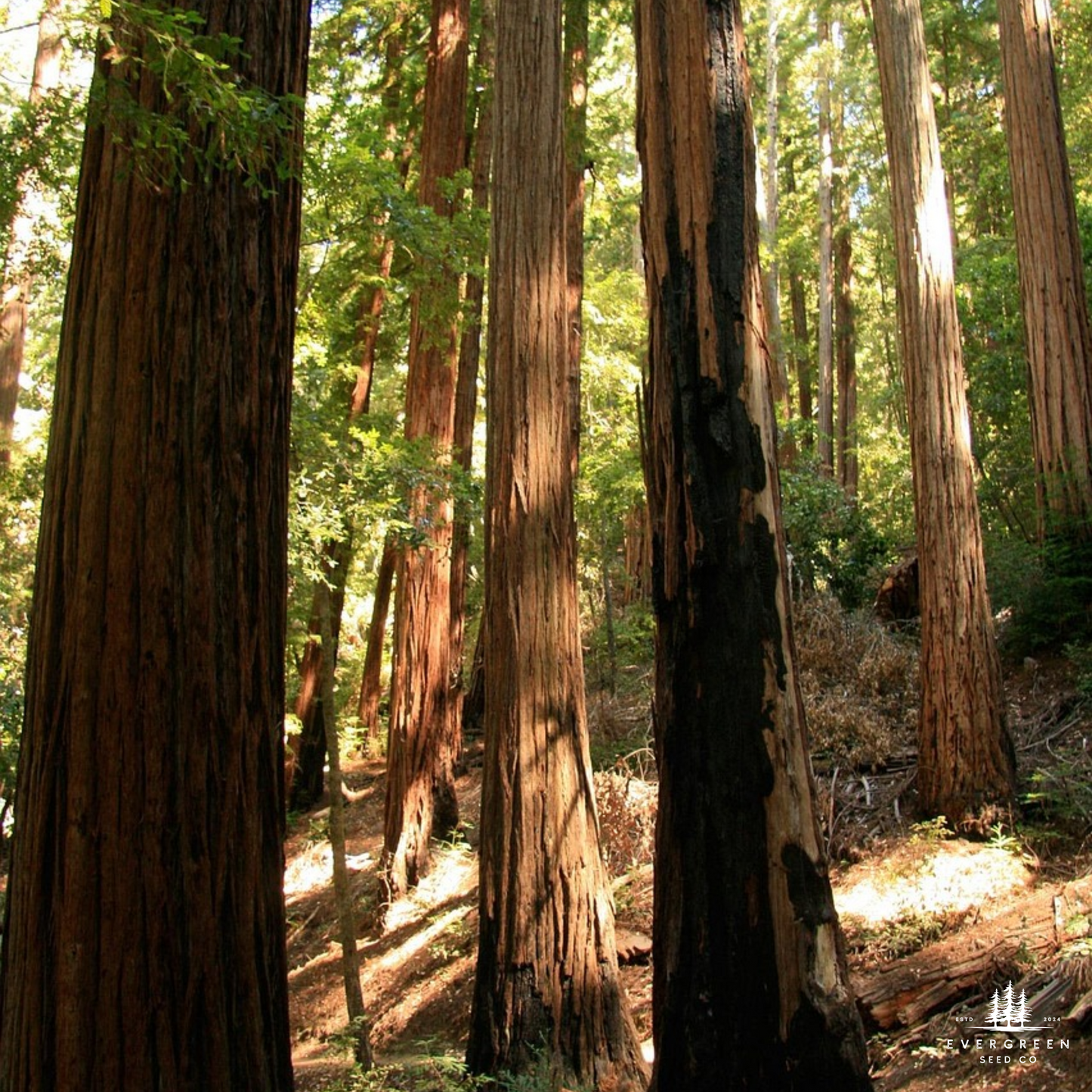
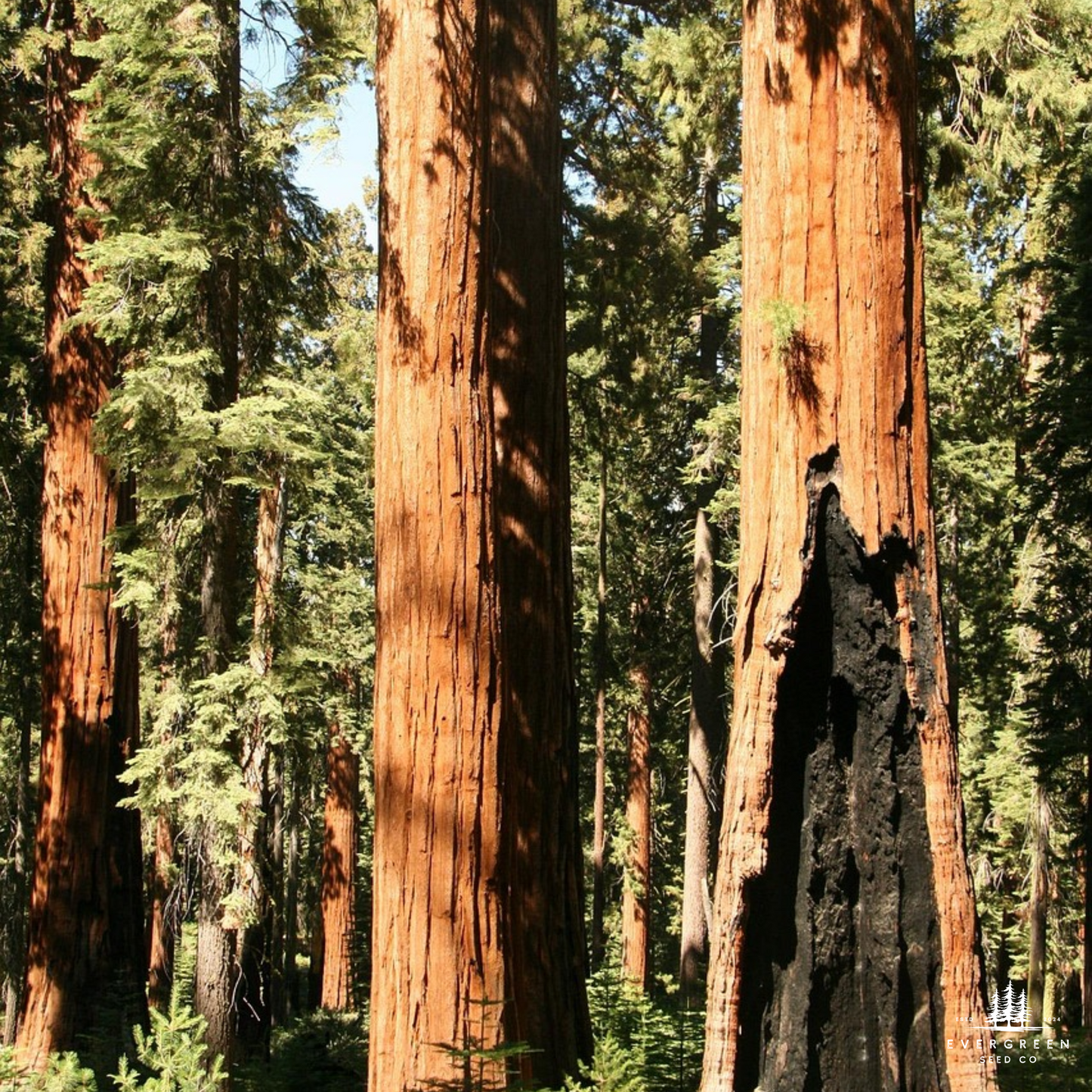
The fibrous reddish-brown bark of a mature Coastal Redwood insulates the living wood from fire heat and contains enough moisture to resist ignition in most forest fires. Historic fires that burned through old-growth Redwood forests killed the understory plants and left the Redwoods largely unharmed.
Redwood forests store more carbon per acre than any other forest type.
Old-growth Coastal Redwood forests contain more above-ground carbon than tropical rainforests of comparable area. A single mature Redwood can store over 250 tons of carbon in its trunk, roots, and soil, making Redwood preservation and planting among the most effective carbon sequestration strategies available.
Growing Details
- Botanical Name: Sequoia sempervirens
- Stratification: Recommended, 30 days cold stratification, surface sow as seeds need light to germinate
- USDA Zones: 7 to 10, with success in sheltered sites in zone 6
- Soil: Deep, moist, well-drained, slightly acidic, rich in organic matter
- Light: Full sun to partial shade
- Height: 100 to 200 feet in cultivation, taller in native habitat
- Spread: 15 to 25 feet
- Growth Rate: Fast, 3 to 5 feet per year in ideal conditions
Plant it knowing that the tree you start today will be here long after everything built around it is gone.
FAQ
FAQ
Do you pre-stratify the seeds?
Most of our seeds are not pre-stratified. We ship them unstratified so you can control germination timing based on your local growing season. We sell to all 50 U.S. states and Canadian provinces, and since each region has different planting windows, pre-stratifying would risk seeds germinating in transit or before you're ready to plant.
True stratification requires cold, moist conditions, which can lead to premature sprouting or mold if not timed properly. To avoid this, we store most seeds in dry cold conditions to preserve viability — but this does not initiate stratification.
Do any of your seeds need to stay moist? (Recalcitrant seeds)
Yes — some species we offer are recalcitrant, meaning they must remain moist to stay viable and cannot be dried out. Examples include: Chestnut, Hazelnut, Paw Paw, etc.
These seeds are shipped in moist cold storage and are clearly labeled on the product page when applicable. Please refrigerate immediately upon arrival and follow included care instructions.
Do you ship internationally?
We currently ship to the United States and Canada only. Unfortunately, we cannot ship to other countries without a phytosanitary certificate, which is required by most international customs agencies.
If you're interested in shipping outside North America, please contact us. Note that a phytosanitary certificate typically adds $60–$80 USD per seed type and must be arranged in advance.
Shipping & What's Included
Shipping & What's Included
Shipping & Packaging
Hand-packed in resealable zipper kraft paper seed bags
Stratification and planting instructions included with every order
1 free bonus seed pack included with every order
Ships within 3–5 business days via USPS
Return Policy
Return Policy
Due to the nature of our products, we do not accept returns on seeds.
However, if your order arrives damaged or incorrect, please contact us within 7 days and we’ll make it right.