

Blue Jacaranda Tree Seeds (Jacaranda mimosifolia)
Blue Jacaranda Tree Seeds (Jacaranda mimosifolia)
The most spectacular flowering tree in the world. For those who live where it can thrive.
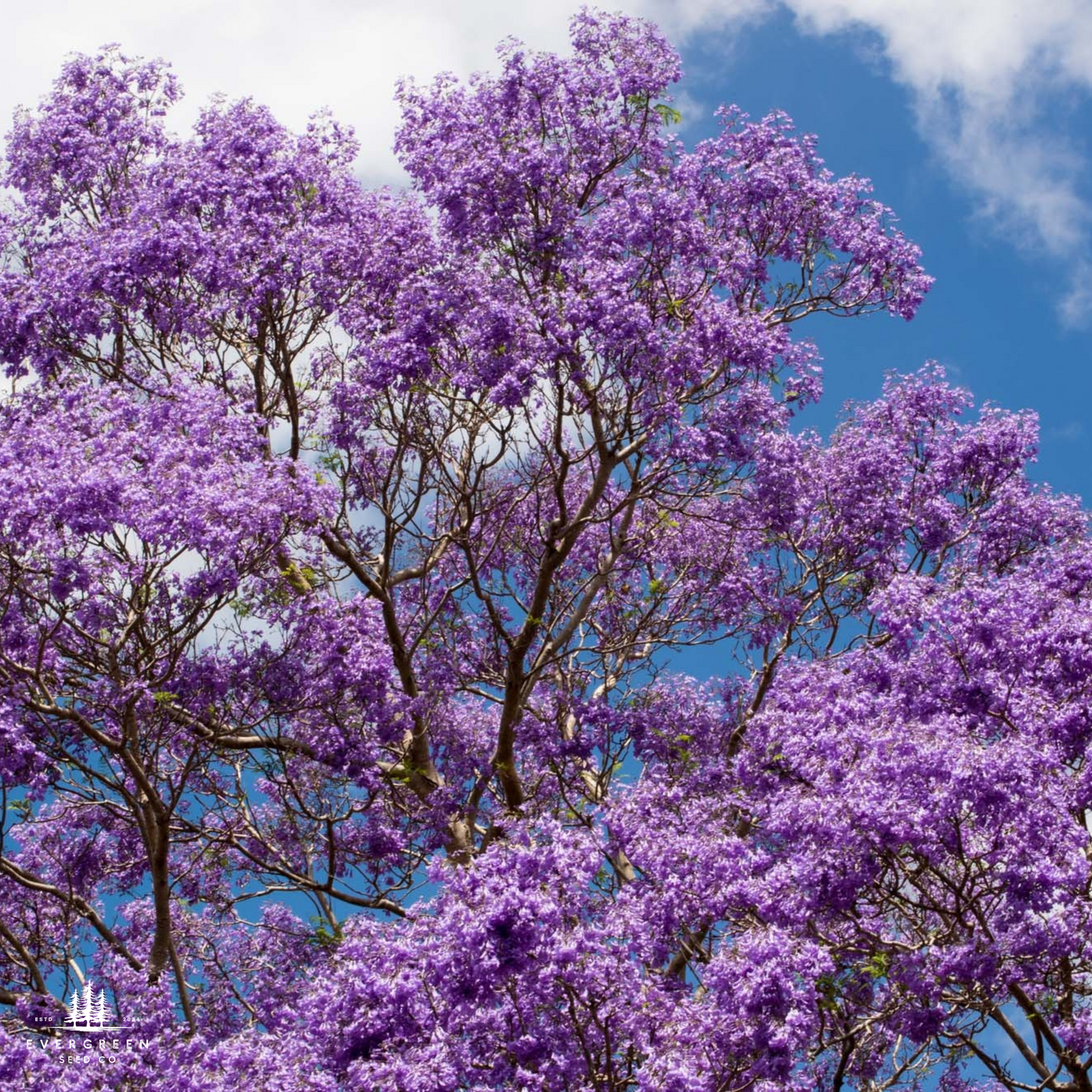
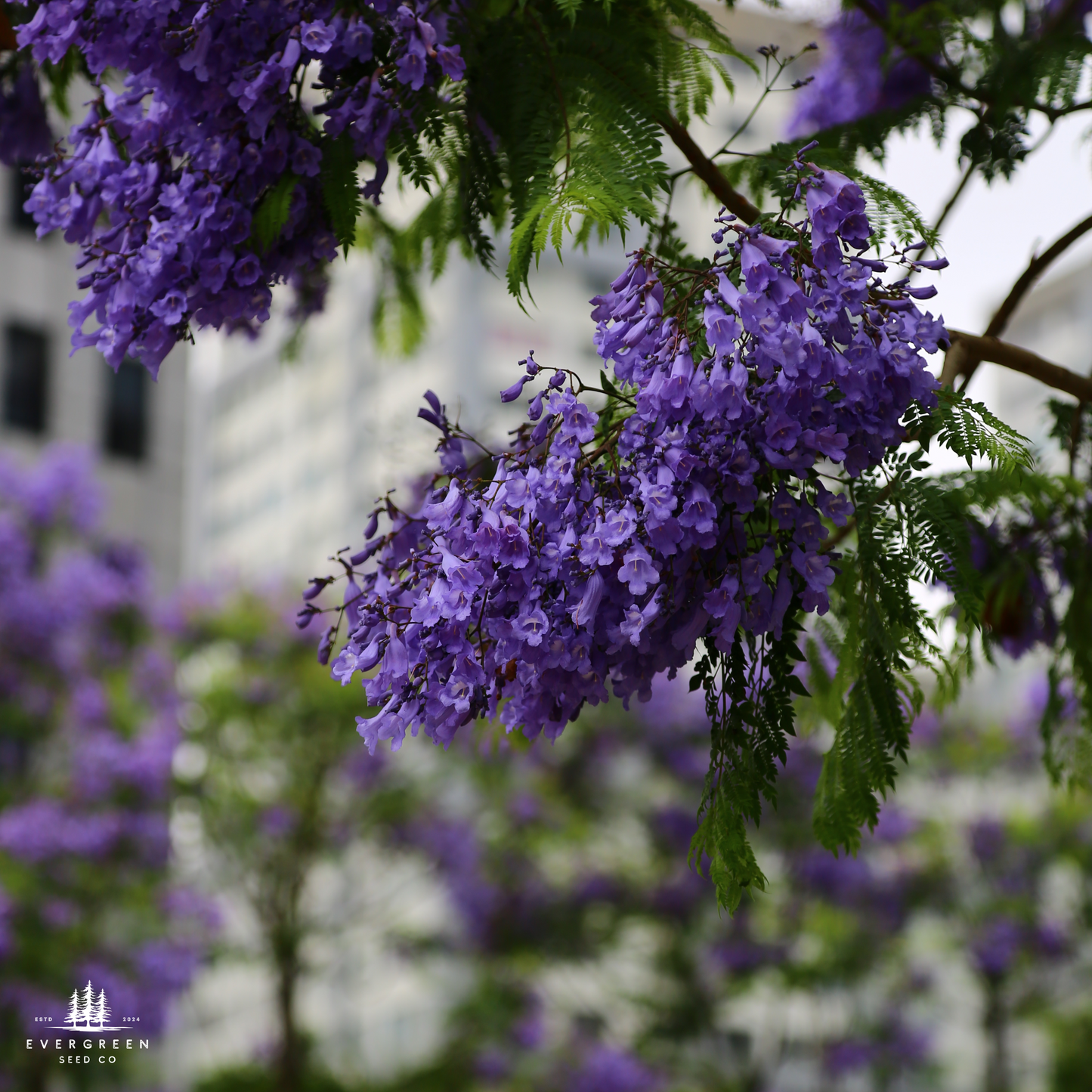
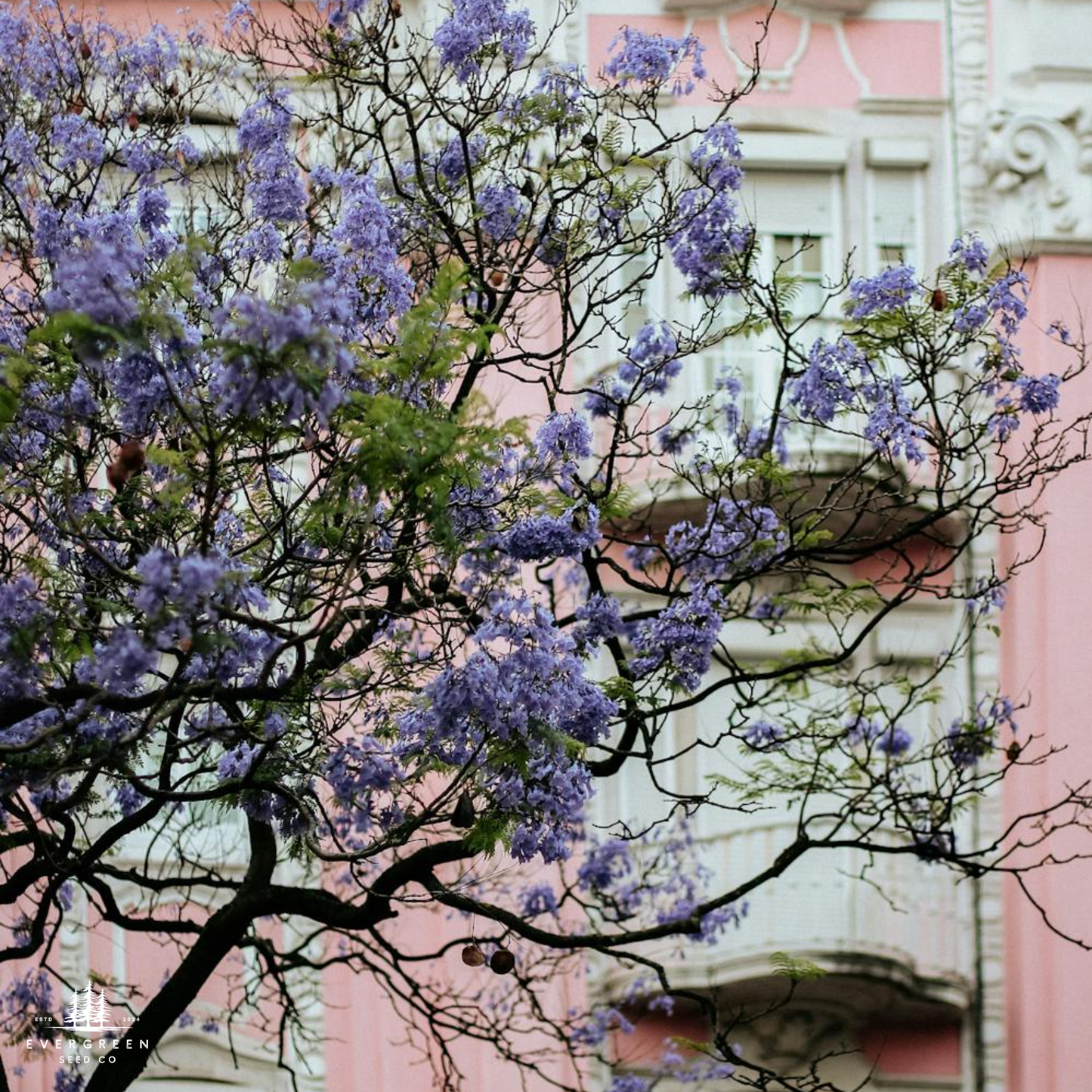
Jacaranda mimosifolia, the Blue Jacaranda, is considered by many horticulturists and travelers to be the most spectacular flowering tree on Earth. In late spring, before a single leaf has opened, it covers itself in dense masses of tubular lavender-blue flowers that last for weeks, creating a display of color so saturating and so pervasive that streets lined with them in South Africa, Australia, and California become destinations for people who travel specifically to see them bloom. The feathery, fern-like compound leaves that follow are beautiful in their own right. If you are looking to buy Jacaranda seeds or grow Blue Jacaranda from seed, this is the tree that turns a warm-climate garden into something people remember.
- Masses of lavender-blue tubular flowers covering the entire canopy before leaves emerge in late spring
- Delicate, fern-like compound leaves providing lacy, filtered shade through summer
- One of the most recognizable and celebrated flowering trees in warm-climate horticulture worldwide
- Fast-growing in warm climates, reaching flowering size in 7 to 10 years from seed
- Seed-grown trees take longer to bloom than grafted nursery trees but develop stronger root systems
Things you probably did not know about the Blue Jacaranda
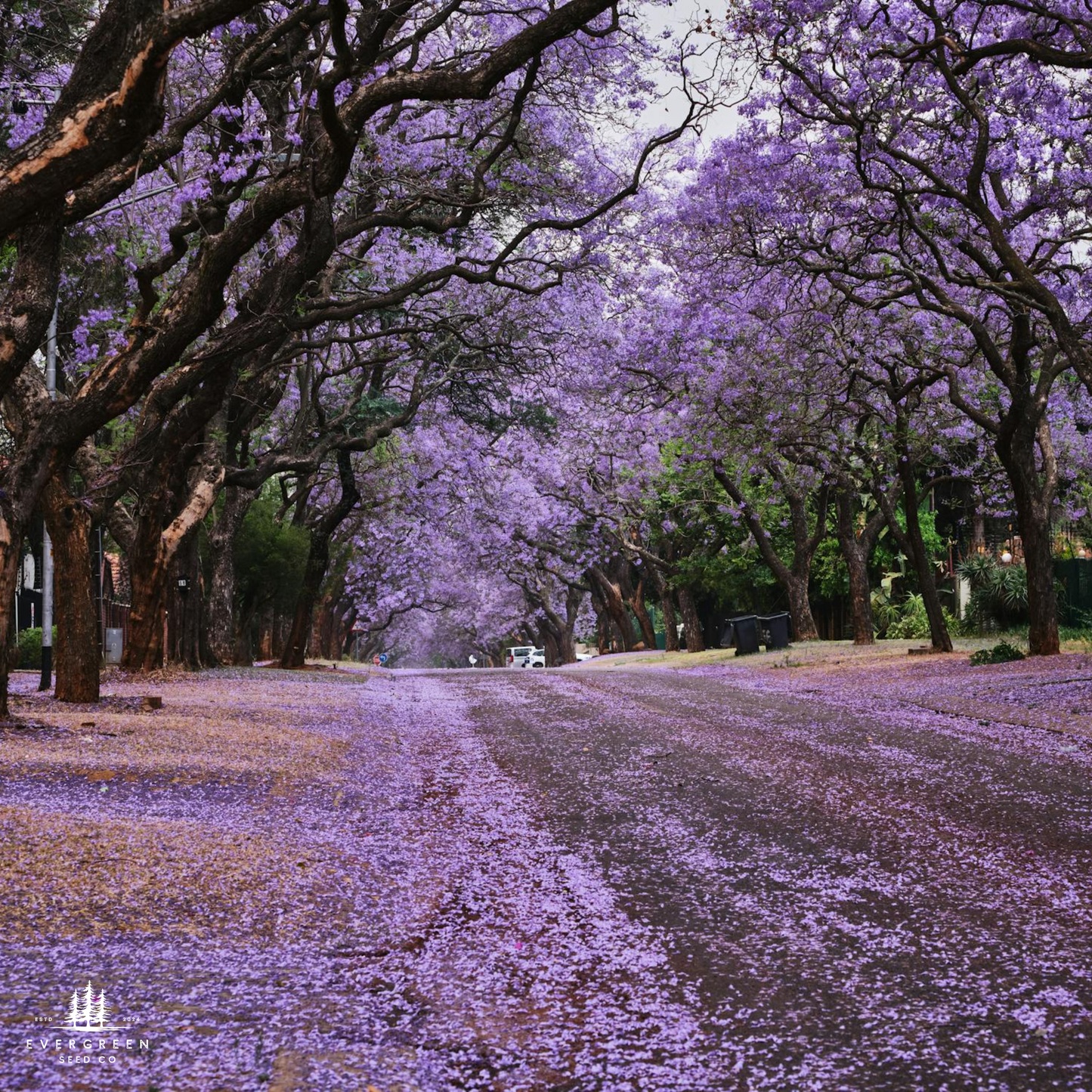
Pretoria, South Africa is called the Jacaranda City. Over 70,000 Jacaranda trees line the streets of Pretoria, South Africa, and when they bloom in October the entire city turns violet-blue. The blooming of the Jacarandas marks the beginning of exam season at the University of Pretoria, giving rise to a student tradition that if a Jacaranda flower falls on your head, you will pass your exams without studying. The trees are not native to Africa but have been so thoroughly adopted that they define the city's identity.
The flowers fall as a carpet rather than gradually. Jacaranda flowers drop en masse when they finish, creating a blue-purple carpet on the ground beneath the tree that is often described as more beautiful than the tree itself. The carpet of fallen flowers can persist for days in calm conditions, creating a double display of living flowers above and fallen flowers below simultaneously.
The wood is used for musical instruments in its native South America. Jacaranda wood is dense, fine-grained, and produces excellent acoustic properties when used for guitar backs, sides, and fingerboards. Brazilian Rosewood, one of the most prized tonewoods in the world, is actually a Jacaranda species, Jacaranda mimosifolia's relative Dalbergia nigra. The acoustic properties of Jacaranda wood have been appreciated by instrument makers for centuries.
It can be grown as a container plant in cold climates. In zones colder than 9, Blue Jacaranda can be grown in large containers, moved indoors in winter, and brought outside in summer. Container-grown specimens rarely reach full size but can flower and provide the distinctive foliage texture in climates where outdoor planting is not possible. Many enthusiasts in zones 7 and 8 manage Jacaranda as a large patio plant with winter protection.
Growing Details
- Botanical Name: Jacaranda mimosifolia
- Stratification: Not required
- USDA Zones: 9 to 11 outdoors, container grown in colder climates
- Soil: Well-drained, sandy to loamy, tolerates poor soils
- Light: Full sun
- Height: 25 to 50 feet
- Spread: 25 to 40 feet
- Growth Rate: Moderate to fast, 2 to 4 feet per year in ideal conditions
Plant it where the climate allows and give it the most sun you have. When it finally blooms you will understand why people travel thousands of miles to stand under one.
FAQ
FAQ
Do you pre-stratify the seeds?
Most of our seeds are not pre-stratified. We ship them unstratified so you can control germination timing based on your local growing season. We sell to all 50 U.S. states and Canadian provinces, and since each region has different planting windows, pre-stratifying would risk seeds germinating in transit or before you're ready to plant.
True stratification requires cold, moist conditions, which can lead to premature sprouting or mold if not timed properly. To avoid this, we store most seeds in dry cold conditions to preserve viability — but this does not initiate stratification.
Do any of your seeds need to stay moist? (Recalcitrant seeds)
Yes — some species we offer are recalcitrant, meaning they must remain moist to stay viable and cannot be dried out. Examples include: Chestnut, Hazelnut, Paw Paw, etc.
These seeds are shipped in moist cold storage and are clearly labeled on the product page when applicable. Please refrigerate immediately upon arrival and follow included care instructions.
Do you ship internationally?
We currently ship to the United States and Canada only. Unfortunately, we cannot ship to other countries without a phytosanitary certificate, which is required by most international customs agencies.
If you're interested in shipping outside North America, please contact us. Note that a phytosanitary certificate typically adds $60–$80 USD per seed type and must be arranged in advance.
Shipping & What's Included
Shipping & What's Included
Shipping & Packaging
Hand-packed in resealable zipper kraft paper seed bags
Stratification and planting instructions included with every order
1 free bonus seed pack included with every order
Ships within 3–5 business days via USPS
Return Policy
Return Policy
Due to the nature of our products, we do not accept returns on seeds.
However, if your order arrives damaged or incorrect, please contact us within 7 days and we’ll make it right.