

Asian Pear Tree Seeds | Japanese Pear | (Pyrus pyrifolia)
Asian Pear Tree Seeds | Japanese Pear | (Pyrus pyrifolia)
Crisp like an apple. Juicy like a pear. The fruit tree that rewrites expectations.
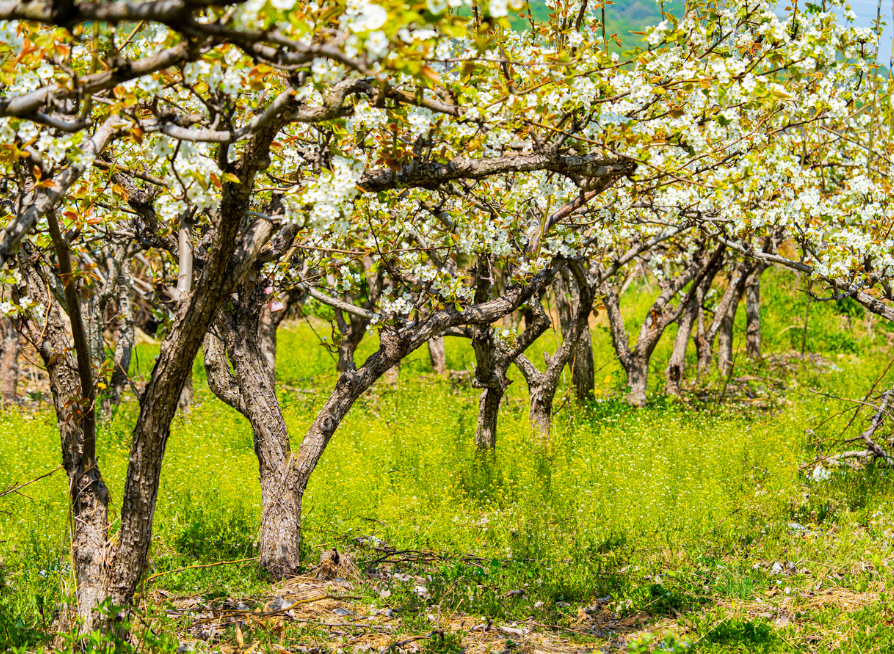
Pyrus pyrifolia, the Asian Pear or Japanese Pear, produces one of the most distinctive and satisfying fruits of any temperate tree, perfectly round, golden to bronze-skinned fruit with a crisp, explosive texture more like a fresh apple than a European pear, yet filled with intensely sweet, refreshing juice that bursts with every bite. Unlike soft, melting pears, Asian pears are firm when ripe, making them ideal for fresh eating, slicing, and storage. The trees themselves are equally ornamental, covered in clusters of white spring blossoms that rival ornamental pears and followed by clean, glossy green foliage through the growing season. Native to East Asia and cultivated for over 3,000 years, Asian pears have been refined into some of the most productive and rewarding fruit trees for home growers. If you are looking to buy Asian Pear seeds or grow Pyrus pyrifolia from seed, this is the fruit tree that delivers both ornamental beauty and crisp, unforgettable fruit.
- Round, apple-like fruit with crisp texture and exceptionally high juice content
- Sweet, refreshing flavor with notes of honey, melon, and mild citrus
- Beautiful white spring blossoms comparable to ornamental pear trees
- Fruit stores well compared to European pears, maintaining texture and flavor
- Long history of cultivation in China, Korea, and Japan spanning thousands of years
Things you probably did not know about Asian Pear
The crisp texture comes from densely packed stone cells distributed throughout the flesh. Unlike European pears, which soften as cell walls break down during ripening, Asian pears retain their firmness due to a high concentration of sclereids, or stone cells, evenly distributed throughout the fruit. These cells provide the characteristic crunch while still allowing the fruit to hold large amounts of juice, creating the unique combination of crispness and juiciness that defines Asian pears.
They are typically harvested fully ripe on the tree, unlike European pears. European pears are picked mature but unripe and allowed to soften off the tree, but Asian pears develop their best flavor and texture when fully ripened on the tree. This means the harvest window is narrower but the eating quality is immediately excellent, with no need for post-harvest ripening.
Fruit thinning is essential for producing large, high-quality pears. Asian pear trees naturally set heavy crops, often far more fruit than the branches can support. Thinning the developing fruit early in the season improves fruit size, prevents branch breakage, and enhances overall fruit quality. Without thinning, the tree will produce many smaller fruits with reduced sweetness.
Seed-grown trees will vary and may not produce identical fruit to the parent. Like most fruit trees, Asian pears grown from seed do not come true to type. Each seedling represents a new genetic combination, often resulting in variation in fruit size, flavor, and texture. This makes seed-grown trees ideal for experimentation, rootstock development, or discovering unique new fruit characteristics.
Growing Details
- Botanical Name: Pyrus pyrifolia
- Stratification: Required, 60 to 90 days cold moist stratification
- USDA Zones: 5 to 9
- Soil: Well-drained, fertile soil with moderate moisture
- Light: Full sun for best fruit production
- Height: 15 to 30 feet
- Spread: 12 to 20 feet
- Growth Rate: Moderate to fast, 1 to 2 feet per year
Plant it where it gets full sun and give it room to produce. The first time you bite into a fully ripe Asian pear, crisp and dripping with juice, you will understand why this tree has been cultivated for thousands of years and why it continues to earn its place in modern orchards.
FAQ
FAQ
Do you pre-stratify the seeds?
Most of our seeds are not pre-stratified. We ship them unstratified so you can control germination timing based on your local growing season. We sell to all 50 U.S. states and Canadian provinces, and since each region has different planting windows, pre-stratifying would risk seeds germinating in transit or before you're ready to plant.
True stratification requires cold, moist conditions, which can lead to premature sprouting or mold if not timed properly. To avoid this, we store most seeds in dry cold conditions to preserve viability — but this does not initiate stratification.
Do any of your seeds need to stay moist? (Recalcitrant seeds)
Yes — some species we offer are recalcitrant, meaning they must remain moist to stay viable and cannot be dried out. Examples include: Chestnut, Hazelnut, Paw Paw, etc.
These seeds are shipped in moist cold storage and are clearly labeled on the product page when applicable. Please refrigerate immediately upon arrival and follow included care instructions.
Do you ship internationally?
We currently ship to the United States and Canada only. Unfortunately, we cannot ship to other countries without a phytosanitary certificate, which is required by most international customs agencies.
If you're interested in shipping outside North America, please contact us. Note that a phytosanitary certificate typically adds $60–$80 USD per seed type and must be arranged in advance.
Shipping & What's Included
Shipping & What's Included
Shipping & Packaging
Hand-packed in resealable zipper kraft paper seed bags
Stratification and planting instructions included with every order
1 free bonus seed pack included with every order
Ships within 3–5 business days via USPS
Return Policy
Return Policy
Due to the nature of our products, we do not accept returns on seeds.
However, if your order arrives damaged or incorrect, please contact us within 7 days and we’ll make it right.