

American Beautyberry Seeds | Beautyberry | (Callicarpa americana)
American Beautyberry Seeds | Beautyberry | (Callicarpa americana)
Nothing in the garden is that color. Nothing attracts birds like it does in fall.
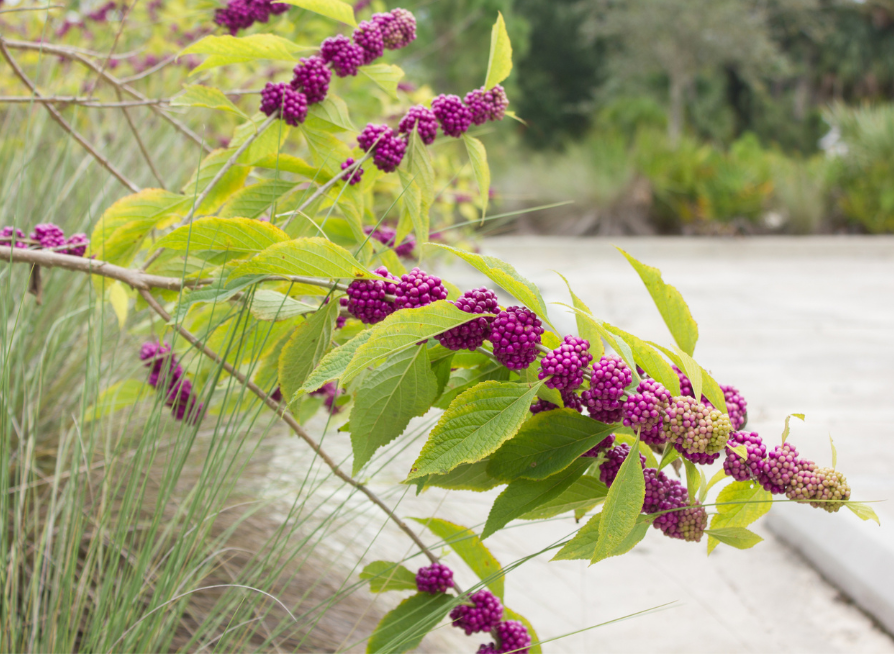
Callicarpa americana, the American Beautyberry, produces the most unexpectedly vivid display of any native shrub in North America. In late summer and fall, after the flowers have finished and the leaves are still green, it covers itself with dense clusters of brilliant magenta-purple berries wrapped tightly around every stem in tight, jewel-like whorls. The effect is so electric and so unlike anything else in the autumn landscape that first-time observers often refuse to believe it is not artificial. It grows in full sun and deep shade with equal success, asks almost nothing from the soil, and brings every thrush, catbird, towhee, and mockingbird in the area straight to it from August through December. If you are looking to buy American Beautyberry seeds or grow this native shrub from seed, there is nothing else in the native plant world that delivers this combination of ease, impact, and wildlife value.
- Brilliant magenta-purple berries in dense stem-hugging clusters, the most vivid fall color of any native shrub
- Adapted to full sun and deep shade, one of the most flexible native shrubs for difficult garden spots
- Berries eaten by over 40 bird species including robins, catbirds, towhees, mockingbirds, and thrushes
- Native across the southeastern United States and adaptable well beyond its native range
- Nearly impossible to kill once established, tolerant of drought, poor soils, and neglect
Things you probably did not know about the American Beautyberry
The leaves repel mosquitoes.
Research conducted at the USDA Agricultural Research Service confirmed that compounds in American Beautyberry leaves, particularly callicarpenal and intermedeol, repel mosquitoes, ticks, and fire ants at concentrations comparable to DEET. Indigenous peoples in the Gulf Coast region crushed the leaves and rubbed them on their skin and on horses during summer. Modern researchers took that traditional knowledge seriously enough to fund a full chemical analysis.
The berries persist on the stems after the leaves drop.
When frost takes the leaves in late fall, the brilliant berries remain attached to the bare stems, creating an even more dramatic display against the gray and brown of the late season landscape. Birds that ignored the plant during summer suddenly discover it in October and return repeatedly until every berry is gone.
It can grow 6 feet in a single season.
American Beautyberry is one of the fastest-establishing native shrubs available in the Southeast and Mid-Atlantic. Young plants in good conditions put on extraordinary growth in their first few seasons, reaching their full flowering and fruiting size within two to three years from seed.
The color is exceptional for a plant-based dye.
American Beautyberry berries have been used by fiber artists for their striking purple-pink dye properties. The color is vibrant when freshly applied but fades without a mordant. The hunt for native plant dye sources among textile artists has brought renewed attention to American Beautyberry as a locally available color source.
Growing Details
- Botanical Name: Callicarpa americana
- Stratification: Recommended, 60 to 90 days cold stratification
- USDA Zones: 6 to 10, with some success in zone 5 in sheltered sites
- Soil: Extremely adaptable, tolerates poor, dry, sandy, or clay soils
- Light: Full sun to full shade, most vigorous fruiting in full sun
- Height: 3 to 8 feet
- Spread: 3 to 8 feet
- Growth Rate: Fast, 2 to 4 feet per year in warm conditions
Plant it where you want something that makes people stop walking and ask what it is. There is no other answer to that question in the entire native plant world.
FAQ
FAQ
Do you pre-stratify the seeds?
Most of our seeds are not pre-stratified. We ship them unstratified so you can control germination timing based on your local growing season. We sell to all 50 U.S. states and Canadian provinces, and since each region has different planting windows, pre-stratifying would risk seeds germinating in transit or before you're ready to plant.
True stratification requires cold, moist conditions, which can lead to premature sprouting or mold if not timed properly. To avoid this, we store most seeds in dry cold conditions to preserve viability — but this does not initiate stratification.
Do any of your seeds need to stay moist? (Recalcitrant seeds)
Yes — some species we offer are recalcitrant, meaning they must remain moist to stay viable and cannot be dried out. Examples include: Chestnut, Hazelnut, Paw Paw, etc.
These seeds are shipped in moist cold storage and are clearly labeled on the product page when applicable. Please refrigerate immediately upon arrival and follow included care instructions.
Do you ship internationally?
We currently ship to the United States and Canada only. Unfortunately, we cannot ship to other countries without a phytosanitary certificate, which is required by most international customs agencies.
If you're interested in shipping outside North America, please contact us. Note that a phytosanitary certificate typically adds $60–$80 USD per seed type and must be arranged in advance.
Shipping & What's Included
Shipping & What's Included
Shipping & Packaging
Hand-packed in resealable zipper kraft paper seed bags
Stratification and planting instructions included with every order
1 free bonus seed pack included with every order
Ships within 3–5 business days via USPS
Return Policy
Return Policy
Due to the nature of our products, we do not accept returns on seeds.
However, if your order arrives damaged or incorrect, please contact us within 7 days and we’ll make it right.